Smart meters to cost the UK billions: 2G switch-off means replacing 12-13 million
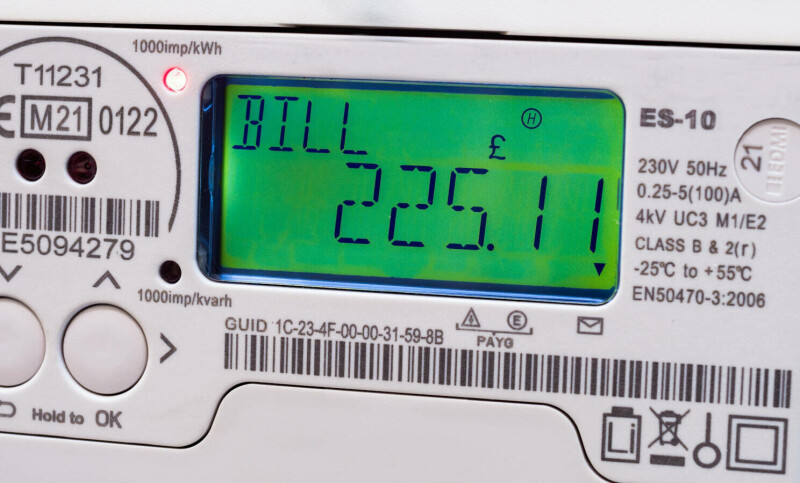
Sunset of legacy cellphone tech means forced upgrade for many millions of smart energy meter users
Between 12 and 13 million UK smart meters could stop working properly when 2G and 3G networks are switched off by 2033, and replacing them all is likely to cost around £4 billion ($5.3 billion).
Smart meters have long been a controversial topic thanks to the British government's botched rollout of the technology; they were supposed to be fitted into 80 percent of households by 2020.
But numerous delays and technical hitches, such as consumers finding their meter stopped being smart if they switched energy supplier, hindered progress.
REG AD
Now, a report from connectivity biz Wirepas, "The European Connectivity Trilemma," shows that it isn't just Brits who have problems, but that other European countries also have their share of smart meter issues and that no two countries have adopted the same approach.
REG AD
The UK's issues center on the fact that early meters used 2G or 3G cellular connections to transmit energy usage back to the supplier. These continued to be fitted until 4G versions began arriving at the end of 2024, the report says.
This issue was covered by The Register back in 2023, and again in 2024.
However, the government had already announced measures to phase out 2G and 3G networks by 2033 several years earlier, back in 2021, so it was known that any meters being fitted would have a limited lifespan.
In fact, 3G services have now already been withdrawn by the networks, and they all plan to phase out 2G ahead of the 2033 deadline. BT/EE will begin closing its network from May 2029, VMO2 will start the same summer, and Vodafone aims to switch off in spring 2030.
The report claims the UK now faces two substantial areas of expenditure as a result. The first covers newer, second generation (SMETS2) meters, where only the communications module needs swapping out, but even this is likely to cost £1.3 to £1.4 billion (c $1.7 to $1.9 billion) before the hardware cost of each new hub is even factored in.
The other is for an estimated 7 million older, first-generation (SMETS1) meter installations, which have the cellular comms hard-wired in, so the whole meter typically needs replacing. The report authors estimate this will cost another £2.1 billion to £2.45 billion ($2.8 billion to $3.3 billion), at an indicative replacement cost of £300 to £350 per installation.
This results in the estimated £4 billion in gross replacement costs, which will ultimately feed into household energy bills, adding to the very costs the government is currently trying to reduce.
We asked the Department for Energy Security and Net Zero (DESNZ), which oversees smart meters, for comment.
REG AD
While some of these older meters would naturally have been due for replacement as part of normal asset renewal cycles, the cell network shutdown makes the replacement program unavoidable and dictates when much of the expenditure must occur.
According to the report, the SMETS2 replacement largely applies to central and southern Britain, as second-gen meters in the north use a long-range radio network and are not subject to the 2G/3G cut-off. However, the issue of older SMETS1 meters applies nationwide.
Wirepas' interest in all of this is that it specializes in IoT connectivity and is pushing NR+ as a solution to the issue. Based on the DECT-2020 New Radio standard developed by the European Telecommunication Standards Institute (ETSI), this is designed to be scalable and operates in the license-exempt and globally available 1.9GHz part of the spectrum.
When 4G technology reaches the end of its life, (which isn't likely to happen until the 2040s, and there is no planned date) the UK's smart meters will need to be replaced once again, the report asserts. However, this is sufficiently far in the future that it is unlikely to trouble policymakers anytime soon. ®
KioskNews shows a cleaned-up reading view extracted from the publisher’s page — the original always lives on their site, not ours.