How Chinese Spies Used Sex And Secret Affairs To Target US' Tech Elite
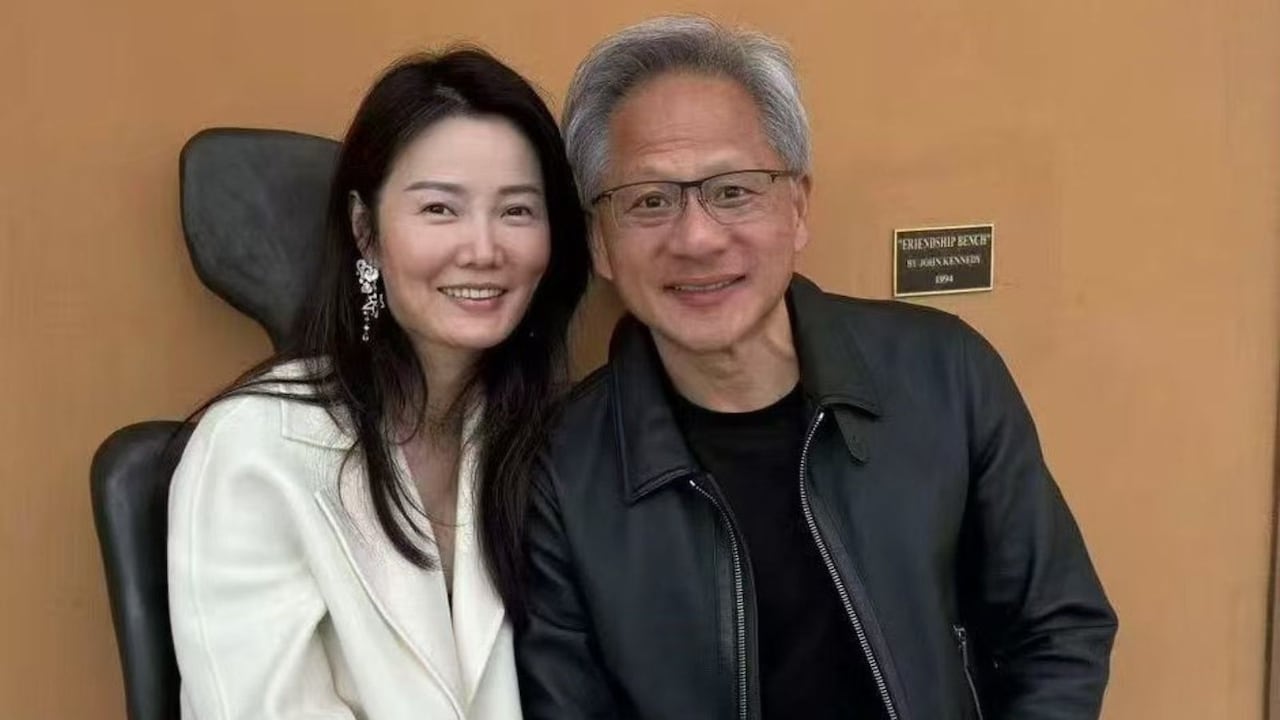
The allegations surrounding Nvidia CEO Jensen Huang have brought an old problem of foreign spies trying to get access to US' most valuable technology in Silicon Valley back into focus.
US intelligence officials have warned for years that Chinese agents are targeting tech companies, using personal relationships, business connections and stolen information to get close to sensitive research.
The controversy involving Huang has now put the issue under the spotlight. US President Donald Trump said on Monday that he had spoken to the Nvidia chief, who told him he "had absolutely no idea that the person in question was a spy."
Nvidia's board has also launched an internal investigation into the allegations.
According to a New York Times report, Trump had known about Huang's alleged links to a Chinese intelligence operative for about a year but did not act on the information, fearing that it could hurt Nvidia's business.
How A Chinese Spy Case Fell Apart
The problem is not new. A case from the late 1980s shows how business interests sometimes took priority over national security concerns.
The FBI had identified a suspected Chinese spy working at a Silicon Valley company involved in classified research with military applications.
Agents followed the man, tapped his phone and approached the company's chief executive for help.
"We just tightened the noose around him," recalled LaRae Quy, a former FBI counterintelligence agent who worked on the investigation.
The suspect was eventually caught while trying to fly from San Francisco to Beijing with a computer disk he had allegedly smuggled out.
But the case did not go much further. The company refused to cooperate with the prosecution because it did not want negative publicity.
The FBI eventually let the matter drop.
"The US government didn't have the gumption to call a spade a spade - China was robbing us blind," Quy said.
She added that companies would rather lose valuable technology than risk damaging their reputation or stock prices.
How 'Honey Traps' Work
Spies have also used romantic and sexual relationships to get close to people with access to sensitive information. These operations are commonly known as 'honey traps'.
Dennis Wilder, a former CIA China analyst, said Chinese intelligence agencies have used this method to target US officials.
"We are constantly having to remove people from our embassies and consulates in China because they get into these honey traps," he said.
The FBI has also been aware of sex workers at luxury hotels in California passing information about their clients to Russian intelligence officials.
China has used similar methods to approach American politicians.
Between 2011 and 2015, Chinese national Christine Fang built relationships with several Democratic politicians in the San Francisco Bay Area, including former Congressman Eric Swalwell.
Fang, who had a sexual relationship with Swalwell, helped raise campaign donations for him and placed an intern in his office. US investigators believed she was working for China's Ministry of State Security.
She left the US in 2015. Former officials also said she had intimate relationships with several US mayors.
FBI Agents Also Caught In A Spy Trap
Another case involved Katrina Leung, a Republican fundraiser and consultant based in Los Angeles.
US authorities arrested her in 2003 on allegations that she had passed classified information to China while pretending to work as an FBI informant.
Leung had affairs with two FBI agents who were handling her case, even as she allegedly passed information to Beijing.
The cases show that Chinese intelligence operations have targeted people across political parties and government agencies.
AI Technology Becomes The New Target
The threat has also moved deeper into America's technology industry, particularly artificial intelligence.
In January, former Google engineer Linwei Ding was convicted on 14 counts, including economic espionage and theft of trade secrets. He was accused of stealing more than 2,000 pages of confidential information about Google's AI supercomputer technology.
US authorities have also uncovered alleged attempts to send advanced Nvidia technology to China despite US export restrictions.
One case involved a $160 million operation that allegedly used fake shipping documents to bypass export controls. Another involved a suspected $2.5 billion scheme to divert restricted AI technology to China through server purchases.
KioskNews shows a cleaned-up reading view extracted from the publisher’s page — the original always lives on their site, not ours.