Like Christina Applegate, Nicole spent years thinking she had MS. But doctors got it wrong
For nine years, Nicole – a Sydney woman who is using a pseudonym for privacy reasons – believed she had multiple sclerosis (MS). The period was marked by countless specialist appointments, tests, intensive bouts of medication and, above all, grief.
“It was horrible. I don’t have a partner, so I always thought, ‘who’s going to look after me? Am I going to end up in a wheelchair?’ … I did research on end-of-life in Switzerland,” she says.
Nicole’s main symptom was dizziness, which prompted brain scans revealing demyelination – deterioration of the fatty coating that surrounds nerve fibres in the brain, spinal cord and peripheral nerves that’s a common symptom of MS. She also had weakness in her limbs, and multiple neurologists diagnosed her with MS.
Then, in 2023, came a surprise. When the now 63-year-old underwent a stapedectomy to treat hearing loss, her ENT suggested she had severe vertigo from untreated crystals in her ear – the cause of her extreme dizziness.
A new neurologist conducted a series of tests and, after going through treatment for vertigo that resolved the dizziness, cleared her of MS, determining the demyelination to be benign. She says she’s been fine ever since.
What is MS and why is it so hard to diagnose?
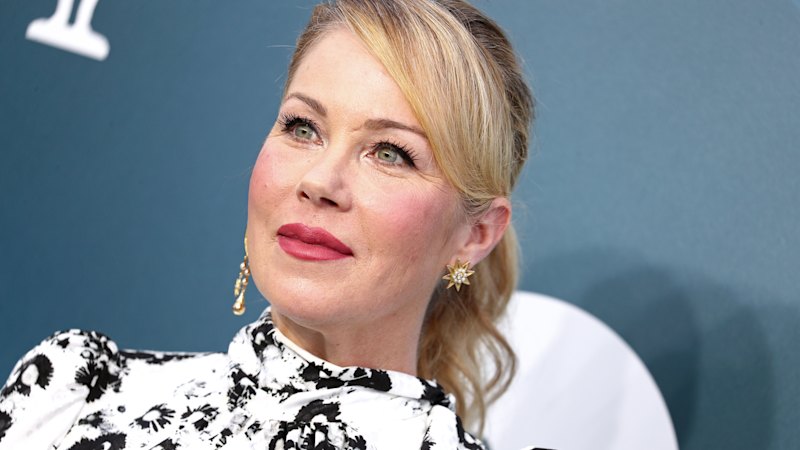
Nicole’s experience of MS and misdiagnosis has been brought into the spotlight, with news on Monday that American actor Christina Applegate was wrongfully diagnosed with the autoimmune condition.
Speaking on the MeSsy podcast, which she co-hosts with Jamie-Lynn Sigler, Applegate revealed her doctor told her she doesn’t have MS, and that she had been misdiagnosed.
“She came into my room, and she said, ‘Congratulations, you don’t have MS’. I was not happy at all, everybody else was so happy, crying.”
The Married With Children actor, 54, was diagnosed with multiple sclerosis in 2021, and since then, has been a fierce advocate for those living with the disease.
But while family and friends received the news with joy, Applegate pointed out she is still ill, and has been left with more questions than answers.
“You don’t get misdiagnosed and suddenly, I’m better. I haven’t gotten better, Jamie, if anything I have gotten worse, so I’m back at square one,” she said.
Unlike Applegate, Nicole’s reaction to her misdiagnosis was less of anger and more of relief, though she acknowledges she might have avoided the years of debilitating dizziness and isolation had she been diagnosed with vertigo to begin with.
MS is a chronic disease in which the body’s immune system attacks the central nerve system, resulting in loss of motor function that can affect walking, hand and arm function, sensation, vision, cognition and memory and cause pain.
While there is no single cause, environmental and genetic factors can contribute to its development. There is no cure, though developments in research and treatment mean long-term outcomes have improved markedly over the past few decades.
Over 37,000 Australians and 3 million people worldwide are living with the disease, according to MS Australia, which affects three times as many women compared to men.
It is the most common acquired chronic neurological disease affecting young adults, with the average age of diagnosis between 20 and 40 years old.
Professor Todd Hardy, a neurologist at the University of Sydney, says MS is challenging to diagnose because there is no single test “that definitively establishes the diagnosis”.
“We bring together the patient’s history, neurological examination, MRI findings and, where appropriate, tests of cerebrospinal fluid and other investigations.”
Symptoms for MS can be incredibly variable and unpredictable, often overlapping with other conditions, says Todd, while “MRI scans can show abnormalities that resemble MS but are actually due to migraine, ageing or small-vessel disease.”
A small study from 2019 found 18 per cent of new MS patients admitted to two US clinics were misdiagnosed.
Another systematic review and meta analysis from 2024 found frequency of misdiagnosis ranged from five to 41 per cent, while underdiagnosis ranged from three to 58 per cent.
Indeed, MS might also be mistaken for something else to begin with.
Geelong author and keynote speaker Justine Martin, 55, has been living with MS for 16 years. But it took eight months for her to receive a diagnosis, with her symptoms (blurry vision, fatigue and impaired cognition) initially dismissed by doctors as migraine.
“Because my mum had MS, that was the first thing I asked [the neurologist],” she says.
“I had my eyes tested and they came back with 20/20 vision. And then I finally got to see another neurologist, and he said, ‘No, it’s just your migraines’. And I kept questioning: ‘But I don’t have the pain like I normally get with a migraine. Why all of a sudden has it changed?’ And they couldn’t tell me. They put me on migraine pills, and I was still getting worse.”
For Martin, a diagnosis – while harrowing – gave her the clarity to move forward with her life.
“When you actually get a label to something that is wrong with you, it makes it easier to get your head around ... when you don’t know what’s happening, when there isn’t that label, that’s where your mind goes to a very dark place.”
[pics of Justine to come 2pm]
While the news of Applegate’s misdiagnosis has left many people living with MS questioning their diagnosis, Hardy says, “the vast majority of patients diagnosed by experienced clinicians following a thorough assessment should have confidence in that diagnosis.”
“Applegate’s experience highlights the importance of getting the diagnosis right, but it does not mean that other people’s diagnoses are necessarily wrong. Anyone with genuine concerns should discuss them with their treating neurologist.”
In September last year, new MS diagnosis guidelines – the updated McDonald Diagnostic Criteria – were introduced in countries including Australia, allowing for earlier and more accurate diagnosis.
How common is misdiagnosis?
Beyond MS, in Australia, around 140,000 cases of diagnostic error occur each year (or one in seven).
Associate professor Julia Harrison, head of medicine at Monash University and a leader of the Improving Diagnosis Symposium, says a good diagnosis is one “that is accurate, timely – so made as early as possible – and communicated with the patient.”
Misdiagnosis may be classed as diagnostic error, or, more commonly, delayed or no diagnosis at all.
Diagnosis is difficult, says Harrison, with tens of thousands of diseases globally.
Things that make a condition harder to diagnose, she says, include if it’s rare, if there’s no test for it, if it progresses rapidly or very slowly and if there are other diseases that mimic it.
“Different people present differently with the same disease. Our bodies are all a bit different,” she adds.
Categories of disease most difficult to diagnose, says Harrison, are cancer, infectious disease and those that affect blood vessels. Autoimmune diseases are another tricky diagnostic category.
Gender bias, as reported by The Sydney Morning Herald and The Age’s series on medical misogyny, can also mean women are disproportionately dismissed, left in pain or misdiagnosed by the healthcare system.
A new University of Cambridge study of 6600 patients, found women with autoimmune diseases are more likely to be diagnosed instead with a psychiatric or psychosomatic condition, compared to men. Researchers also found women were more likely to experience diagnostic delays.
“Women’s symptoms can sometimes be dismissed, attributed to stress or anxiety, or investigated less thoroughly. If that happens, a genuine neurological condition may take longer to diagnose,” says Hardy.
“Conversely, we should not assume that every diagnostic difficulty reflects gender bias, or that women are necessarily more likely to be misdiagnosed with MS.”
What are the effects of misdiagnosis?
The most extreme consequence of a missed diagnosis is death, says Harrison, particularly in cases of rapid progression.
A delayed or missed diagnosis can prolong a patient’s pain and ability to get the treatment they need, affect quality of life and mean an inability to work.
Meanwhile, an incorrect diagnosis can subject patients to unnecessary or harmful medications, and mean emotional energy and time spent at medical appointments.
Hardy describes the consequences of misdiagnosis as “profound”.
“Being told you have MS can fundamentally change how you think about your future … discovering that the diagnosis was wrong can bring enormous relief, but it can also leave people feeling angry, confused and uncertain about their health.”
Harrison stresses the importance of having a trusting relationship with your GP, where one feels listened to, comfortable asking questions, can advocate for themselves and feel part of the process.
“Don’t just assume the doctor’s always right,” she says.
Some helpful questions to ask when diagnosed, according to Harrison, include:
- “How sure are you?” (There’s a lot of uncertainty in medicine, he says)
- “What else could it be?”
- “What’s the worst thing it could be and why aren’t you worried about that?”
- “What should I watch out for?”
- And if things haven’t improved or get worse, even with treatment: “Is this expected? Do we need to reconsider the diagnosis?”
Make the most of your health, relationships, fitness and nutrition with our Live Well newsletter. Get it in your inbox every Monday.
KioskNews shows a cleaned-up reading view extracted from the publisher’s page — the original always lives on their site, not ours.