The 10 Heaviest Movies of the 21st Century, Ranked

Jeremy has more than 2800 published articles on Collider to his name, and has been writing for the site since February 2022. He's an omnivore when it comes to his movie-watching diet, so will gladly watch and write about almost anything, from old Godzilla films to gangster flicks to samurai movies to classic musicals to the French New Wave to the MCU... well, maybe not the Disney+ shows.
His favorite directors include Martin Scorsese, Sergio Leone, Akira Kurosawa, Quentin Tarantino, Werner Herzog, John Woo, Bob Fosse, Fritz Lang, Guillermo del Toro, and Yoji Yamada. He's also very proud of the fact that he's seen every single Nicolas Cage movie released before 2022, even though doing so often felt like a tremendous waste of time. He's plagued by the question of whether or not The Room is genuinely terrible or some kind of accidental masterpiece, and has been for more than 12 years (and a similar number of viewings).
When he's not writing lists - and the occasional feature article - for Collider, he also likes to upload film reviews to his Letterboxd profile (username: Jeremy Urquhart) and Instagram account.
He has achieved his 2025 goal of reading all 13,467 novels written by Stephen King, and plans to spend the next year or two getting through the author's 82,756 short stories and 105,433 novellas.
Sign in to your Collider account
A heavy movie is the opposite of an uplifting or feel-good movie. That’s the best way to explain the term, in case you're unsure for whatever reason. You’ve probably seen movies (or other things) described as heavy, though, and hopefully you're also aware it doesn’t literally mean the weight of, like, the film. Otherwise, it’d probably be Oppenheimer or The Odyssey that are the heaviest, if you're talking about carrying all that literal film.
Well, speaking of Oppenheimer, that’s a thematically heavy film as well, but it’s just missing out below. It could be here, but it’s not, because there might well be all these other titles worth stressing as the heaviest movies of the 21st century so far. One more caveat: the 21st century is considered here as one starting in 2001, rather than 2000, in case you're wondering why any bleak movies from 2000 (like Requiem for a Dream, Dancer in the Dark, and Werckmeister Harmonies) aren’t here.
10 'Amour' (2012)

As you might guess from the title, Amour is about love, but not really the happy or uplifting sort, making it hard to call a romance movie in the conventional sense. Though it is still focused on two people in the final stages of their lives together who do clearly still care for each other, and then difficult decisions ultimately have to be made as health issues worsen and the inevitable approaches.
You could do something like Amour in a sappy or tearjerker sort of way and maybe some people would dig it, but those adjectives have never been applicable to the films of Michael Haneke, so you don’t get anything nice or even slightly sentimental here. It’s not as vicious or violent as some of his more extreme movies, but the upsetting and empty-feeling emotional punch that Amour undoubtedly packs makes it qualify for a well-deserved spot in this ranking.
9 'Bone Tomahawk' (2015)

The level of violence is probably what people will mention first, when the topic of conversation is Bone Tomahawk, and that’s understandable. Hell, that probably should be the first thing that comes up, especially as a potential warning for people who are squeamish, since this goes much further into bloodthirsty territory than most Westerns, and honestly, more so than most horror-heavy Westerns (not that there are tons of those out there, but still).
And it does sound like somewhat standard Western stuff, on the surface, because Bone Tomahawk is about some people being captured, and then an expedition of sorts to try and recover those people. It’s where it eventually ends up that’s super grisly, but it also happens late enough in the picture that it’s kind of a spoiler to detail how and why it gets violent. You just have to trust that it does, and also trust that there are things here that might be better left unseen.
8 'All Quiet on the Western Front' (2022)
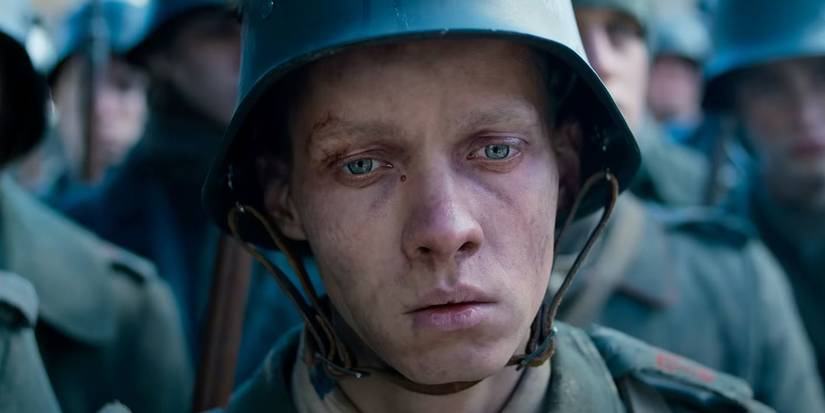
Coming out almost a century on from the first film adaptation of All Quiet on the Western Front, and being made more than a century on from World War I, All Quiet on the Western Front (2022) has the same story as the novel of the same name and that previous adaptation, but it does get a good deal more brutal. It’s the quintessential anti-war story, but the level of violence and intensity here is more accurate to how warfare would've been for those unfortunate enough to get swept up in and brutalized by the First World War.
And there are some narrative changes that make this version of All Quiet on the Western Front even more upsetting dramatically, so it’s not just the grittier combat scenes here that make this a more difficult watch than that previous film adaptation. What you're left with is a straightforward but undeniably effective anti-war movie, and yes, it’s the kind of anti-war movie you’ve seen before, but such films should probably continue to get made for as long as war (just broadly speaking) remains a thing.
7 'Hereditary' (2018)

You could take all the horror out of Hereditary and it would still be uncompromisingly grim as a family drama about some very relatable and honestly mundane things, so that it’s very upsetting as a psychological horror movie is just icing on the cake. Or think of something more negative than a cake, and then something more negative than that thing which can be put on top of the already negative thing, and then that’d be an admittedly better metaphor.
It’s also a difficult movie to summarize without giving away everything, so to keep things broad, Hereditary is about a family with a dark past, and then it turns out their present is also pretty bleak, and things about the past ultimately worsen the struggles of the present. It’s a nightmare of a film, and one where you can both recommend it highly to any horror fan, though with the further recommendation that they should probably only watch it the one time, since a second viewing could well be just too much.
6 'Blue Valentine' (2010)

One of the worst romance movies to watch on any given actual Valentine’s Day, Blue Valentine is even more downbeat than the aforementioned Amour, since it’s all about two younger people falling out of love, rather than two older people in the final stage of their time together because of age. It’s definitely realistic to an uncomfortable extent how Blue Valentine explores this, and then further how it shows everything initially disintegrating and then basically imploding.
You might think that there’d be some relief from recognizing Ryan Gosling and Michelle Williams, reminding yourself that they're very well-known actors and all, therefore just playing roles here, but they disappear into those roles remarkably well, so it’s actually easy to forget you're watching actors be directed here. It’s a downer all the way through, in a way that’s impressive and yet also extremely hard to watch/enjoy.
5 'Antichrist' (2009)

Antichrist kicks off with about as depressing a scene as one can imagine at the start of a horror/drama film about grief; think Midsommar and its opening scene, for a more recent and well-known movie. And then it shifts into being about unpacking that grief, with two characters going off and isolating themselves as a way apparently to recover, but nothing really goes to plan.
There are fewer characters here than in Midsommar, but it goes to stranger territory, arguably, to the point where calling Antichrist just a horror/drama movie ends up being a bit misleading. It’s Lars von Trier doing his thing, and while the jury’s out on whether Antichrist is well and truly his most upsetting, it’s definitely up there, and it scores extra points (for better or worse) for present purposes owing to how intense and grisly it is; even more so than the majority of von Trier’s other emotional and grim films, that’s for sure.
4 'Martyrs' (2008)

Before it transitions into horror, Martyrs feels like something of a thriller, specifically of the home invasion variety, with it being about revenge initially and carrying out some extreme violence in, you know, a home. But that’s just a small part of it, and it’s also not as grisly as Martyrs later becomes, with the horror component of this being intentionally disarming in a way that doesn’t feel right to detail, even with the film coming up on two decades old.
Then again, ruining it could de-incentivize watching it, and it’s one of those movies that’s traumatic enough you can imagine 99% of people out there probably not liking it. If you're well-versed in upsetting horror movies, and are somewhat braced for something shocking, maybe Martyrs is worth exploring, since it’s definitely interesting and the ways it horrifies are uniquely unsettling. It is also just a lot, and the kind of thing where even if multiple watches would further one’s understanding and appreciation for the film, one watch already feels like more than enough.
3 'Blonde' (2022)
There is a risk with calling a movie that’s just a few years old one of the heaviest of the century so far, or there would be a risk with that if the movie wasn’t as upsetting as Blonde. This one is about Marilyn Monroe, or kind of, since it’s not really a biographical film, and instead uses aspects of her life to tell a broader – and very critical – story about Hollywood and the very intensely dark side of fame.
And Blonde deals with exploitation and unapologetically depicts some scenes of immense cruelty, which has rubbed some people the wrong way, given Monroe was a real person. But this film does get horrific for good reason, and there is a sympathetic look at Marilyn Monroe here even with all the darkness. The novel Blonde was based on was upfront about not being strictly historical, and this adaptation (an accurate one to a truly underappreciated extent) deserves to be judged and viewed the same way.
2 'The Nightingale' (2018)

It’s kind of surprising that The Nightingale was able to show what it did while retaining an R rating, but it could be the historical context, maybe? Like, compared to Bone Tomahawk, which is another uncompromising and violent Western, and admittedly a gorier one. But it’s the intensity and context of some of the violence in The Nightingale that’s very upsetting, ultimately kicking off a very downbeat cycle of revenge in 1820s Australia.
So, it’s also an unconventional Western in that sense, but it basically makes The Proposition (another gritty Australian Western from the 21st century) look PG-13-rated in comparison. The Nightingale does have good reason for being as full-on as it is, yet it’s still a whole lot to grapple with, so even if the movie’s quite good, it’s also very difficult to work out who you can actually potentially recommend it to.
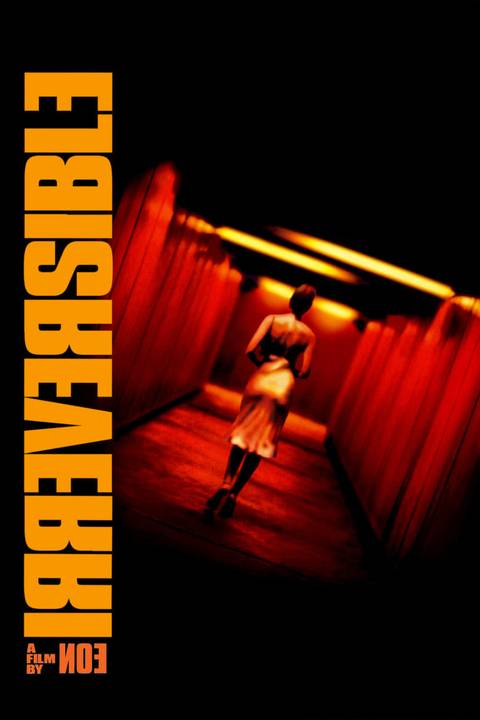
1 'Irreversible' (2002)

Easily one of the bleakest movies about revenge ever made, to an even greater extent than the just-mentioned The Nightingale, Irreversible plays out in non-chronological order in a way that makes everything more impactful, because you're confused at first, then you realize what’s going on, and then you're left with scenes of people being happy and relatively carefree while unaware of the horrors that await them. All the horrors you’ve already seen, in other words.
It’s hopeless in that way, and sobering to think about a direct series of events in this order, with it inspiring a certain level of fear about the unpredictability of life and the way it can all be upended and ruined so suddenly, and for seemingly no reason. Irreversible makes the comparatively nice scenes depressing because of that structure it employs, so it’s misery all the way down, or all the way up, or, most accurately, all the way through. It is unforgettable and entirely un-recommendable in equal measure.
Irréversible
- Release Date
- March 7, 2003
- Runtime
- 94 minutes
- Director
- Gaspar Noé
- Writers
- Gaspar Noé
KioskNews shows a cleaned-up reading view extracted from the publisher’s page — the original always lives on their site, not ours.