Salt Lake Stadium: India’s grand football theatre
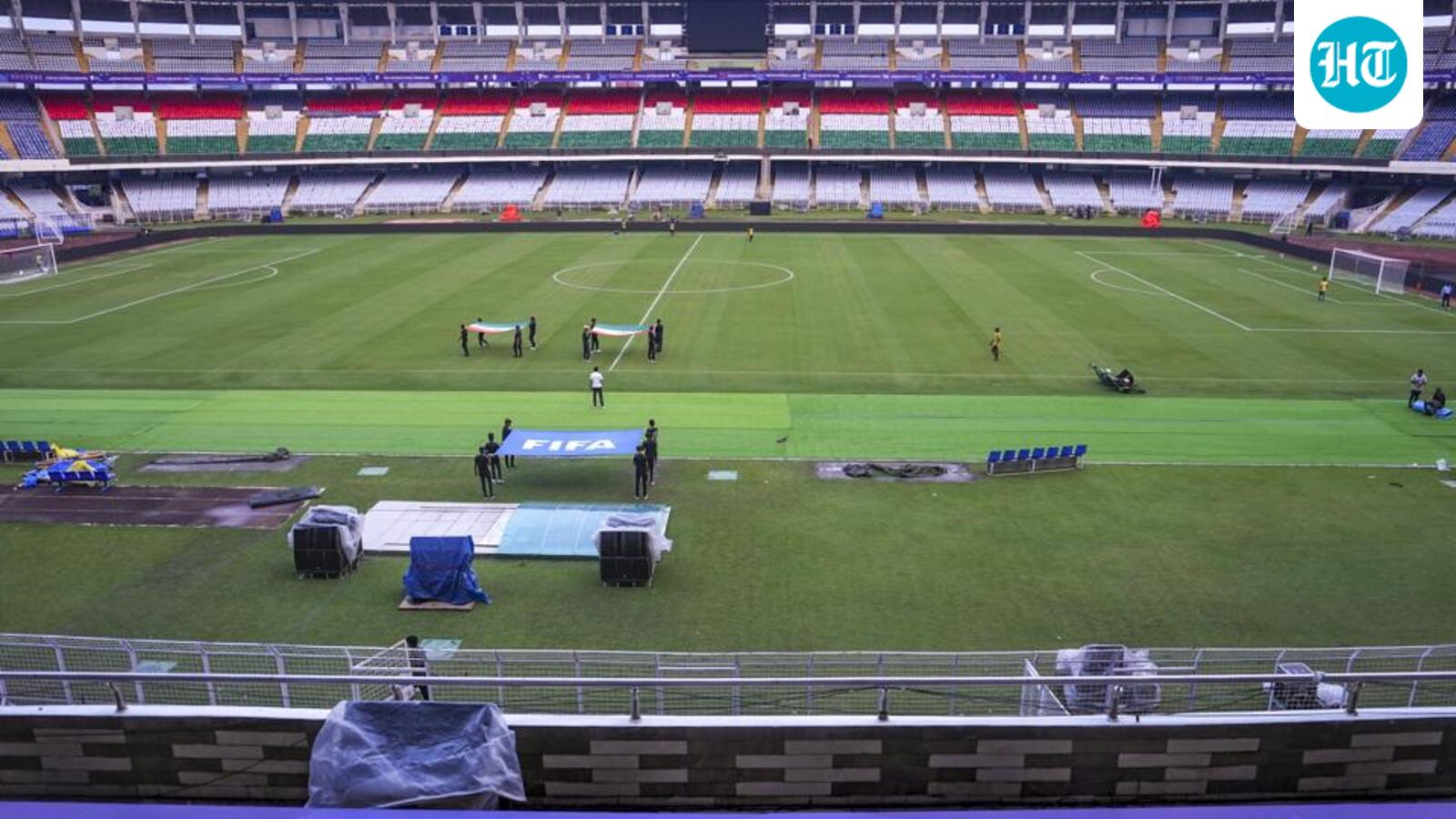
Kolkata: There are football stadiums that belong to clubs, franchises, and sometimes to a city. And then there is Salt Lake Stadium. For more than four decades, this cauldron has been the place where India’s football has met some of the finest of the world.
On Saturday, Brazil will walk out for the first time to play India. Three days later, it will be Uruguay. For a country restricted to watching the best of world football only on their screens, the sight of Brazil and Uruguay playing ball against India in our backyard seems surreal. For Salt Lake, it is probably the most illustrious entry in an already remarkable ledger.
The stadium opened in January 1984 with the Nehru Gold Cup, conceived on a scale that now seems almost fantastical—120,000 spectators—making it for years one of the largest football arenas in the world. FIFA records that its official attendance record came in 1997, when 131,000 people packed in for the derby between East Bengal and Mohun Bagan.
There is a larger context beyond the numbers though. Salt Lake became the stage from where India’s football ambition was broadcast to the wider world. The stadium hosted World Cup qualifying football, the South Asian Games, Super Soccer tournaments and international competitions involving teams from Europe, Asia and the Americas. It became the natural home for the city’s clubs and, increasingly, for the national team, as well as a pit stop for the occasional international.
The stars have flocked too. Pele, for instance, came with New York Cosmos to play at Eden Gardens in 1977, seven years before big ticket football shifted to Salt Lake. The pilgrimage to Kolkata had begun much before, the stadium just inherited it.
Serbia and Bosnia played each other, and their first international, after the Balkan War at Salt Lake Stadium.
Diego Maradona made his way to Salt Lake in December 2008. He didn’t play a match there. Still, he showed a glimpse of his magic for a few minutes, juggling a football before a crowd intoxicated simply by his presence. The image was unmistakably Kolkata: the world’s most famous footballers could arrive as visitors, but the city treated their proximity to a ball as an event in itself.
A few months earlier, the stadium had witnessed something more substantial. On 27 May 2008, Bayern Munich brought a star-studded side to Kolkata to face Mohun Bagan. Oliver Kahn, the German football great, was playing his final match for Bayern. Ze Roberto, Mark van Bommel and others were in the visiting team. Bayern won 3-0, but the result became incidental when Kahn left the field in the 55th minute to an enormous ovation. Bayern’s own account describes it as the goalkeeper’s farewell from active football, aptly in front of a reported 120,000 strong crowd.
Then came Lionel Messi, on September 2, 2011, when Argentina, with their talisman taking over as captain, played Venezuela at Salt Lake in a friendly. Six years later, the venue acquired another distinction when it hosted the final of the 2017 U-17 World Cup, the first FIFA tournament staged in India. England came from two goals down to beat Spain 5-2 in front of 66,684 spectators, with Brazil also playing the third-place match here.
For once, Kolkata was not merely importing football, it was hosting a genuine global event. And yet the most revealing thing about Salt Lake may be that it has survived all the reinventions of Indian football.
The stadium has shrunk, physically and metaphorically. Old terraces have welcomed seats. Hospitality boxes have come up. The capacity too has fallen from the vast 120,000 of its early years. It was renovated for the U-17 World Cup. The playing surface changed from natural turf to artificial, before it reverted to natural grass in 2016. Its name too has officially become Vivekananda Yuba Bharati Krirangan. Along with all this has the football economy changed around it. From state tournaments and club derbies of the IFA Shield, it started hosting National Football League, I-League, ISL and FIFA events.
Its permanence is what makes the Brazil and Uruguay fixtures feel so significant. Brazil’s senior team has never played a match in India, Uruguay’s last encounter with India in Kolkata was in the 1982 Nehru Gold Cup, before Salt Lake existed. Now with both nations playing at the amphitheatre, this feels like another housewarming.
It’s ironic because Salt Lake Stadium was built at a time when Indian football dreamt of becoming part of the international conversation, one that still is far from finished. India is tailing even the mid-tier football nations, but throughout that time the stadium kept opening its gates, allowing Kolkata to witness generations of footballers in action. It doesn’t promise an Indian football arrival, but rather keeps a place ready when that dawn breaks.
KioskNews shows a cleaned-up reading view extracted from the publisher’s page — the original always lives on their site, not ours.