Nvidia optimistic despite AI anxieties
SAFEGUARDING AI: Nvidia CEO Jensen Huang maintained a bullish stance despite concerns about artificial intelligence safety and growing calls for an industry slowdown
Nvidia Corp chief executive officer Jensen Huang (黃仁勳) expects to sell twice as many chips in the coming year, fueled by the spread of artificial intelligence (AI) across different industries.
AI is of great benefit to a variety of sectors, Huang told reporters on the sidelines of an event convened by King Charles III in Scotland on Thursday. Nvidia is the top seller of AI accelerators, chips used to develop and run AI models.
Huang is maintaining his bullish stance at a time when concerns are growing about AI. Industry leaders have discussed slowing down development of the technology over fears that it might be potentially dangerous. Huang said that companies need to take responsibility and make sure their AI software and services are safe before releasing them.
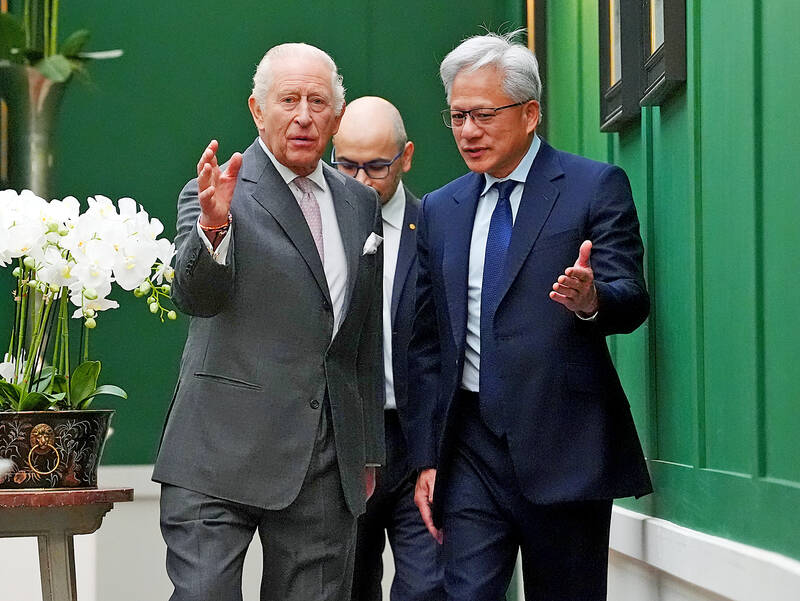
King Charles III, left, walks with Nvidia chief executive officer Jensen Huang, right, and Sir Demis Hassabis to a meeting of leaders from the artificial intelligence sector, government and thought leaders at Dumfries House in Cumnock, Scotland, on Thursday.
Photo: AP
Last month, Nvidia projected sales growth of 70 percent in its next fiscal year. It said at the time that revenue could double if the company had enough supply to meet surging demand.
King Charles III convened technology leaders and other influential figures for a summit focused on the mounting risks of AI, a topic that has captivated the globe this week. While the executives there did not publicly commit to any changes, some addressed the safety concerns directly.
“Those of us building AI must test systems rigorously,” Huang said in brief remarks at the royal event on Thursday. “When a product is not safe enough, we should hold it back.”
Joining Huang in Scotland were OpenAI’s chief financial officer Sarah Friar and Google DeepMind cofounder Demis Hassabis. Anthropic PBC public affairs chief Tino Cuellar also joined the AI forum at Dumfries House, along with leaders from other technology companies, nonprofits and educational institutions, including Beijing’s Tsinghua University.
“Those in our world who value our humanity and its vital moral component are anxiously seeking your reassurance that we will not lose control of our destiny,” the King said in his opening remarks. The gathering was designed to discuss how the technology could be “harnessed in ways to benefit society and the natural world,” Buckingham Palace said in a statement.
The event is timely. Anthropic CEO Dario Amodei triggered a global debate about the escalating risks of AI in a weekend essay calling for a slowdown in frontier model development. OpenAI CEO Sam Altman agreed with the essay’s conclusions, while Hassabis described it as the “right path forward.” Meanwhile, Nvidia’s Huang disagreed with a slowdown or further regulation. Over the past week, two AI researchers quit Google DeepMind and Anthropic, claiming that the technology could be lethal.
Those concerns have caused jitters among lawmakers and the wider public internationally.
At the summit, King Charles posed two key questions: “First, how can we harness the benefits of AI, with safety at its heart. And, second, how can we build international cooperation and consensus to achieve this, so no nation is left behind — and the future of mankind protected?”
KioskNews shows a cleaned-up reading view extracted from the publisher’s page — the original always lives on their site, not ours.