War on Earth could spill over to the moon, Chinese space scientists warn
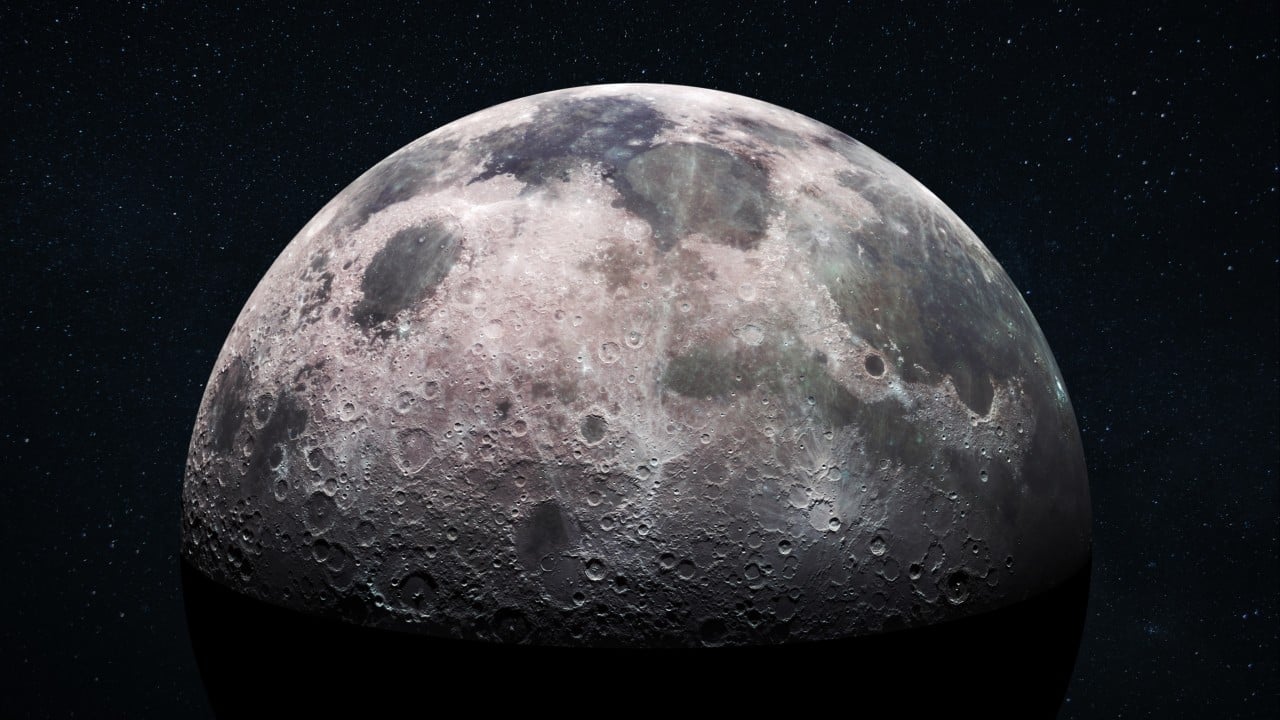
In a rare study, Chinese aerospace researchers have explored how a war could one day spill into the vast space between the Earth and the moon, with rival spacecraft chasing and evading each other, trying to slip past defences and even blocking strategic routes.
Spacecraft could hide in the complex gravitational environment around the moon, where their trajectories are difficult to predict, before emerging and moving towards targets closer to Earth when needed, according to a team from the Northwestern Polytechnical University in Xian.
The craft could also be stationed near “choke points” – regions where important or fuel-efficient routes converge – ready to intercept rivals and potentially force them to break through or take less efficient routes, the researchers wrote in the Chinese-language Journal of Command and Control in July.
Such capabilities could have an impact without an actual confrontation, they argued.
“Without directly using force, [a country could] compel an adversary to change its route, delay a mission, give up a launch window or incur higher costs,” said Dang Zhaohui, the report’s lead author and an associate professor at Northwestern Polytechnical University’s school of astronautics.
“What is at stake in cislunar orbital competition is not any single spacecraft, orbit or route, but the ability to access, control and use space – and to deter adversaries – that they provide.”
Cislunar space is the vast region where the gravity of both the Earth and the moon shapes how spacecraft move. Compared with satellites orbiting relatively close to Earth, vehicles there can follow far more complex paths under the pull of both bodies.
KioskNews shows a cleaned-up reading view extracted from the publisher’s page — the original always lives on their site, not ours.