Spy or not, Alice Huang was a useful pawn
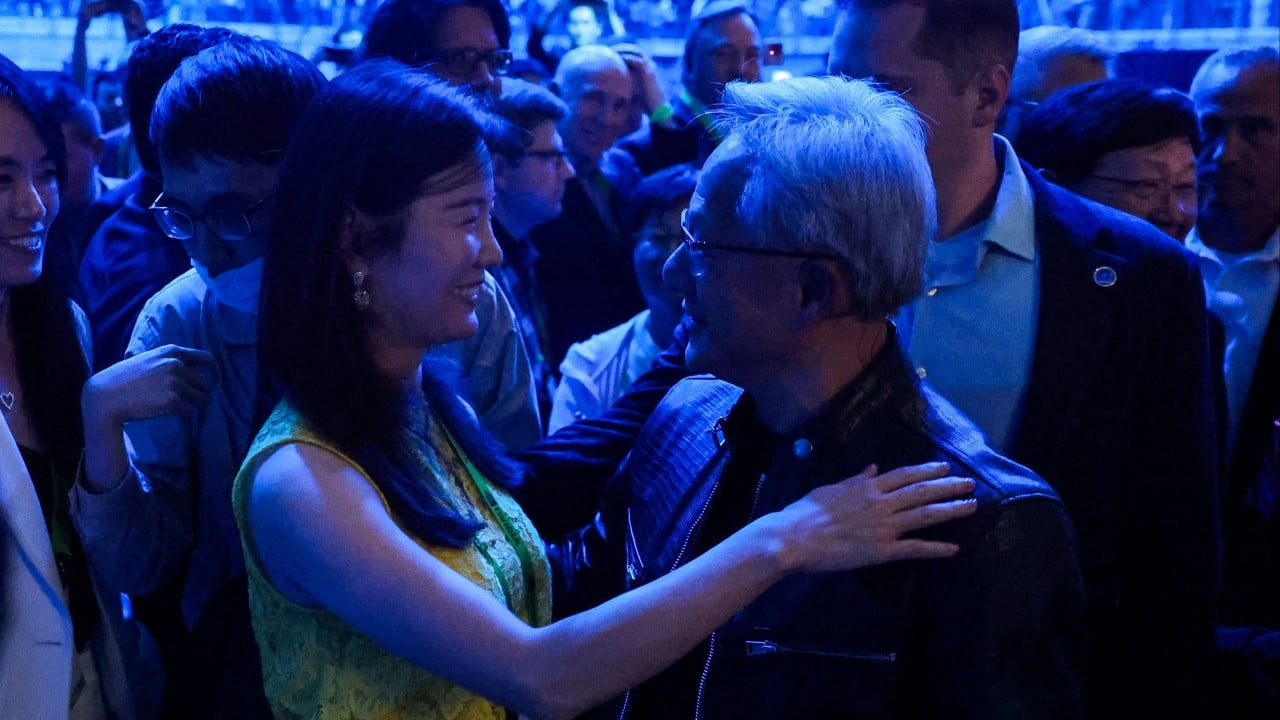
She might not be a spy after all, but she could have been. That, apparently, is US intelligence’s current assessment of Alice Huang, the microchip siren blamed for bringing down AI titan Jensen Huang.
“The US intelligence community is still working to understand the relationship between a Chinese businesswoman who had an affair with [then] Nvidia CEO Jensen Huang and the Chinese government,” CNN reported, citing multiple sources.
“The intelligence collected on her to date,” it said, “does not prove she was acting as a spy for Beijing.” US officials also disagree about how strong the evidence is that China’s Ministry of State Security recruited her to spy on Jensen Huang and, by extension, on US policymakers.
Now they tell us. How convenient!
Even The New York Times, which broke the story, appears to be backtracking a little. The unknowns around Huang, it said, have prompted questions about “what it means to be a spy and given backers of Mr Huang an opening to raise questions about the extent and nature of her role”.
What does it mean to be a Chinese spy? The Times reporters are getting positively philosophical. No wonder conspiracy theories about nefarious forces out to bring down Jensen Huang are spreading like wildfire online. Some now sound almost credible.
05:21
The rise and fall of Jensen Huang, who has resigned as Nvidia’s CEO
We will probably never know what really happened. But we can at least apply the old Latin test of cui bono: who benefits?
Consider what Huang stood for. His ousting removes a singular voice that helped moderate the US-China rivalry over AI. He supported open-source models and defended “distillation” as common industry practice rather than intellectual property theft. He argued for giving China greater access to advanced US chips, on the basis that “addiction” to them would slow China’s own chip development and make its AI-related industry dependent on American tech.
Without that bridge with Huang, the artificial intelligence (AI) divide between the two rival superpowers is likely to deepen. The espionage allegations hand China hawks in Washington an excuse to press the Trump administration for tougher curbs. Just ahead of US-China AI safety talks, cooperation now looks hopeless.
Congress plans to pass tighter AI chip export rules. And the US Commerce Department is preparing to add seven countries – including Singapore, Malaysia and Thailand – to the list requiring export licences for advanced AI chips. Small wonder Chinese AI stocks fell on Huang’s resignation.
The impact of the Jensen Huang saga on the global tech market
US start-ups and developers who rely on cheap, customisable open Chinese models could end up being forced to buy expensive tools monopolised by Silicon Valley giants.
Anthropic, OpenAI and Google have accused Chinese firms of unfairly copying their technology. One method is distillation, in which a “student” model is trained to replicate the outputs of a “teacher” model. It also means using a model to extract vast data from a source such as a newspaper’s digital archive or a publisher’s library, without paying for copyright. Yet all the AI giants in the US have practised distillation themselves and some have reached out-of-court settlements with IP holders affected.
SCMP Plus is a new premium news platform that gives you an
all-inclusive edge to stay ahead on China news.
To access our exclusive content you’ll need to subscribe.
Already a subscriber?
LOG IN
Meanwhile, China hawks in Washington and congressional Republicans are blasting the Trump administration for being too soft on Beijing over AI and chip exports. A row within the White House surfaced when Treasury Secretary Scott Bessent blamed the Commerce Department for failing to restrict Megaspeed, the Singapore-based firm at the centre of the alleged scandal.
Critics say lax oversight let restricted chips reach Chinese buyers through intermediaries such as Megaspeed, whose Nvidia purchases are in the billions of dollars. John Moolenaar, the hardline Republican chair of the House Select Committee on China, argues that advanced chips aid Beijing’s military and surveillance systems. The disputes complicate Trump’s diplomacy with China and renew scrutiny of past conditional chip sales.
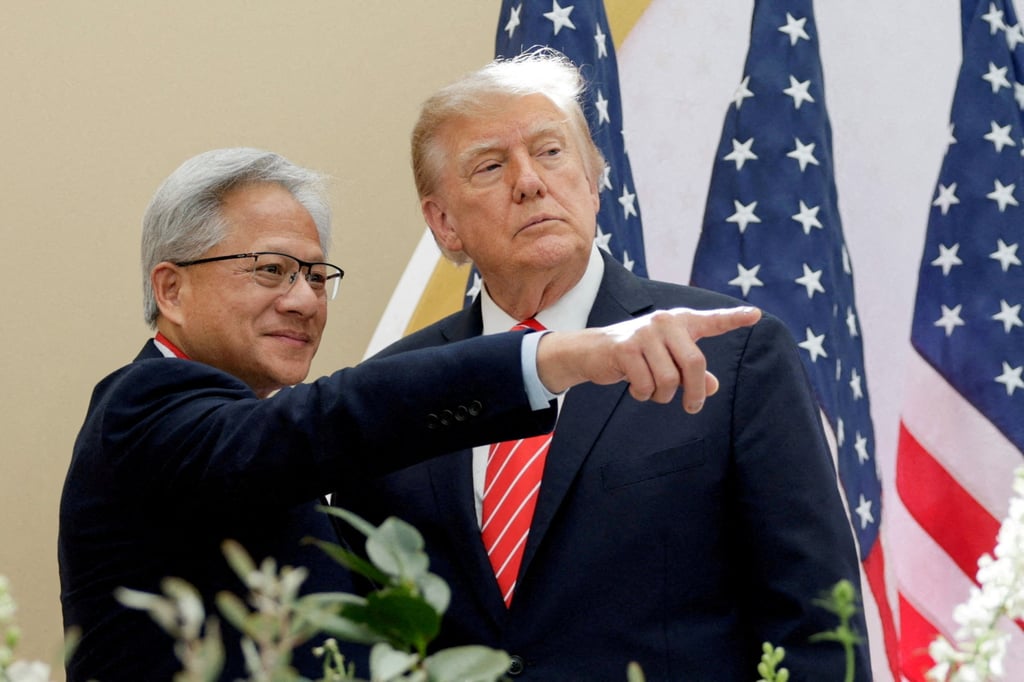
Anthropic and OpenAI, for their part, have opposed open-source models, preferring to charge a premium for their own proprietary ones. So Huang stood against the political and commercial agendas of both the Washington and Silicon Valley establishments.
The two Huangs might have been the victims of infighting within the US government. But perhaps whether Alice Huang was a spy is moot, and not only because Jensen Huang has been neutralised. After all, every Chinese citizen is a potential spy.
That is what the CNN report says: “Under Chinese national security law, Chinese citizens can be compelled to help gather intelligence on behalf of the Chinese Communist Party. Even if she had not done so yet, given her access to Huang – and by extension, to Trump – some officials believe she posed a clear counter-intelligence risk.”
Guilty for being Chinese? That seems to be how Washington operates these days.
KioskNews shows a cleaned-up reading view extracted from the publisher’s page — the original always lives on their site, not ours.