Indian IT giants radically reduced green card applications even before US crackdown, data shows
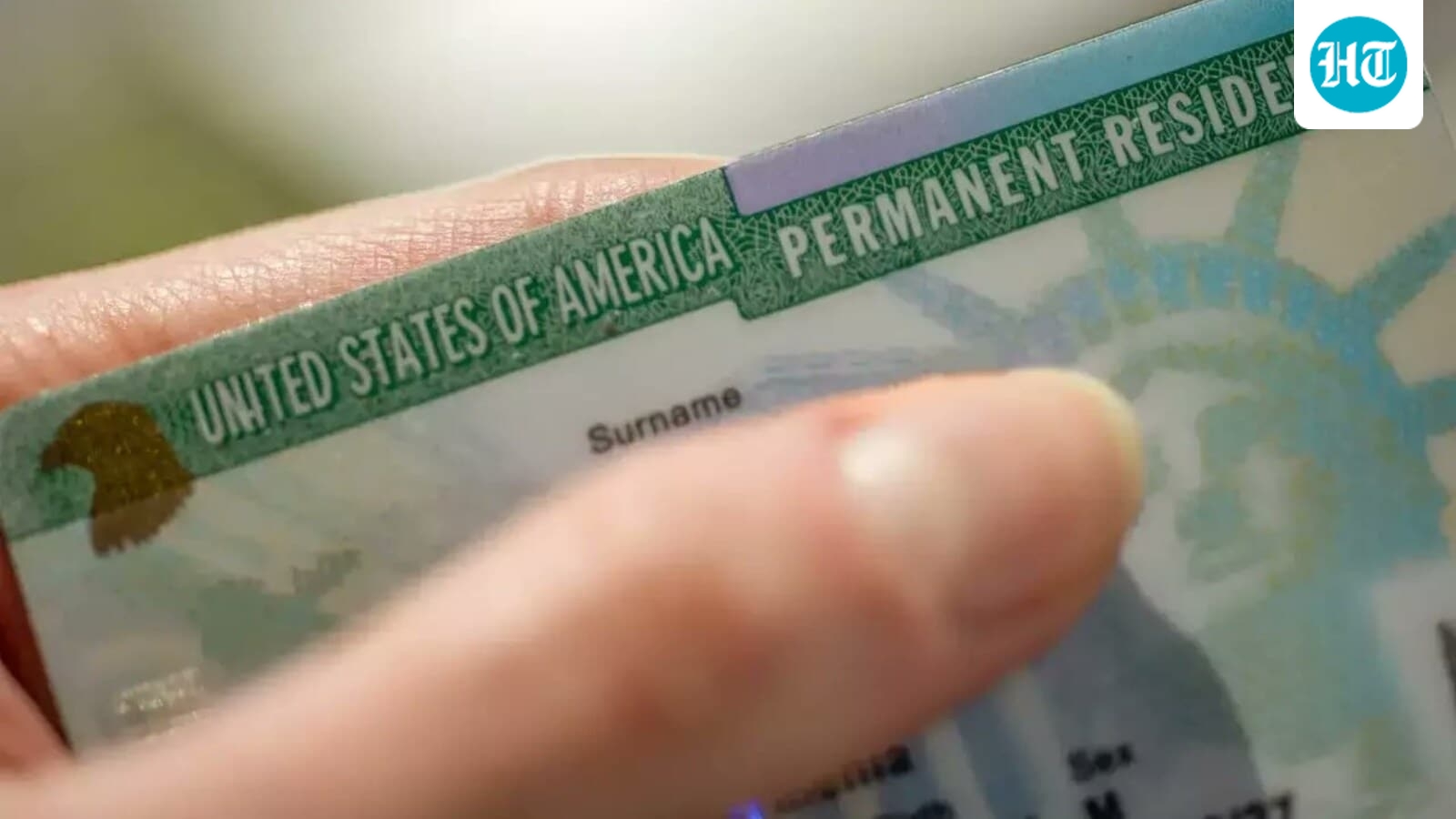
On Thursday, the US government justified its decision to suspend eight technology companies - including Indian IT giants TCS, HCL, Infosys and Wipro - from a green card labour certification program on the grounds that granting permanent residence to foreign workers on H-1Bs was undercutting American workers.
However, an HT analysis of US immigration finds that the four Indian IT giants that were suspended have radically reduced PERM labour certification applications since FY 2024, which is typically the first step in applying for employment-based green cards.
For example, Tata Consultancy Services received just two PERM approvals in 2026, down from 1,804 in FY2024 - a 99.8% decrease in two years. According to the website PermTrack, both approvals received by TCS as of 30 June 2026 were for applications submitted in 2024.
The reduced number of approvals aligns with the firm’s assertion on Thursday that it had radically cut its use of green cards for foreign workers.
"As we had announced earlier, we intend to hire an additional 15,000 people in the US over the next five years, to further augment our local workforce. Our PERM applications were in single digits in the last two years, and hence we do not expect the suspension of the program to impact our workforce strategy and customer engagements," TCS said in a statement.
Similarly, Wipro has received no PERM approvals in 2026, after receiving 506 approvals in FY2025. Its last approvals were received in April 2025 for applications made back in 2023. Infosys received no approvals in FY 2025 and 2026 and last received approvals in 2024, when 87 applications were given the green light. HCL America Inc. and HCL America Solutions received only 66 approvals as of 30 June 2026, down from 350 in FY 2025.
Cognizant - which was founded in India in 1994 and is now headquartered in the US - was also suspended from the green card labour certification program on Thursday. Cognizant also received no PERM approvals in FY 2025 and 2026, down from 1,235 in FY 2024.
Indian software body points to the trend
Indian software body NASSCOM also pointed to the trend, arguing that tech companies were transitioning only a limited number of employees from H-1 B visas to green cards through the PERM process.
“However, over a number of years, Indian technology companies have significantly reduced their dependence on H-1B visas, while steadily expanding local hiring and building a strong domestic workforce in the U.S. They work with the majority of the US Fortune 500 companies, enable them to innovate and grow, and generate more local jobs. Consequently, the number of employees transitioning from H-1B visas to permanent residency through the PERM process is also relatively limited,” the industry group said in a statement on Thursday.
What is PREM certification?
US employers must complete the PERM certification process before sponsoring a foreign worker for an employment-based green card. Under this process, the US Department of Labour sets a prevailing wage that the job must pay, following which the sponsoring firm must advertise domestically for interested applicants to fill the job.
If no qualified American workers are found, the firm can apply to the Department of Labour for a PERM certification. If approved, the company can move ahead with a green card petition for the foreign worker.
Immigration lawyers pointed out that tech firms operating in the United States had made a conscious shift in their business models, anticipating a number of restrictive immigration changes.
“They have been preparing for this for quite some time. They're already hiring a lot of American workers. Nobody is interested in going and spending $100,000 on H-1B petitions and more on green cards if they can avoid it. The companies are not in the business of just randomly spending money and supporting foreign workers. That's not what their objective is,” says Ellen Freeman, an immigration attorney.
KioskNews shows a cleaned-up reading view extracted from the publisher’s page — the original always lives on their site, not ours.