‘America’s favourite mystery’ and the paper trail everyone can now see
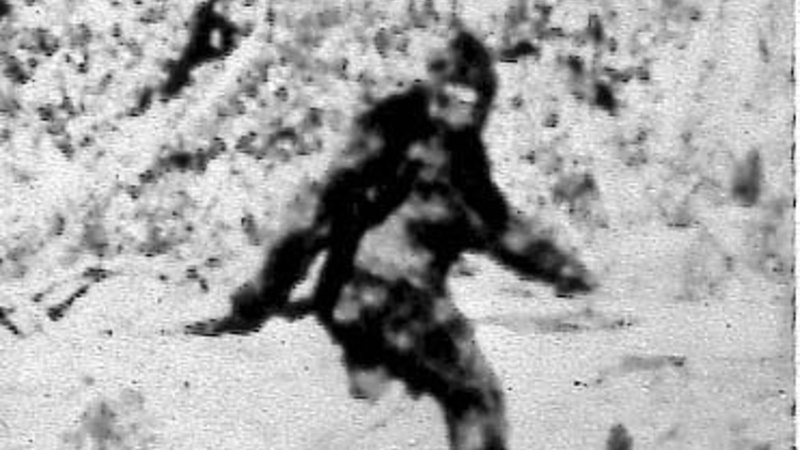
Brooklyn: Many have tried – and failed – to confirm that Bigfoot, the folkloric ape-like giant who is said to roam North America, is real. There have been reports of near misses, giant footprints and unexplained figures dotting the woods. But despite all efforts, the hairy biped has largely remained the stuff of campfire stories.
Last month, the US government published records that some believers said bolstered the efforts to verify the creature’s existence.
The US Forest Service has released a small set of documents pertaining to Bigfoot, who is also known as Sasquatch in some Indigenous legends.
The documents included a 23-year-old newspaper article about mysterious tracks found in Montana, an Agriculture Department track report from Umatilla National Forest in Oregon from 1982, and a recounting of another track sighting in Montana in the 1940s.
The agency did not immediately respond to a request for comment.
“If the tracks were faked, someone went to a great deal of trouble and detail,” a researcher, Rodney Johnson, wrote in the agriculture report, describing photos of large tracks he concluded had been “made by something other than a 300-pound-plus, two-footed being”.
For some, the content was not revelatory.
David Daegling is an anthropology professor at the University of Florida and author of a 2004 book about Bigfoot’s legacy in the US. “The file drop is not groundbreaking in the least,” he said in an email, describing the documents as “standard Bigfoot fare”.
Part of Bigfoot’s enduring mythos was that its qualities were amorphous, Daegling wrote in a 2019 article. Bigfoot is generally accepted as being “big, hairy and bipedal”, but beyond that, its characteristics are up for debate.
“Bigfoot’s ambiguity enables it to stay relevant,” he wrote. “It serves us well as a monster when we need that escape, and it just as easily can stand in for an imperturbable guardian of the wilderness.”
Still, for those in the Bigfoot community, even the existence of the government-issued documents can feel like a legitimisation.
These are not the first documents the Trump administration has released that are related to unexplained sightings.
This year, the Pentagon released records pertaining to UFOs, or “unidentified anomalous phenomena” as they are called officially. One document detailed a mysterious potato-esque object seen in the Colorado skies. (The government has suggested it was a trick of the light scattering off the snowy ground, causing an optical illusion.)
Rick Foss, a board member of the North American Wood Ape Conservancy, a volunteer group devoted to the search for Bigfoot, was heartened by the new documents, which he said echoed the experiences and encounters of many of the conservancy’s members.
“This is something that hundreds and thousands of people have documented all throughout the country and the world, but we don’t hear about it from official sources,” said Foss, who lives in Florence, Arizona. “It was nice to see it in a positive or a neutral light. It wasn’t being made fun of.”
His curiosity about Bigfoot was piqued as a child after watching The Legend of Boggy Creek, a docudrama about a large, hairy creature said to roam the swamps of Arkansas.
Foss, who is a counsellor with a doctorate in forensic psychology, said he had never had a Bigfoot sighting but believed he had experienced a few close encounters. Those included hearing unidentifiable noises in the woods and hearing something slapping the side of his cabin in the early morning.
Bigfoot is never far from the cultural conversation in the US.
Marq Evans, director of the 2026 documentary Capturing Bigfoot, said the existence or otherwise of the creature was “America’s favourite mystery”. In his film, Evans revealed that the most famed Bigfoot footage, the 1967 Patterson-Gimlin film, appeared to have been an effective hoax. Believers and deniers alike have pored over that clip for years.
There were a few reasons people continued to get hooked on the hunt for Bigfoot, Evans said.
There was the thrill of the unknown and a hunger for mystery “in a world that is mapped out and where we know almost everything”, he said. He also attributed the perpetual search to “frontier nostalgia” and the human desire to explore. Also, roaming the woods with friends was not a bad way to spend a day, he said with a laugh.
Jeremiah Byron, host of podcast Bigfoot Society, said the documents had made him hopeful that there would be more to come.
“They’re not saying Bigfoot is real, but they’re releasing documents that have to do with Bigfoot,” said Byron, 43, who lives in central Iowa. “But this stuff is getting put out there by the government. What is going to come down the line next?”
This article originally appeared in The New York Times.
Get a note directly from our foreign correspondents on what’s making headlines around the world. Sign up for our weekly What in the World newsletter.
KioskNews shows a cleaned-up reading view extracted from the publisher’s page — the original always lives on their site, not ours.