Hong Kong evolving into Beijing’s offshore interface rather than a shrinking hub: study
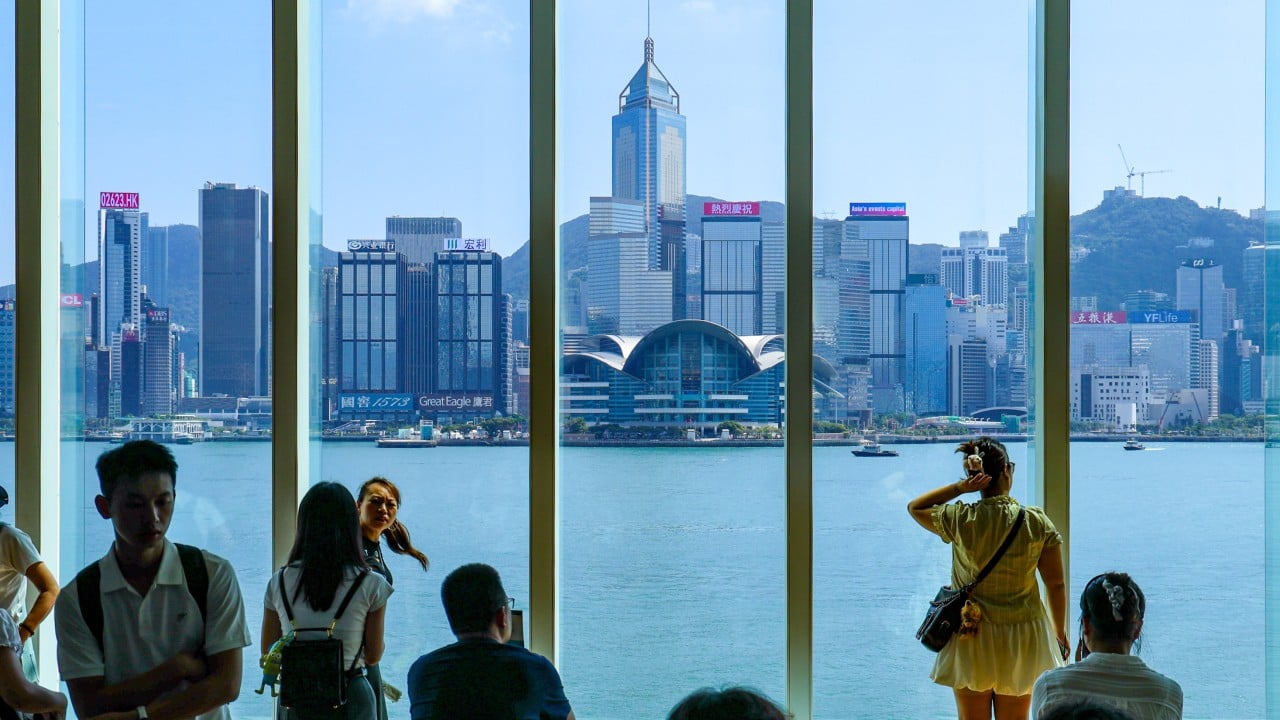
Hong Kong is pivoting to an offshore hub of Beijing’s tightly controlled financial framework, according to a report that examines the city’s evolving role under China’s national development strategy.
The study, published this week by Enodo Economics and the Asia Society Policy Institute’s Centre for China Analysis, challenges years of Western commentary portraying Hong Kong as a diminished international financial centre following years of political upheaval.
“Beijing is not simply managing the erosion of a Western-style financial centre,” wrote Diana Choyleva, founder of Enodo Economics.
“It is repurposing Hong Kong into the offshore financial platform of a still-controlled Chinese system,” allowing Beijing to capture “many of the benefits of financial openness without surrendering sovereign control over its capital account”, Choyleva said.
She described the model as “financialisation with Chinese characteristics”, a middle path between liberalisation and financial repression. Under this architecture, Hong Kong performed four core offshore functions for Beijing: savings, credit, equity and settlement.
While the report acknowledged that Hong Kong’s political autonomy had narrowed since Beijing imposed the national security law in 2020, it argued that authorities accelerated their plans for the financial centre after the legislation “resolved Hong Kong’s political uncertainty”.
Mainland investors, for example, could buy Hong Kong shares through the southbound Stock Connect without receiving unrestricted access to the Hong Kong dollar, the report said. Daily turnover through the channel averaged about HK$121.1 billion (US$15.4 billion) in 2025, it added.
The report also cited Hong Kong’s global rankings, initial public offering (IPO) activity and wealth management business as evidence against “a story of terminal decline”.
Hong Kong ranked third in the latest Global Financial Centres Index, one point ahead of Singapore. It overtook Switzerland in 2025 to become the world’s largest cross-border wealth management hub, with US$2.95 trillion in booked assets, according to a Boston Consulting Group report in May.
The city also raised HK$388 billion in IPOs in the first nine months of 2026 and ranked second globally in the first half of the year, behind only Nasdaq, according to a KPMG report. Mainland Chinese issuers made up 98.5 per cent of first-half proceeds.
Choyleva said the strongest momentum was concentrated in businesses linked to mainland Chinese clients and issuers, yuan services and cross-border wealth management.
“Hong Kong is therefore proving itself more clearly as China’s offshore financial interface than as an independently chosen global venue,” she said.
The mechanism has forced local authorities to mirror the US Federal Reserve’s elevated interest rates despite weakness in the property and retail sectors, fuelling debate over whether the city should instead adopt a currency basket.
The report noted that Beijing had compelling reasons to preserve the linked exchange-rate system, which was instituted in 1983.
“That dollar peg gives Hong Kong a freely convertible currency anchor, deep access to dollar liquidity, and the credibility international investors still require,” the report said, adding that the yuan could not yet perform those functions at a global scale.
While maintaining the peg left Hong Kong exposed to potential US financial sanctions, Washington’s leverage could gradually diminish without a formal currency decoupling as Beijing steadily expanded alternative settlement mechanisms, according to the report.
“The peg may therefore be one of the last things to change,” Choyleva said. “The erosion of American leverage can occur beneath it long before the monetary anchor itself moves.”
KioskNews shows a cleaned-up reading view extracted from the publisher’s page — the original always lives on their site, not ours.