10 Hard Sci-Fi Movies Without a Single Flaw


Sign in to your Collider account
Hard sci-fi is a highly specific subgenre of science fiction wherein the plot is mostly grounded in reality. While advanced tech is almost always the name of the game for the genre, the tech in hard sci-fi is usually only one or two steps above what already exists, rather than being completely off-the-wall. Space travel doesn't feature faster-than-light travel, and it certainly doesn't feature massive, action-packed space battles.
Another key characteristic of hard sci-fi is that it often talks about the science behind the story. Chemistry, social sciences, astrophysics, and biology are all prominent themes, often verified by actual scientists working closely alongside the movie. It's definitely harder to do than other sci-fi subgenres, so it's not as common, but that hasn't stopped there from being a lot of hard sci-fi movies. These are the most perfect hard sci-fi movies that don't have a single flaw.
'Ex Machina' (2014)
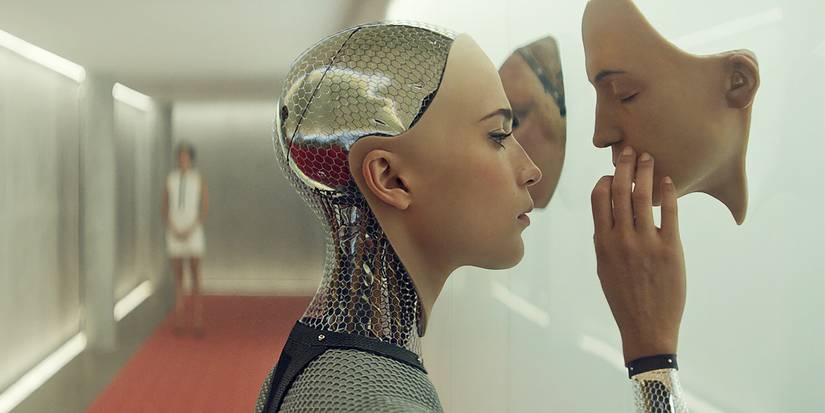
Ex Machina is a dystopian film and a poignant warning that is more relevant now than ever. The story is set in the future, where synthetic AI has dominated much of the world's culture, growing more and more advanced by the day. In the midst of this AI revolution, a programmer is selected to run tests on a new form of AI: a robot that is meant to resemble a human. The programmer's job is to determine whether or not she is capable of thought and compassion.
Things are not so cut-and-dry, though, as the film eventually dives into the ethical implications of creating what is, essentially, artificial life. Though this would ordinarily be a trope for soft sci-fi, the movie also makes sure to keep things grounded in actual physics and computer science. It doesn't feel completely off the wall or absurd, but rather like a genuine possibility for the future of humanity, which is why it fits into the hard sci-fi subgenre. Still, it does a wonderful job and is sure to make the viewer think.
'The Martian' (2015)

Based on Andy Weir's novel of the same name, The Martian stars Matt Damon as Mark Watney, an astronaut who is sent with a team to explore the surface of Mars; the first humans to do so. Unfortunately, a dust storm quickly sweeps in, forcing the crew to abandon the planet, accidentally leaving Watney behind. Lost in the red wastes of Mars, Watney must find a way to survive on a planet where life is practically impossible.
This movie takes a long look at the conditions of the red planet and why it's so uninhabitable in the first place. There is no water, no oxygen in the atmosphere, there is little to no shelter for Watney to use, and he is completely alone with no way to contact home or let anybody know he's there. The Martian is a harrowing dive into the harshest of conditions and an inspirational tale of survival against impossible odds.
'Ghost in the Shell' (1995)
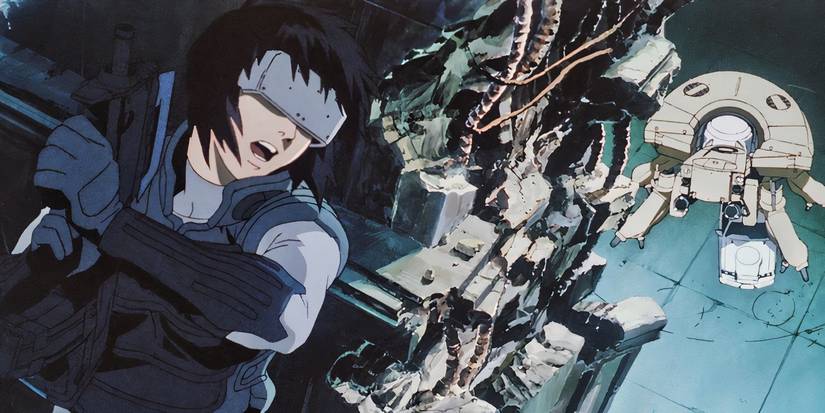
Ghost in the Shell is a Japanese anime movie that is widely considered a textbook example of the cyberpunk subgenre. This means it is largely about technology running major city centres, and a conscious effort to rebel against technology. However, it also leans heavily into the hard sci-fi subgenre as well, especially since it covers topics like computer science and programming.
The story is that a faceless hacker known as the Puppet Master has taken control of the city's systems, while a cyborg police officer frantically searches to take him down. Even though it is an anime film, it's highly accessible for non-anime fans and perfectly enjoyable. While it's best to ignore the 2010s live-action remake of this movie, the original is an absolute must-see for any fans of cyberpunk or sci-fi in general.
'Project Hail Mary' (2026)

Project Hail Mary is a recently released sci-fi comedy that has been making headlines a lot recently. And why shouldn't it? It is pretty amazing, after all. It opens abruptly with a man waking up aboard a spacecraft with no memory of how he got there. However, he is able to gradually piece together the reason for his mission, which involves a quest to prevent a mysterious cosmic substance from snuffing out the Sun.
The movie stars Ryan Gosling in the leading role as the science teacher who wakes up on the spacecraft. The reason this movie is hard sci-fi is that it heavily relies upon the use of mathematics and physics whenever the characters are faced with a problem. Calculations and equations are the name of the game here, many of which are scientifically sound and meticulously researched. This can bore a lot of people, but most sci-fi fans have loved it thus far, and it seems like the critics have, too.
'Children of Men' (2006)

Children of Men is a sorely underrated movie about the end of the world. The apocalypse isn't some one-off major event like a nuclear war or a natural disaster, though. Instead, it's about a sudden and unexplained wave of mass infertility. Women can no longer conceive babies, no matter how hard they try, meaning the extinction of the species is imminent, leading to a slow, painful sociological decline as humankind breathes its collective final breaths. However, there is one faint glimmer of hope in the form of a solitary woman who has miraculously become pregnant.
Even though this sounds like an implausible scenario, it does take time to examine the impact such an event would have on world governments and society. It's less about human emotion and more about politics, sociology, and economics. Moreover, it doesn't appear to be set in a technology-dominated future—it is set in the year 2027, and it looks like it, too, featuring no advanced technology beyond what we already have. It's a phenomenal movie that sorely needs some more love.
Collider Exclusive · Sci-Fi Survival Quiz Which Sci-Fi World Would You Survive? The Matrix · Mad Max · Blade Runner · Dune · Star Wars
Five universes. Five completely different ways the future went wrong — or sideways, or up in flames. Only one of them is the world your instincts were built for. Eight questions will figure out which dystopia, galaxy, or desert wasteland you'd actually make it out of alive.
💊The Matrix
🔥Mad Max
🌧️Blade Runner
🏜️Dune
🚀Star Wars
01
You sense something is deeply wrong with the world around you. What do you do? The first instinct is often the truest one.
02
In a world of scarcity, what resource do you guard most fiercely? What we protect reveals what we believe survival actually requires.
03
What kind of threat keeps you up at night? Fear is useful data — if you're honest about what you're actually afraid of.
04
How do you deal with authority you don't trust? Every dystopia has a power structure. Your approach to it determines everything.
05
Which environment could you actually endure long-term? Survival isn't just tactical — it's physical, psychological, and very much about where you are.
06
Who do you want in your corner when things fall apart? The company you keep is the clearest signal of who you actually are.
07
Where do you draw the line — if you draw one at all? Every survivor eventually faces a moment that tests what they're actually made of.
08
What would actually make survival worth it? Staying alive is one thing. Having a reason to is another.
Your Fate Has Been Calculated You'd Survive In…
Your answers point to the world your instincts were built for. This is the universe your temperament, your survival instincts, and your particular brand of stubbornness were made for.
The Matrix
You took the red pill a long time ago — probably before anyone offered it to you. You're a systems thinker who can't help but notice the seams in things.
- You're drawn to understanding how the system works before figuring out how to break it.
- You'd find the Resistance, or it would find you — your instinct for spotting constructed realities is the machines' worst nightmare.
- You function best when you have access to information and the freedom to act on it.
- The Matrix built an airtight prison. You'd be the one probing the walls for the door.
Mad Max
The wasteland doesn't reward the clever or the well-connected — it rewards those who are hard to kill and harder to break. That's you.
- You don't need comfort, community, or a cause larger than the next horizon.
- You need a vehicle, a clear threat, and enough fuel to outrun it — and you're good at all three.
- You are unsentimental enough to survive that world, and decent enough — just barely — to be something more than another raider.
- In the wasteland, that distinction is everything.
Blade Runner
You'd survive here because you know how to exist in moral grey areas without losing yourself completely.
- You read people accurately, keep your circle small, and ask the questions others prefer not to answer.
- In a city where humanity is a legal designation rather than a feeling, you hold onto something that keeps you functional.
- You're not a hero. But you're not lost, either.
- In Blade Runner's world, that distinction is everything.
Dune
Arrakis is the most hostile environment in the known universe — and you are precisely the kind of person it rewards.
- Patience, discipline, and political awareness are your core strengths — and on Arrakis, they're survival tools.
- You understand that the long game matters more than any single victory.
- Others come to Dune and are consumed by it. You'd learn its logic and earn its respect.
- In time, you wouldn't just survive Arrakis — you'd begin to reshape it.
Star Wars
The galaxy far, far away is vast, loud, and in a constant state of violent political upheaval — and you wouldn't have it any other way.
- You find meaning in being part of something larger than yourself — a cause, a crew, a rebellion.
- You'd gravitate toward the Rebellion, or the fringes, or whatever pocket of the galaxy still believes the Empire's grip can be broken.
- You fight — not because you have to, but because standing aside isn't something you're capable of.
- In Star Wars, that willingness is what makes all the difference.
'Moon' (2009)
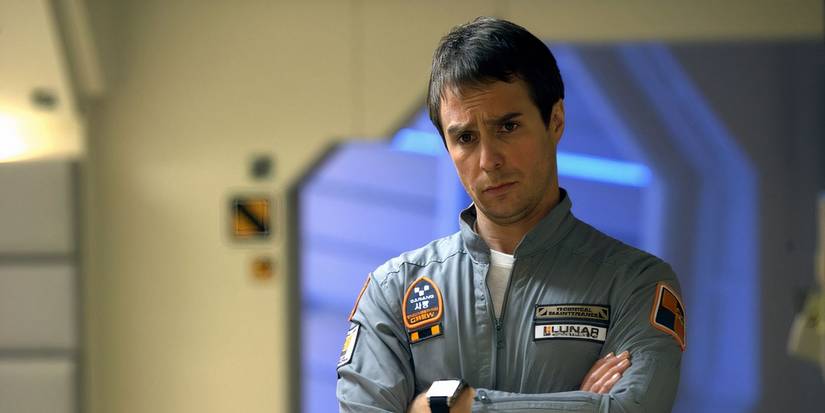
Moon is another underrated film that was surprisingly successful in the critical department. The movie is about an astronaut who is approaching the end of a three-year mission on the surface of the Moon. Accompanied by his AI assistant, he discovers a natural resource that could potentially reverse the energy crisis Earth is having. But things get weird when the astronaut finds his own doppelgänger has arrived on the Moon.
It sounds completely impossible at first, but the film does make sure to explain everything. It addresses concepts of chemistry and astrophysics, while also maintaining the use of not-too-advanced technology. None of the tech seems that far off from what we currently have, making the movie feel much closer to reality. This is most certainly a movie you should check out if you're interested in space, mysteries, or sci-fi as a whole.
'Interstellar' (2014)
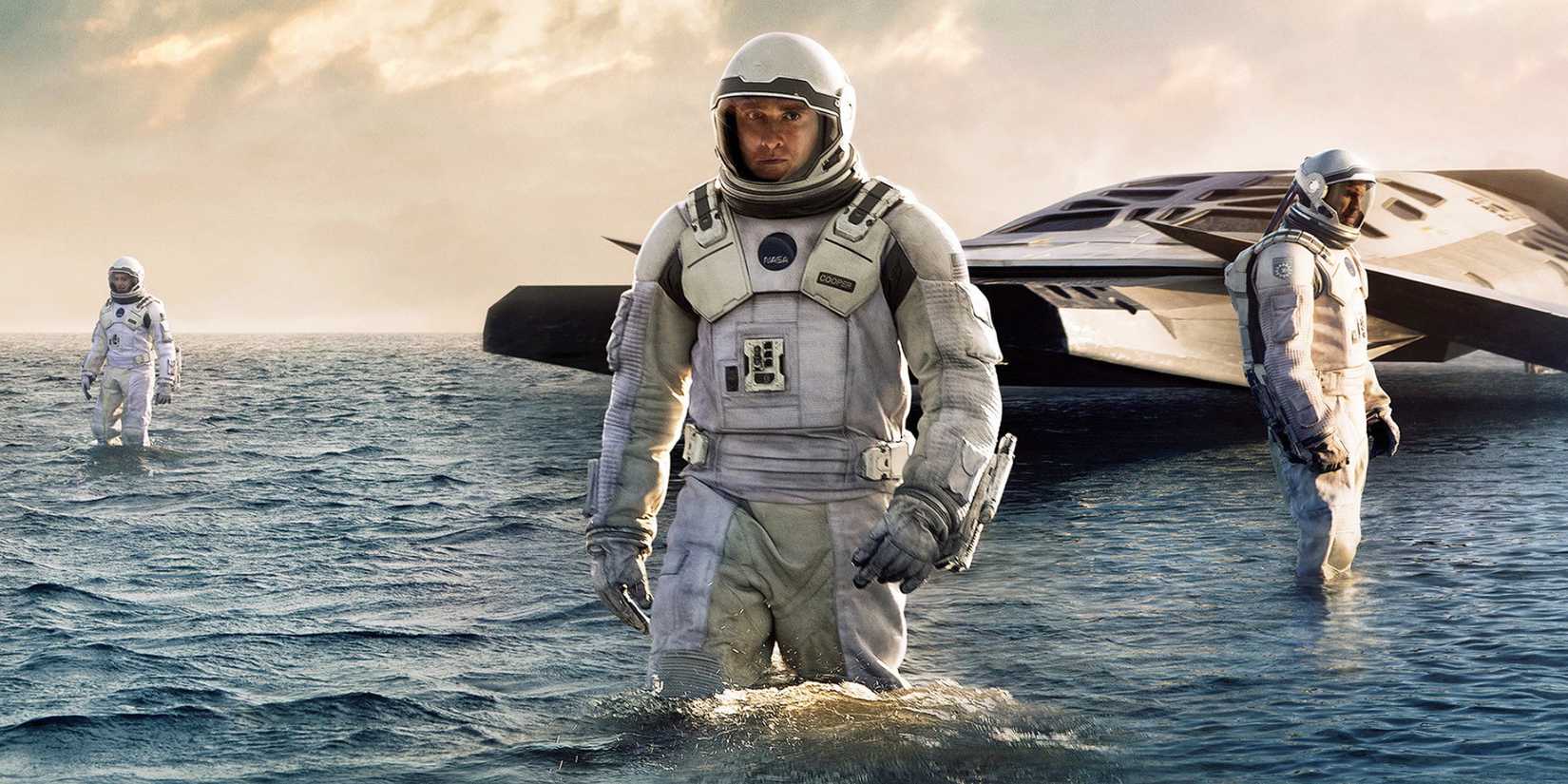
Christopher Nolan's critically acclaimed film Interstellar didn't win over everyone when it first came out, but it was a success with critics. The story follows an astronaut as he is sent through a wormhole, emerging far out into space, in search of a new habitable planet for humans to call home. Earth is dying due to human environmental intervention, which means time is of the essence.
What this film does best is portraying planets that are both weird and wonderful all at once. Though the science isn't super sound in this one, it does delve heavily into the mechanics of each planet and why they are the way they are. For example, there's that iconic scene on the ocean world, where every hour is equivalent to several years on Earth. Things are meticulously explained, diving into the reality of how space works. It's a brilliantly done and highly entertaining film that earns every bit of praise it gets.
'Arrival' (2016)

2016's Arrival is based on Ted Chiang's 1998 novella, Story of Your Life. The movie stars Amy Adams as a linguistics professor named Louise, who is contacted following alien vessels landing on Earth. Fortunately, the aliens don't mean any harm, quite unlike most sci-fi movies. Louise is brought to one of the landing sites as a liaison between humanity and the extraterrestrials, in the hopes that, as a linguist, she will be able to decipher their language and communicate with them.
The movie is pretty mind-bending—you might need more than one viewing to truly grasp what it's trying to say. A lot of it follows Louise's linguistic practices, showing how she begins to understand the aliens' language, how she learns to interpret their writing system, and how it opens up her brain to ways of thinking that most humans cannot comprehend. It's emotional, mysterious, and wondrous to watch. It might not be the most faithful adaptation, but it's superb nonetheless.
'Jurassic Park' (1993)
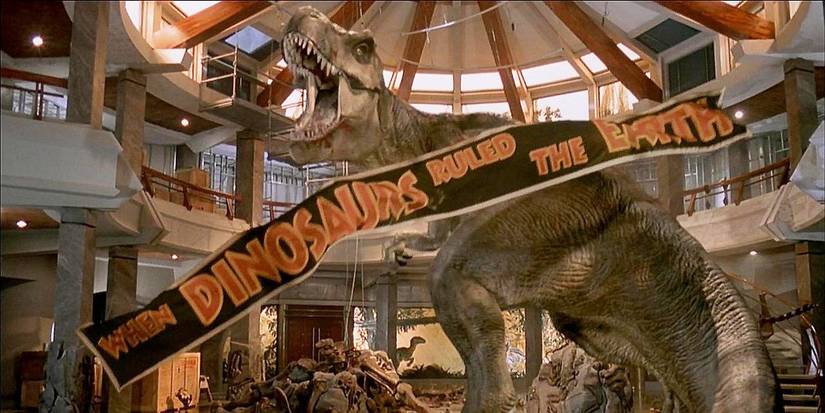
Chances are, the original Jurassic Park likely doesn't need an introduction at this point, right? Most people have seen the movie or at least know what it's about by now: a group of scientists uses fossilized DNA to bring dinosaurs back to life, creating a zoo for dinosaurs known as Jurassic Park. What could possibly go wrong? Of course, the inevitable happens, and the dinosaurs begin breaking out of the enclosures and attacking the humans on staff.
A lot of people might forget that this one fits into the hard sci-fi genre, but it certainly does. A lot of it is about genetics and biology rather than human emotion and psychology. It's also not set in some distant, implausible future—instead, it opts for a more "present-day" aesthetic. For 30 years, Jurassic Park has reigned supreme in the dinosaur movie subgenre and is a textbook example of hard sci-fi.
'2001: A Space Odyssey' (1968)

2001: A Space Odyssey is one of the most famous and well-received sci-fi movies ever made. It was famously directed by Stanley Kubrick, who was an absolute master at his craft. To this day, the technology in this film remains unparalleled, as many of the scenes often stump viewers as to how they could possibly be filmed, even by modern standards.
After an expedition to the Moon uncovers a mysterious artifact, scientists trace its origin back to Jupiter. Humanity then sends a spacecraft to the solar system's largest planet, in hopes of uncovering the artifact's origins and possibly discovering life. The ship is automated by an AI assistant named HAL, who oversees the ship's function and the execution of the mission. This movie has such a fantastic plot twist, a befuddling yet brilliant ending, and remains a staple of the sci-fi genre nearly 60 years later.
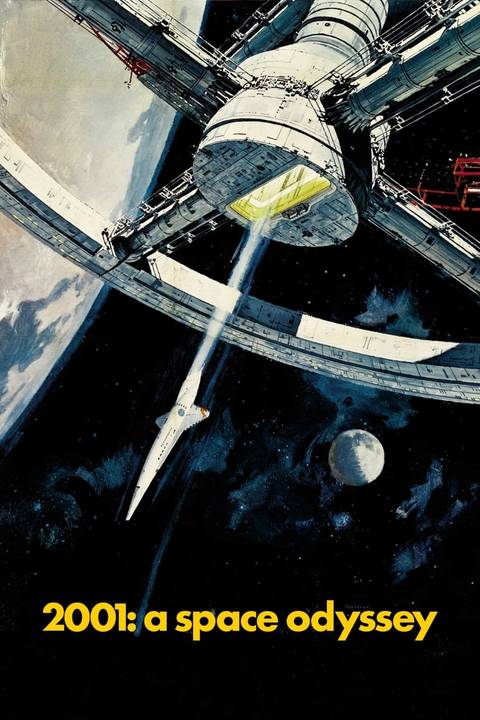
2001: A Space Odyssey
- Release Date
- April 10, 1968
- Cast
- Keir Dullea, Gary Lockwood, William Sylvester, Douglas Rain, Daniel Richter, Leonard Rossiter, Margaret Tyzack, Robert Beatty, Sean Sullivan, Bill Weston, Ed Bishop, Glenn Beck, Alan Gifford, Ann Gillis, Edwina Carroll, Penny Brahms, Heather Downham, Mike Lovell, John Ashley, Jimmy Bell, David Charkham, Keith Denny, Jonathan Daw, Péter Delmár, Terry Duggan
- Runtime
- 149 minutes
- Director
- Stanley Kubrick
- Writers
- Stanley Kubrick, Arthur C. Clarke
KioskNews shows a cleaned-up reading view extracted from the publisher’s page — the original always lives on their site, not ours.