The 8 Best James Ellroy Books, Ranked

Jeremy has more than 2800 published articles on Collider to his name, and has been writing for the site since February 2022. He's an omnivore when it comes to his movie-watching diet, so will gladly watch and write about almost anything, from old Godzilla films to gangster flicks to samurai movies to classic musicals to the French New Wave to the MCU... well, maybe not the Disney+ shows.
His favorite directors include Martin Scorsese, Sergio Leone, Akira Kurosawa, Quentin Tarantino, Werner Herzog, John Woo, Bob Fosse, Fritz Lang, Guillermo del Toro, and Yoji Yamada. He's also very proud of the fact that he's seen every single Nicolas Cage movie released before 2022, even though doing so often felt like a tremendous waste of time. He's plagued by the question of whether or not The Room is genuinely terrible or some kind of accidental masterpiece, and has been for more than 12 years (and a similar number of viewings).
When he's not writing lists - and the occasional feature article - for Collider, he also likes to upload film reviews to his Letterboxd profile (username: Jeremy Urquhart) and Instagram account.
He has achieved his 2025 goal of reading all 13,467 novels written by Stephen King, and plans to spend the next year or two getting through the author's 82,756 short stories and 105,433 novellas.
Sign in to your Collider account
It’s a shame people don’t call works of noir literature "book noir" the way "film noir" is the name of a genre (or movement) when you're talking about movies, but either way, noir books do exist. Plenty of them were adapted into film noir movies, if you're looking at the golden age of noir fiction, yet sticking to that period a little before – and then around – the middle of the 20th century means missing out on some great neo-noir movies, and also compelling noir books.
Enter James Ellroy, whose earliest novels were published around the start of the 1980s, and whose best novels started coming out nearer to the end of the decade in question. The 1990s was also a good decade for Ellroy, and he’s had some interesting books published in the 21st century, too. His works of noir and/or historical fiction are very intense, downbeat, violent, and unpredictable, and the following books of James Ellroy’s stand as his best.
8 'Blood's a Rover' (2009)

Ellroy’s Underworld USA trilogy concluded with Blood’s a Rover, which is certainly the most challenging of the three, a little like how his other well-known series ended with its most out-there entry (more on that one shortly). The first of the Underworld USA books covers 1958 to 1963, the second 1963 to 1968, and Blood’s a Rover 1968 to approximately 1972… intentionally ducking away from covering the Watergate scandal, maybe because it was too convenient an endpoint?
Ellroy’s not super interested in establishing patterns, though, and that makes Blood’s a Rover admirable and sometimes frustrating.
Big historical events that happened in 1963 and 1968 were what the other two books, respectively, built to. Ellroy’s not super interested in establishing patterns, though, and that makes Blood’s a Rover admirable and sometimes frustrating. It’s uncompromising, at least; that can’t really be denied. It also pushes things especially far with how many of its characters are intensely unlikable, because most people here feel like they could be villains of any ordinary story, which contrasts with most Ellroy novels where you'll have at least one prominent character who feels almost like a hero compared to everyone else. Blood’s a Rover is too miserable and cynical (even by Ellroy’s standards) for that.
7 'White Jazz' (1992)

The other big series that’s inevitably going to get mentioned alongside Underworld USA, if you're talking about James Ellroy, is the L.A. Quartet, with the first book in that quadrilogy being the one that really put him on the map, as a writer of crime fiction. White Jazz is not that first book, though, instead being the fourth and easily the densest of the bunch. Again, it’s like Blood’s a Rover and its position within the overall saga it belongs to.
The best parts of White Jazz concern some threads left hanging from earlier books in the L.A. Quartet, making it a necessary sequel if you want some closure. It’s harder to recommend in other regards, because Ellroy goes all-out on his signature style of punchy sentences and a cutting of words that only the most ruthless of editors would consider unnecessary. The result is a book that tells a story which would usually be told across 600 to 700 pages, but Ellroy does it in about 350. It’s hard to keep up, to put it mildly, but if you can manage to avoid drowning while immersed in White Jazz, it can certainly be a rewarding read.
6 'The Cold Six Thousand' (2001)

The Cold Six Thousand is the second book in the Underworld USA trilogy and, what do you know, also the second-best. Narratively, this one picks up right after the assassination of John F. Kennedy, with the lead-up to that event being what the first book focused on, and then The Cold Six Thousand ends up building to two more assassinations that happened just a couple of months apart in 1968: Martin Luther King Jr.’s and Robert F. Kennedy’s.
Characters both fictional and based on real-life people are involved in various shady events that, in Ellroy’s version of this historical period, contribute to those two assassinations eventually happening. That probably sounds a bit vague, but it’s hard to go into more detail than that without dedicating countless more paragraphs. The Cold Six Thousand is almost a bit much, but it’s a stronger effort overall than Blood’s a Rover, and there is ever-so-slightly more room for things to breathe than was the case with the plot of White Jazz.
5 'My Dark Places' (1996)

The title here is certainly not deceitful, as My Dark Places does indeed go to some incredibly dark places. There might be more by way of cynicism in some of Ellroy’s fiction, but My Dark Places, which is part memoir and part true crime, could well be the boldest of all his books. What Ellroy acknowledges while getting painfully introspective about some very traumatic events sometimes proves hard to comprehend.
My Dark Places is about the murder of James Ellroy’s mother, Geneva "Jean" Ellroy, which happened when he was only 10 years old, detailing the aftermath and how it shaped Ellroy’s life and outlook on the world. Much of it also concerns his efforts, nearly four decades later, to assist in solving the murder (unsolved since 1958), desperate for any sort of closure. My Dark Places is beyond striking, as far as memoirs go, and very much worth reading, as long as you're prepared for at least some of the heaviness you're in for through the act of picking it up.
4 'The Big Nowhere' (1988)

The Big Nowhere complicates things, as the second of the L.A. Quartet books, in terms of its style and structure. There are three different point of view characters here, and that’s one reason why the scope of the story here is also more ambitious than the crime novels Ellroy had written before, with a fair few crimes needing to be solved, and certain ways those crimes are all linked, via conspiracies and all that.
It’s dizzying, like a lot of James Ellroy books, and also pretty upsetting in parts. Saying that might not sound like much when Blood’s a Rover and My Dark Places have already been singled out for being depressing and particularly downbeat, but hey, what can you do? It’s another Ellroy novel that scratches that itch, really digging in its nails and drawing blood in the process, but the hurt is possibly what you're here for (or at least anticipating), in any event.
3 'The Black Dahlia' (1987)

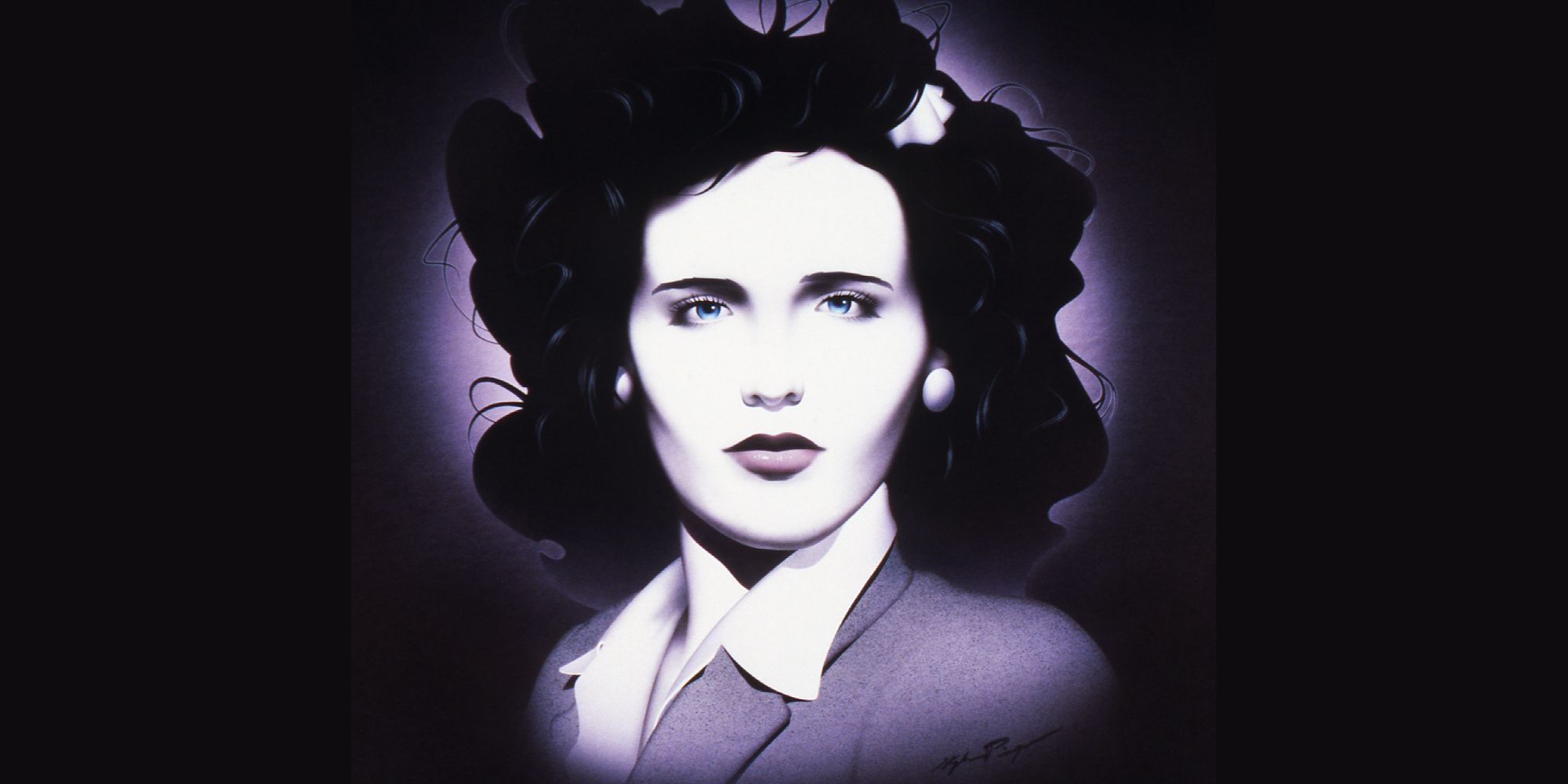
Before My Dark Places, James Ellroy explored similar things in the book that opened the L.A. Quartet: The Black Dahlia. The murder at the center of this story did really happen, to a woman named Elizabeth Short who ended up being known as the Black Dahlia, and it was also infamously unsolved in real life. If that’s not enough to make it line up with My Dark Places, then the dedication at the start of The Black Dahlia (“to Geneva Hilliker Ellroy”) definitely will.
The main characters, though, are fictional, and the story’s ultimately about them getting wrapped up in the Black Dahlia case, and torn apart psychologically by all the uncertainty and anxiety that came with it. Plenty of things expanded on thematically in later James Ellroy books are present here, with that leading to it being a good deal more approachable than most of his other novels. It’s the ideal starting point, if you want to tackle Ellroy’s body of work, since it was his first great book, and the one that justifiably made him a well-known writer of crime fiction.
2 'L.A. Confidential' (1990)

The style and structure of The Big Nowhere are retained in L.A. Confidential, with three protagonists being cycled through here (and the multiple point of view thing is something he’d continued with the Underworld USA trilogy, of course). It’s an arguable refinement of what already worked in The Big Nowhere, with these two books being perhaps the most similar out of any potential pairing in Ellroy’s whole bibliography.
Call it a Goodfellas to Casino situation, if you want to make a film/director-related comparison, but he really makes it work, and there’s enough here, in L.A. Confidential, to stop it from feeling exclusively like a retread. The retreading is also compelling anyway, because what James Ellroy did in The Big Nowhere arguably deserved to be repeated and then built upon. Crime, conspiracies, death, show-business, copious amounts of immorality… it’s all here.

L.A. Confidential
- Release Date
- September 19, 1997
- Runtime
- 138 Minutes
- Director
- Curtis Hanson
- Writers
- Brian Helgeland, Curtis Hanson
1 'American Tabloid' (1995)
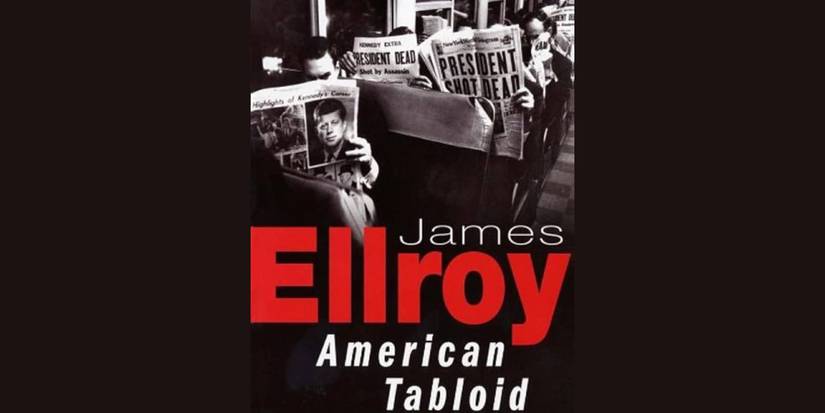
The basic premise of American Tabloid was already alluded to, when talking about the other two books in the Underworld USA trilogy. This one’s set between 1958 and 1963, and so it works as something of a sequel to the L.A. Quartet books, too, since the events of that series begin in the late 1940s and then end around the end of the 1950s, with a few characters and historical figures being relevant to both of the series in question.
American Tabloid benefits from being about an especially interesting and dramatic period in American history, and it builds up an immense amount of dread throughout. This time in history is depicted as the start of a downfall for the entire United States, which sounds like a bit much for one book to handle, but American Tabloid does pack a whole lot into its nearly 600 pages, with the next two books then showing the even more chaotic fallout of what happens here. Still, what does happen here is the most interesting, and overall, American Tabloid manages to be Ellroy’s most impressive and compelling novel.
KioskNews shows a cleaned-up reading view extracted from the publisher’s page — the original always lives on their site, not ours.