Festive Shopping On 'Easy EMIs'? Here's How Much Extra You Might Pay

Festive shopping often comes with an attractive promise: bring home a smartphone, television or washing machine today and pay for it in small monthly instalments. Easy EMIs have made big-ticket purchases more accessible, particularly for households that want to avoid a large upfront payment.
But there is a catch. A smaller EMI does not necessarily mean a cheaper purchase. Processing fees, GST, interest charges and discounts sacrificed in the process can quietly increase the final bill.
During festive sales, when several purchases appear affordable individually, consumers could end up committing a larger portion of their monthly income to repayments.
Also Read | Layoffs Are Rising In Tech, But These Skills Are Helping People Unlock Better Pay
Vishal Gupta, CEO and Founder of Saralya, told NDTV that consumers should look beyond the monthly instalment when evaluating festive financing offers.
According to Gupta, the real question is not whether a purchase can be divided into EMIs, but whether the financing arrangement makes the product more expensive and fits comfortably within the household budget.
No-Cost EMI May Not Mean Zero Additional Cost
A no-cost EMI generally works by adjusting the interest charged by the lender against a discount offered by the merchant or manufacturer. However, consumers may still have to pay processing fees and GST on the interest component.
The Reserve Bank of India's research on digital lending has also highlighted this distinction. Its analysis of sampled EMI plans found that GST could range from 0.4 per cent to 3.2 per cent of the product price, depending on the plan.
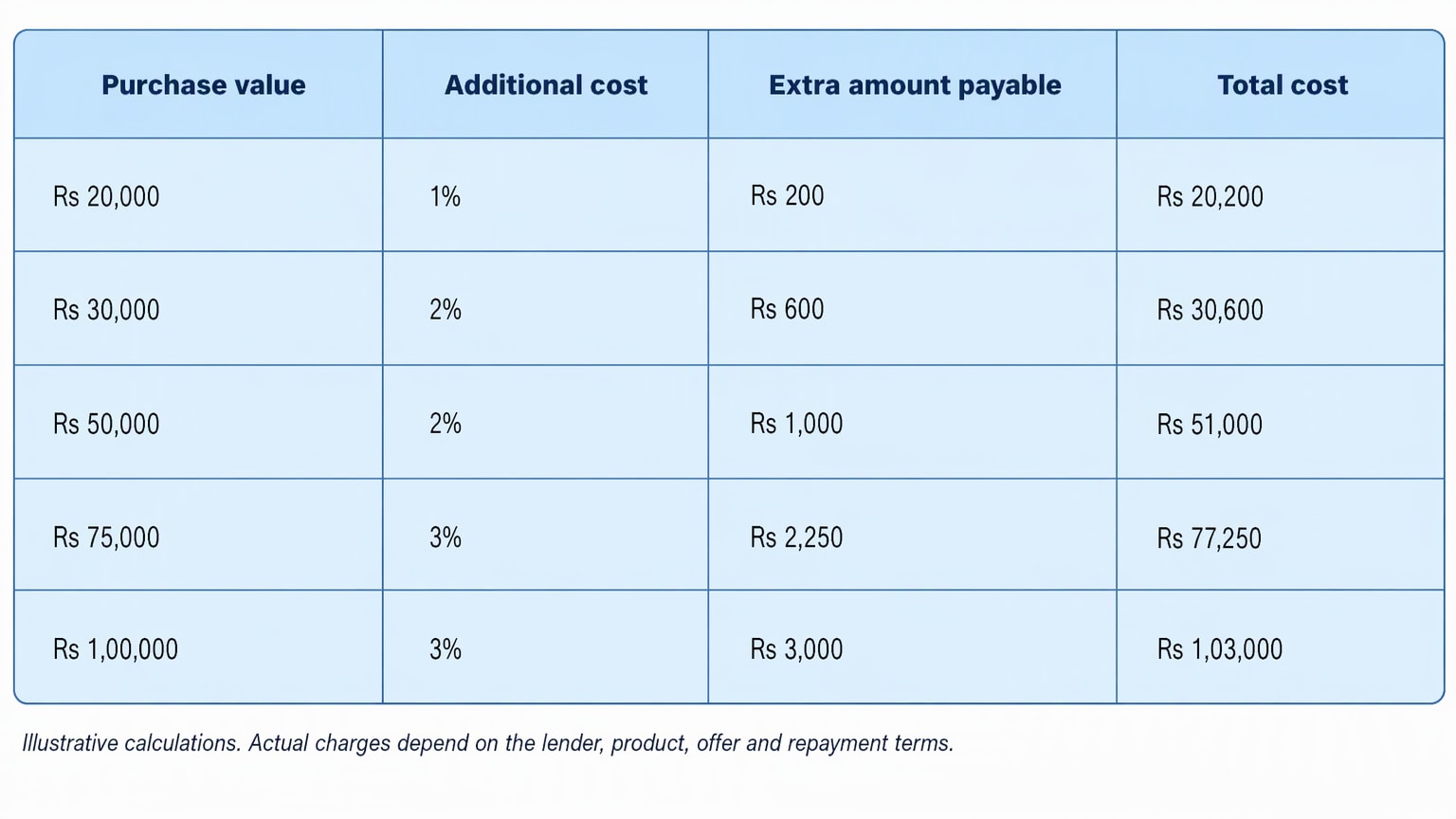
Another factor is the discount sacrificed. A customer paying upfront may receive a price reduction that is unavailable under an EMI offer. For example, a product priced at Rs 50,000 could become Rs 51,000 if additional charges amount to 2 per cent of its price. The extra Rs 1,000 may appear small, but it is still a cost that shoppers should account for before accepting the offer.
Easy EMI: How Much More Could You Pay?
Here is an illustration of how additional costs can affect festive purchases.
When Multiple Festive EMIs Become a Budget Problem
The bigger concern may not be the cost of one purchase, but the combined impact of several instalments.
A smartphone, television and household appliance may each come with a manageable monthly payment. Together, however, they can reduce the money available for rent, savings, existing loan repayments and emergencies.
Gupta said consumers should assess their repayment capacity before committing to additional instalments. A purchase that looks affordable because the EMI is small can become a financial strain when several such commitments overlap.
The festive season can also encourage shoppers to buy products they had not originally planned to purchase. Financing makes these decisions easier in the moment, but the repayments continue long after the celebrations are over.
5 Things To Check Before Choosing Easy EMI
Before accepting an EMI offer, consumers should compare the following:
- Cash price versus EMI price: Check whether paying upfront offers a better discount.
- Total repayment: Add all instalments, processing fees and applicable taxes.
- Loan tenure: A longer repayment period may reduce the monthly EMI but increase the overall cost.
- Late payment charges: Understand penalties and their possible impact on your credit score.
- Existing commitments: Check whether the new EMI leaves enough room for essential expenses and savings.
Gupta's broader advice is to treat festive financing as a payment option rather than additional purchasing power. Consumers should make sure that the product remains affordable even after accounting for all other financial commitments.
The golden rule: Calculate what you will pay in total, not just what you will pay every month.
KioskNews shows a cleaned-up reading view extracted from the publisher’s page — the original always lives on their site, not ours.