Cars out, diners in: Final section of George Street set for $25m revamp
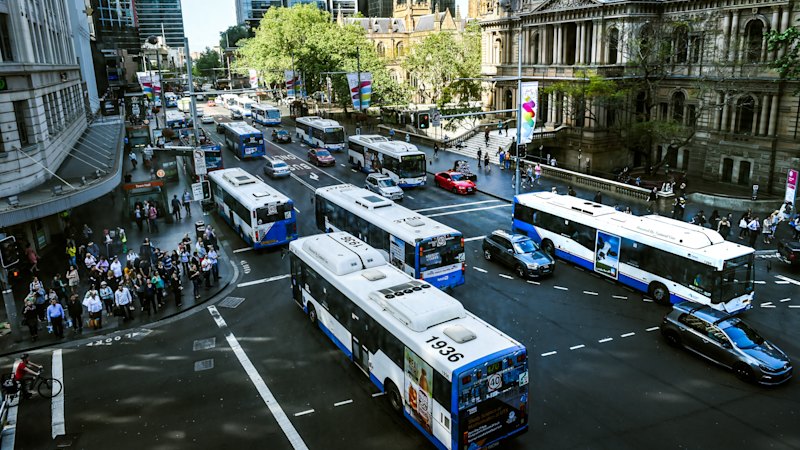
The northernmost stretch of Sydney’s revamped 2.5-kilometre George Street corridor will be permanently pedestrianised under plans to lure visitors to one of the city’s most historic precincts.
Some vehicle lanes will be converted to wide footpaths, traffic lights will be removed and temporary outdoor dining spaces will be made permanent between Essex Street near Circular Quay and Jack Mundey Place in The Rocks, behind the Museum of Contemporary Art.
The state government and the City of Sydney unveiled the $25.8 million plan, to be completed by late 2028, on Wednesday.
Construction is expected to begin in 2027. City of Sydney Lord Mayor Clover Moore said the plan marked the final chapter in the long-running project to transform the crucial George Street corridor from a “noisy, polluted traffic jam” to a retail and hospitality hotspot that prioritised pedestrians.
“It’s to support business, but also it’s about supporting the cultural life of the city. It allows people to socialise and enjoy our beautiful city in the way other cities have done – that’s what inspired us in the first place,” Moore said.
The upgrades will be delivered in two sections. The City of Sydney will create a 150-metre pedestrian boulevard from Essex Street to Alfred Street in the CBD by converting the eastern side of George Street into a wide footpath with seating, trees, lighting and paving up to the light rail tracks. Traffic lights at Essex and George Street, and Alfred and George Street will be removed.
The state government, which owns The Rocks, will make permanent the 100-metre outdoor dining area that was temporarily erected to draw visitors to the dining precinct during the COVID-19 pandemic – which Planning and Public Spaces Minister Paul Scully said was a “long overdue” idea.
One-way southbound access for vehicles will be maintained, while the other lane is repurposed.
The council has to date spent $300 million on the “city-shaping project” to overhaul George Street, attracting more than $8 billion in private investment along the corridor. But it hasn’t always been popular. When work to pedestrianise the corridor began in late 2015, it sparked furore from critics who said construction would stifle businesses along the vehicle-dominated thoroughfare.
More than 10 years ago, Labor under former leader Luke Foley opposed building the light rail along George Street, arguing it would be a disaster even when built, form a “Berlin Wall” through the city and disrupt traffic flows.
Transport Minister John Graham said on Wednesday: “George Street used to be a smoggy gauntlet, more popular with taxis and buses than human beings. It’s now a vibrant place that attracts shoppers, workers and tourists.”
Scully said the transformation of The Rocks could become a template for other parts of Sydney, provided state and local authorities took an integrated approach.
“We can have good outcomes in more parts of not only Sydney but more parts of NSW. Because why shouldn’t we embrace the opportunity that’s provided to us?” he said.
The Morning Edition newsletter is our guide to the day’s most important and interesting stories, analysis and insights. Sign up here.
KioskNews shows a cleaned-up reading view extracted from the publisher’s page — the original always lives on their site, not ours.