India can keep growing at 7% if it curbs inequality, boosts demand: Stiglitz at HTLS 2026
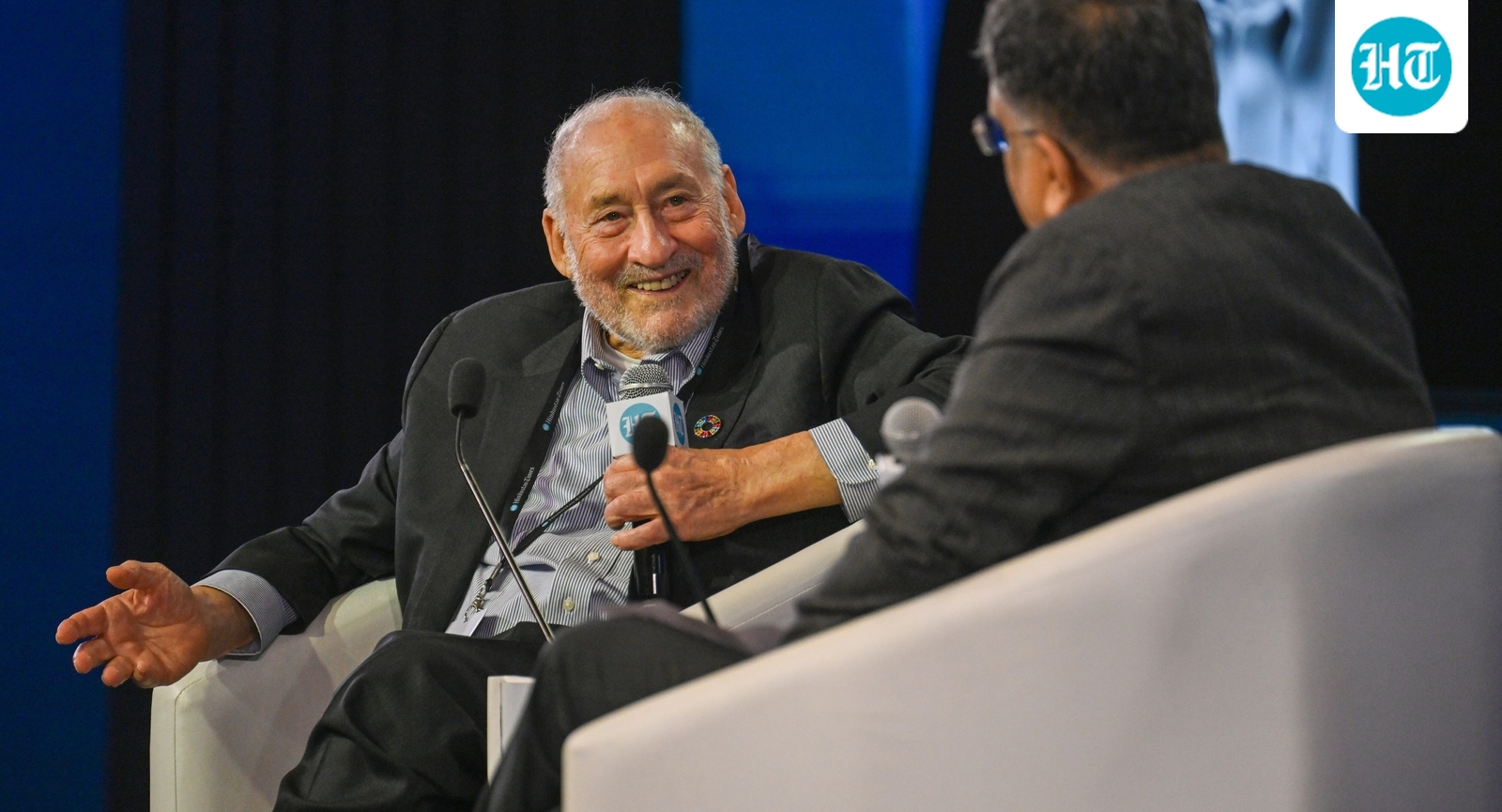
The Indian economy can keep growing at 7% if it keeps income inequality in check and domestic demand strong, Nobel laureate economist Joseph E Stiglitz said on Saturday, calling for heavy public investment in infrastructure, education and the environment, and warning that climate change and artificial intelligence would test the country hard.
"If you manage domestic demand, you make sure that income inequality is not too great, then I think there is enough domestic demand, enough room to grow, because you're still so much below the global frontier that I think there's no reason why you can't continue to grow at 7%," Stiglitz said at the 24th Hindustan Times Leadership Summit, in conversation with Dr Niranjan Rajadhyaksha, Executive Director of Artha Global.
"It's going to be hard. It's not going to be easy," he said.
Stiglitz said he thought about India's prospects in terms of both demand and supply. What worried him in both India and the US was the balance between the two: a country with growing inequality, like the US, would not have the demand to keep up with what it produced.
"Now the big advantage that India has is it has a huge domestic market, if you manage it well," he said.
On the supply side, India needed infrastructure, which the market would not provide on its own, and better education, with "a large role for public, state investment", he said. "We obviously have to compete in some ways as humans with AI, and I think that means we have to get smarter and more efficient."
He singled out groundwater on which many of India's farmers depend. "A large fraction of those are dependent on groundwater, which is disappearing. And there hasn't been a policy to try to make sure that groundwater is conserved as much as it should," he said, asking the audience to imagine what a fall in farm productivity would do to the country.
Climate change, he said, was "a one-edged sword", unlike AI.
Stiglitz, a lead author of the Intergovernmental Panel on Climate Change's 1995 report, said the panel had been "right except for one thing. We didn't think about it happening as fast and as bad. And I think it's going to be particularly severe in countries like India, in the tropics. It's going to be very hard."
AI, he said, cut both ways: it "has this potential of super abundance to enable us to solve problems that we haven't solved", but "a rogue AI, a dangerous AI, could be a very dangerous AI".
He said India in particular should be worried. "If you look at where AI has affected most quickly, it has been in the tech sector. It's an irony that AI was really good at replacing coders," he said.
The sectors AI hit first were "very supportive of the Indian transformation", he said. "The question is, how do you pivot? That's an open question not only in India but in the US and all countries."
Stiglitz also said "borders do matter", a lesson first of Covid-19, when countries tried to hoard even masks, and then of Donald Trump, and that countries needed to think about national economic sovereignty, including capital controls. He said India might have to think about its investments.
Stiglitz shared the 2001 Nobel Prize in economics, chaired Bill Clinton's Council of Economic Advisers from 1995 to 1997, and served as the World Bank's chief economist from 1997 to 2000.
KioskNews shows a cleaned-up reading view extracted from the publisher’s page — the original always lives on their site, not ours.