Can AI solve a 167-year-old maths problem? Anthropic researcher says Claude may have done it
Artificial intelligence (AI) seems to be on its way to making yet another breakthrough in mathematics. Levent Alpöge, a mathematician at Anthropic, on Friday, November 20, claimed that he had discovered a proof of one of mathematics’ longest-standing problems, the Riemann Hypothesis, with the help of the company’s Claude AI model.
One of the seven Millennium Prize Problems set by the Clay Mathematics Institute, it carries a $1 million prize for a solution that meets the institute’s criteria. First proposed in 1859, the Riemann Hypothesis has remained unsolved for more than 165 years.
Alpöge has put out a statement claiming that he has discovered proof of the Riemann Hypothesis, which was proposed by German mathematician Bernhard Riemann. The hypothesis claims that prime numbers appear to be located on the number line at random at first, but there is actually a meaningful order to them. The hypothesis has since become the guiding principle for numerous fields in mathematics, along with being the most popular open problem in maths.
The Anthropic employee posted his Claude proof coded in Lean, a programming language that verifies mathematical arguments. While Lean is not perfect, experts can verify whether the hypothesis is properly coded and whether the proof is accurate. In case the proof is validated, it will go on to add to the list of mathematical achievements made by AI this year that no human has been able to make in the longest time.
The Riemann Hypothesis has puzzled mathematicians for generations, mainly because there is no straightforward way to prove that its prediction holds for all non-trivial zeros of the zeta function. However, AI has begun making progress on related mathematical problems. In August this year, Anthropic revealed that an unreleased version of Claude had improved a longstanding mathematical bound concerning the proportion of zeros that lie on the critical line, although it did not prove the Riemann Hypothesis itself.
In September, OpenAI announced that an internal AI system had produced a proposed solution to the Navier–Stokes problem, another of the seven Millennium Prize Problems. The following month, the company released 372 families of mathematical results, covering hundreds of research manuscripts. However, these developments have also raised questions about how AI-generated mathematical proofs should be independently verified.
But what is the Riemann Hypothesis?
In simple terms, it is a mathematical problem that could explain the pattern behind prime numbers. The hypothesis attempts to explain a hidden pattern in the distribution of prime numbers. Over 165 years later, mathematicians have yet to prove whether it is true or not. On the surface, the hypothesis may seem like an abstract mathematical problem, with hardly any relevance to academia. But it addresses some of the key questions about numbers, such as: is there an order to the way prime numbers are distributed, even if they appear to occur at random?
Story continues below this ad
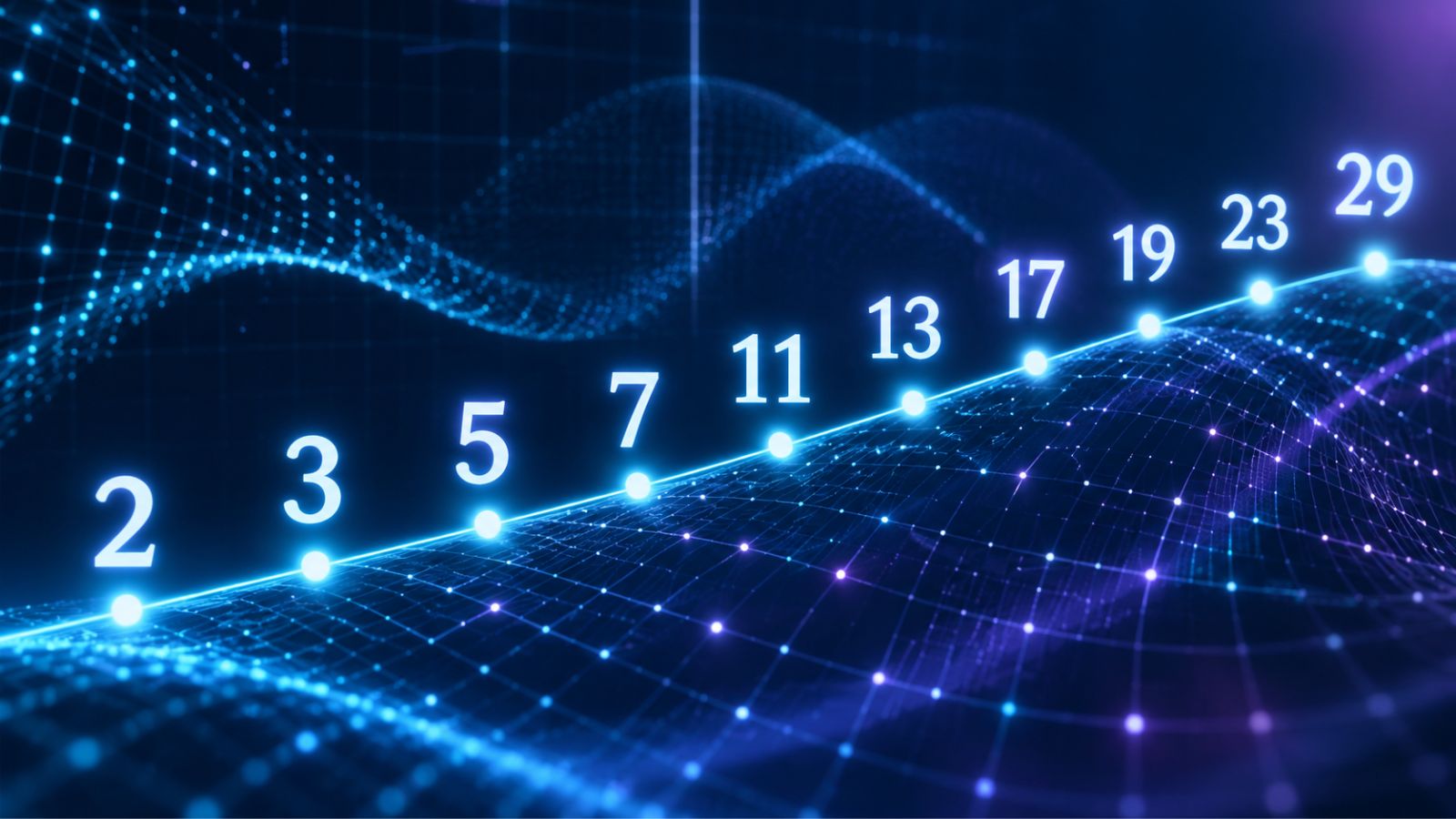
In order to understand why this conjecture has attracted the attention of mathematicians for generations, we would need to understand what prime numbers are and why they are important. Prime numbers are whole numbers greater than one that can only be divided evenly by two numbers: one and themselves. For example, numbers like 2, 3, 5, 7, 11, 13, and 17 are all prime numbers, while 12 is not a prime number, as it can be divided by 2, 3, 4, and 6, apart from 1 and itself. Prime numbers are seen as the building blocks because every whole number greater than one can be expressed as a product of prime numbers. For example, 12 can be broken into 2x2x3, and 30 can be expressed as 2x3x5.
However, there is also something unusual about prime numbers. While they follow mathematical rules, there is no simple repeating pattern that shows exactly how the next prime number would appear. Moving along the number line, prime numbers become less frequent with inconsistent gaps between them. Sometimes two prime numbers appear closer together; at other times they are far apart. Riemann proposed a mathematical idea that could help explain how prime numbers are distributed.
His conjecture is based on a mathematical function called the Riemann zeta function. In simple terms, this function helps mathematicians study the relationship between numbers and prime numbers. The zeta function takes a number as its input and outputs a mathematical result. Mathematicians are particularly interested in the points where this function equals zero. These points are called zeros and have a close connection to the distribution of prime numbers. Riemann made a prediction about these zeros, suggesting that all the important zeros, known as non-trivial zeros, would lie along one specific vertical line in a mathematical space called the complex plane. This line is called the critical line, and its position is represented by the number 1/2. In simple terms, the Riemann Hypothesis predicts that all these non-trivial zeros follow this one mathematical rule. If proved correct, it would give mathematicians a much better understanding of how prime numbers are distributed.
Why Anthropic mathematician’s claims matter
In his statement, Alpöge described the problem as something that had guided his mathematical ambitions since childhood, revealing that he had expected to spend decades working towards a solution. Alpöge said he worked with Anthropic’s Claude over several months to develop what he believes is proof of the hypothesis. He also claimed that their approach could be extended to solve two related problems: the Generalised Riemann Hypothesis and the Extended Riemann Hypothesis.
Story continues below this ad
Describing Claude’s contribution, Alpöge said the AI model eventually moved far beyond his own pace of reasoning. “Claude far outpaced me near the finish line. No, Claude flew, and danced, and sparkled near that finish line,” he wrote.
He revealed that the process involved bringing together several mathematical ideas and that Claude helped him explore connections he had not fully anticipated. While he said the arguments had been formalised using Lean, a mathematical proof-verification system, he acknowledged that the complete argument was extremely long and that he had yet to fully understand every part of it. Alpöge described the discovery as something that could point towards a much wider shift in scientific research. “One dawn across science of something far greater.”
What does this mean for AI?
AI is increasingly moving beyond solving simple math problems to helping researchers make discoveries that could change how they understand the subject. Earlier this year, an OpenAI model disproved a longstanding hypothesis in discrete geometry by producing a mathematical counterexample. In September, Anthropic’s Claude produced the first complete computer-verified formalisation of Fermat’s Last Theorem, which had already been proved by mathematician Andrew Wiles in 1995. Microsoft researchers also used human-directed AI to help resolve the 31-year-old KLS conjecture, which has implications for statistics, optimisation and computing.
In October, OpenAI released hundreds of AI-generated mathematical research results, while acknowledging that they were at different stages of verification. Anthropic mathematician Levent Alpöge has now made an even more extraordinary claim that he and Claude have developed a proof of the 167-year-old Riemann Hypothesis. However, this claim is yet to be independently validated.
Story continues below this ad
All these developments show how AI is increasingly becoming integral to scientific research. AI systems are helping mathematicians to spot patterns, challenge established assumptions, and delve into mathematical ideas that could otherwise take them years to investigate. But producing mathematical answers is only one aspect of the challenge. Researchers are required to establish that the underlying reasoning of these AI-generated proofs is correct, independently verify the results and understand how they can be applied.
KioskNews shows a cleaned-up reading view extracted from the publisher’s page — the original always lives on their site, not ours.