Rights groups report ‘dangerous’ surge in use of rubber bullets on Palestinian inmates
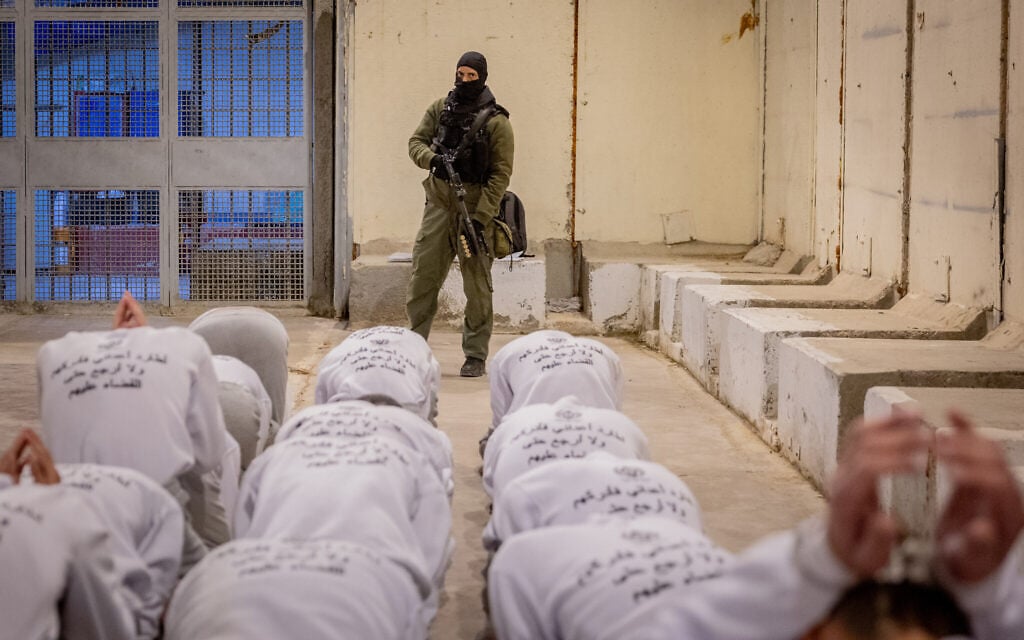
Two of Israel’s leading human rights groups are sounding the alarm about a surge of mostly Palestinian inmates being shot by guards with rubber bullets at close range and, in some cases, suffering severe injuries.
Palestinians held for security offenses have long faced harsh treatment in Israeli prisons, but rights groups say conditions have deteriorated dramatically since the war in Gaza began more than three years ago.
Physicians for Human Rights Israel (PHRI) and the Public Committee Against Torture in Israel say they have documented 22 cases of inmates being shot with rubber bullets. One of these inmates is Israeli; the rest are Palestinian.
0:00 / 0:00
Promoted: JPPI, Bret Stephens

Nearly all of the shootings have occurred since last fall, whereas only a handful of such incidents were documented by these rights groups in the prior decade.
The groups sent a letter to the Israel Prison Service in August, urging it to end behavior they called “widespread” and “unlawful.”
Get The Times of Israel's Daily Edition by email and never miss our top stories
By signing up, you agree to the terms
The Associated Press did not independently confirm the 22 shootings documented by the groups. But it reviewed files provided by PHRI — including statements inmates gave to their lawyers, as well as medical reports — and spoke with two former inmates who said they had been shot.
The prison service did not respond to a request for comment on rules governing the use of rubber bullets or whether rubber bullets have been fired at close range.
Rights groups say guards using more force than needed
In many instances, the shootings were neither proportionate nor being used as a last resort, such as to stem violence or prevent a prisoner from escaping, the rights groups said.
Under Israel’s prison regulations, guards are only allowed to use weapons when facing imminent risk, said Sari Bashi, executive director of the Public Committee Against Torture in Israel.
“The use of [rubber] bullets against prisoners is a dangerous new development,” said Muhannad Abu Ghosh, director of the prisoners and detainees division at PHRI. It is “becoming another routine form of violence in Israeli prisons.”
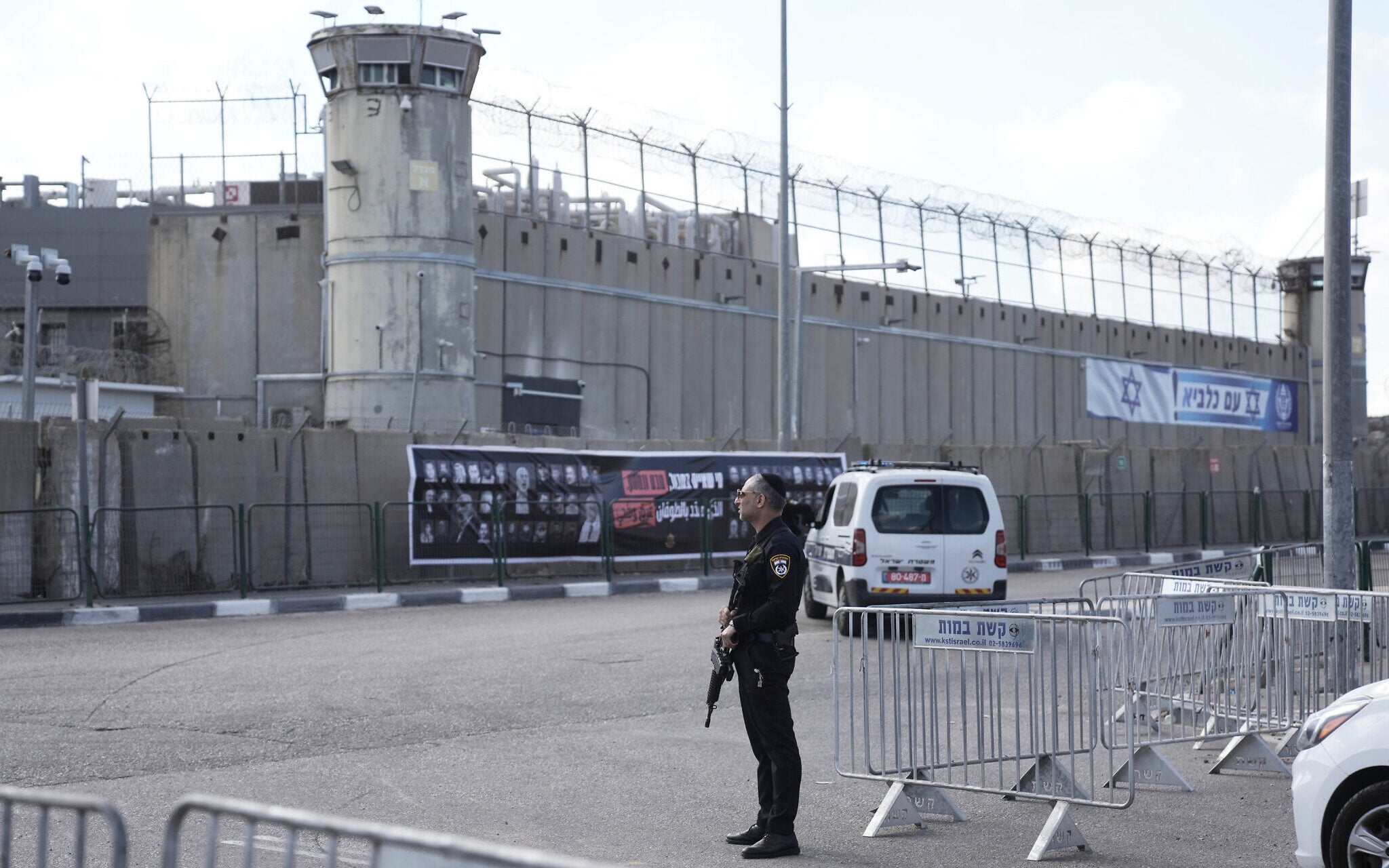
Responding to the letter Israeli rights groups sent in August, the prison service’s legal adviser said it saw no reason to stop using rubber bullets in “measured” and “appropriate” ways. The letter said the prison service is committed to the safety of its prisoners.
Israel is one of several nations, including the United States and Canada, that allow prisons to use “less-lethal” munitions, such as rubber bullets and other projectiles.
Some inmates who were shot did not receive medical care
After the Hamas-led onslaught in southern Israel on October 7, 2023, Israeli forces rounded up thousands of Palestinians in the West Bank and Gaza, doubling the country’s prison population, according to Hamoked, a legal rights group.
Some prisoners and detainees were released last year as part of a ceasefire deal between Israel and Hamas. But Hamoked, which relies on prison service data, says more than 9,000 Palestinians are still imprisoned or detained.
The AP has previously reported on alleged abuse, medical neglect and the deaths of Palestinians in Israeli custody. And while there were previous instances when prison guards used rubber bullets — including during a large-scale raid of Ofer prison in 2019 — the practice wasn’t common, rights advocates say.
In recent months, inmates in Israeli prisons have been struck by rubber bullets in the legs, knees, stomach and pelvic area, according to Physicians for Human Rights Israel. Several of those shot said they weren’t treated for their injuries, according to the PHRI documents shared with the AP.
One man was shot for refusing to return to his cell to protest untreated scabies, his lawyer’s notes said. Another was struck in the leg at point-blank range.
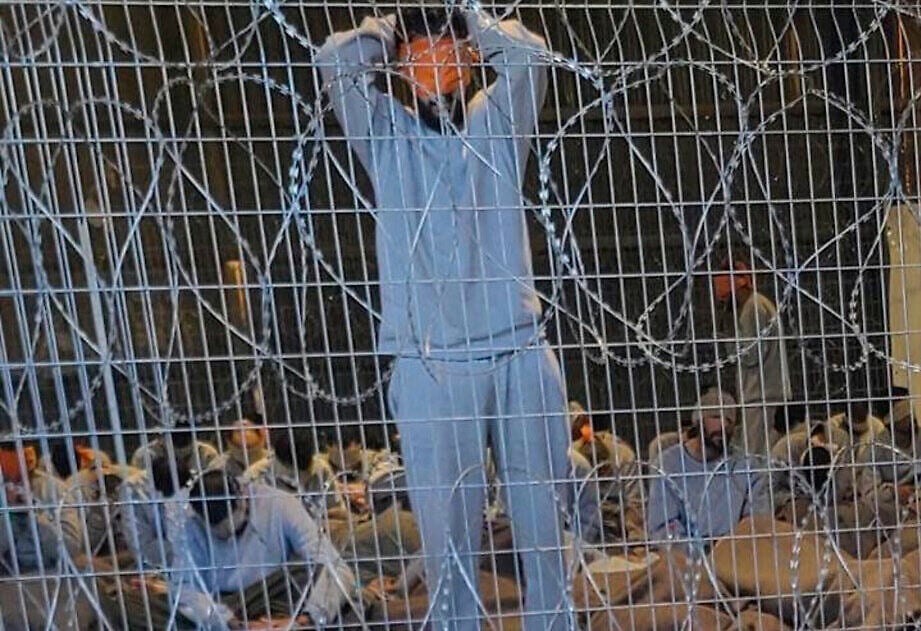
In June, a 45-year-old inmate had to have a testicle removed after it was “completely crushed” by a rubber bullet, according to a report from Soroka Medical Center, where the patient was brought.
One Palestinian detainee, who spoke with the AP on condition of anonymity for fear of reprisal, said he was shot multiple times, most recently in January, over the 30 months he was held in different prisons.
He said there never appeared to be a reason for the shootings, and that guards would sometimes come into the cell in the middle of the night and fire at people.
He said that he was struck multiple times in his legs, and that the bullets, which burned his skin, sometimes caused infection.
The Israel Prison Service did not respond to a request for comment on the detainee’s account.
“I was praying to die,” he said in an interview. “I felt that it’s the end.”
Help us report truthfully on social media

As a multimedia journalist, my job is to take the quality, fact-based journalism produced by The Times of Israel newsroom and make it accessible across every platform — from Instagram posts to podcasts to short-form videos.
This is how many, especially young people, consume news these days. But misinformation is rampant on social media. Our team at ToI produces accurate, responsible short-form reporting on Israel and the Jewish world.
If you believe in the importance of factual social media journalism, please consider joining our reader support group, The Times of Israel Community. Your financial support is essential to sustain responsible multimedia reporting.
— Gabriella Jacobs, multimedia journalist
Support our work Support our work Already a member? Sign in to stop seeing this
KioskNews shows a cleaned-up reading view extracted from the publisher’s page — the original always lives on their site, not ours.