HistoriCity: A short history of the ancient origins of Garba-Raas
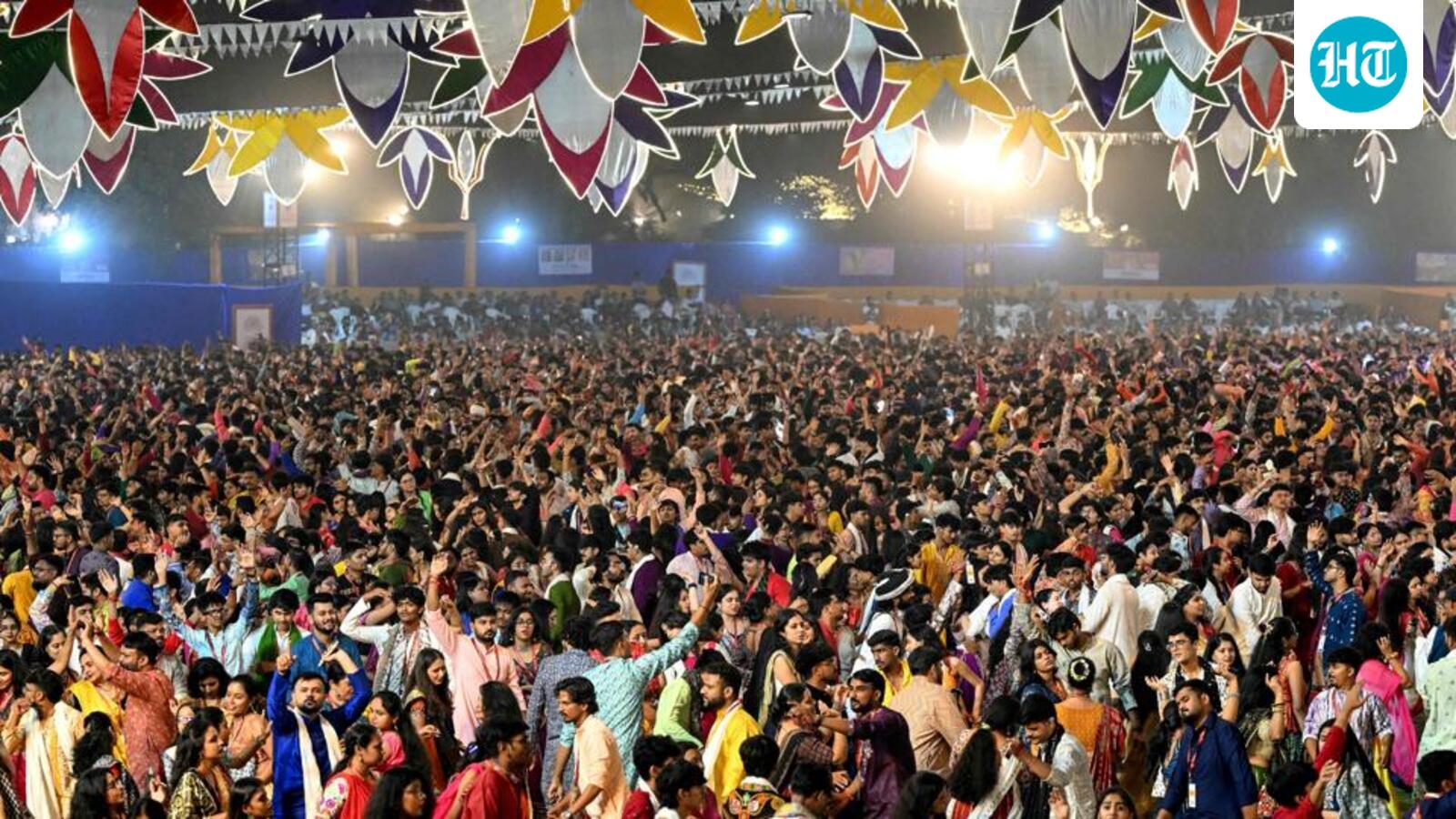
Once rooted in Gujarat’s harvest rituals, Garba and Dandiya Raas evolved into global Navratri symbols, blending traditions while retaining distinct forms.

 Prefer HTon Google

The Garba-Raas comprises two dance forms, the traditional Garba, performed only by women, and the Dandiya Raas in which only men participate. Today, the Garba and the Dandiya have become prominent among the many key symbols of India’s cultural heritage. In 2023, UNESCO recognised Garba as Intangible Cultural Heritage.
As the last echoes of Navratri fade and the sticks are put away for another year, it’s worth asking how a harvest-time dance from Gujarat’s village squares came to fill stadiums from Ahmedabad to New Jersey.
The origins of the dance
Attempting to trace the origins of this circular dance form with any accuracy would be a huge misstep. References exist to dance and revelry painted on rocks and in rock shelters, showing a group of human beings with interlocked hands dancing to drum beats.
There are also literary mentions specifically to men and women dancing in a circle. Abhinavagupta writes in the 11th century text, “the dance that is performed in a circle (maṇḍala) is called Hallīsaka. One single person should lead the [dance], just like Hari (i.e Kṛiṣhṇa) among the shepherdesses”. This quote forms the basis of the legendary link between Dandiya Raas and Krishna.
There are other references as well. Utpala Desai writes in Raas Traditions of Gujarat, “Rajshekhar’s Karpur Manjari refers to a dance in which dancers, standing in two rows dance with wooden sticks to different rhythmic patterns. From Puranas, we learn that the Yadavas arrived in Gujarat somewhere around 1500 BC and left their imprint in mythologies and also in several traditions of performance.”
The Garba derives its name from the Sanskrit word for womb or Garbha. Dandiya signifies two small wooden sticks struck against each other as well as used to strike those of other dancers. While Garba likely began as an agriculture-linked celebration, the origins of both Dandiya and Garba possibly lie in hunting-related rituals performed during the hunter-gatherer period. Both are performed in circles; in the Garba women clap and move rhythmically around an earthen pot symbolising creation. The cyclical movements too resonate the circle of life.
Kapila Vatsayan writes in Traditions of Indian Folk Dance, “The songs of the Garba are often of great antiquity and beauty and have been handed down orally for countless generations. Its origins seem to be tribal revolving around hunting: gradually it became an agricultural ritual…”
Dance as celebration
Dandiya Raas was originally tied to farming life and performed as a celebration, but it has since shed those agricultural roots and become a stage art practised around the world. Naturally, many of its elements have shifted along the way, reshaping the dance itself. What began as spontaneous dance by village men is now loved by both men and women in villages and cities alike. Its evolution, from the dance of the Yadavas to the Mishra raas of the 20th century, has involved much that was added and much that was lost, and it has moved from the village square into auditoriums and performance venues during Navratri.
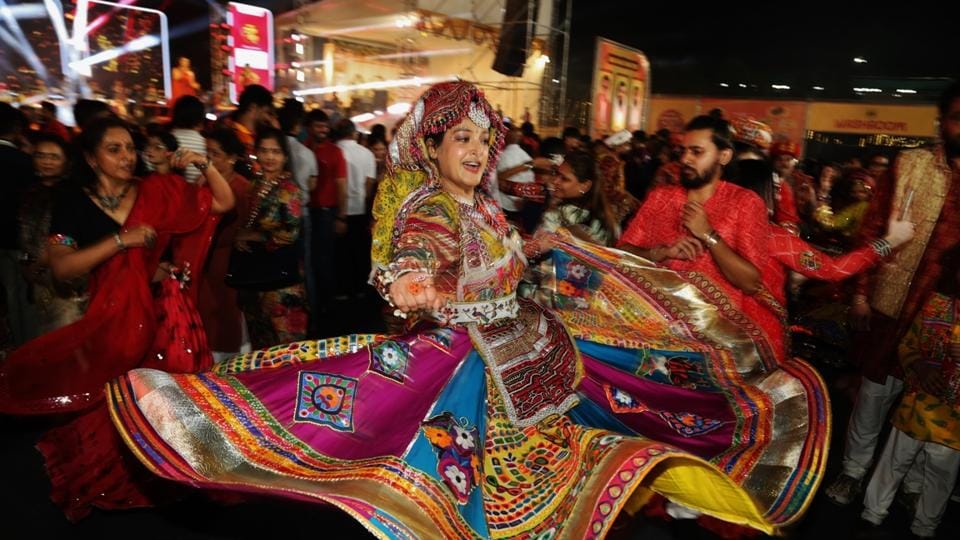
The changes in its costumes, music, steps, choreography and songs closely mirror the social changes of each era. Today, as mentioned, it has blended with Garba, another Gujarati folk dance traditionally performed by women during Navratri, so that Raas-Garba now stands as a shared cultural emblem of Gujarat, even though each dance retains its own distinct character.
However, these dances, particularly the Raas, have been performed by several communities each bringing their own twists to it. “...body movements, postures, choreography, music and costumes of each community are noticeably different. Based on occupational backgrounds of the communities, it can be broadly classified as Kanabi raas (farmers), Maher raas (warrior-Kshatriya), Padhar raas (fishermen), Hudo raas (Shepherds) , Jat raas ( Muslim Maldhari community of Kutch), and Mishra or Gop raas (performed by men and women irrespective of caste and profession)”, Desai notes.
For instance, Padhar Raas is the dance of the Padhars, a Scheduled Tribe counted among the five Adivasi communities of Gujarat. It is performed only by men, and is the only one that does not use dandiya; unlike other Raas dancers, they do not lift their legs or slide, instead playing the manjira to mark time.
The Padhars live in 12 villages around Nal Sarovar, a natural lake lying across Surendranagar district (once part of the princely state of Limdi) and Ahmedabad district. They trace their origins to Sindh and worship Hinglaj Mata, whose shrine is in Baluchistan. The former landscape of the Nal Sarovar area, together with the community’s way of life, culture and raas tradition, points to their having once been a seafaring people settled along the coast. Nal Sarovar is thought to be an extension of the Gulf of Cambay, and it is believed that the Sindhu river once met the sea here. Today the Padhars own no land and work as farm labourers, supplementing a modest income in winter by ferrying tourists around Nal Sarovar in their boats.
Get Latest News, breaking headlines, and top India News, and today real-time updates from across the nation. Stay informed on politics, government policies, crime, Today Weather, and major developments on Hindustan Times
KioskNews shows a cleaned-up reading view extracted from the publisher’s page — the original always lives on their site, not ours.