Side by side in Shenzhen: inside Xi Jinping and Peng Liyuan’s first-couple diplomacy
Vietnamese leader To Lam and his wife, Ngo Phuong Ly, had just moved on. Russian President Vladimir Putin had yet to appear. In the lull, Peng Liyuan took a step towards her husband, Chinese President Xi Jinping.
She began to speak, pointing ahead and to her right as Xi’s gaze followed her gesture before returning to her. They stood close while they talked in the brief interval – no more than a minute and a half – before the next guest arrived.
As China’s first couple welcomed Asia-Pacific Economic Cooperation (Apec) leaders in Shenzhen, Xi and Peng showed the easy affection that has become part of their public image, offering a glimpse of Xi as a husband and of the unusually visible role Peng has come to play in Chinese diplomacy.
Two months earlier, the couple shared another quietly companionable moment in Washington. On the final morning of Xi’s state visit, they climbed the steps of the US National Archives hand in hand.
Inside, as they viewed the Declaration of Independence, Peng rested a hand at Xi’s waist, then brushed it lightly along his side. Xi took a step forward, leaving her room to get a closer look at the document.
China’s first couple drew comparisons at the time with US President Donald Trump and first lady Melania Trump, with some body language experts saying Xi and Peng’s gestures appeared more natural.
Peng was the better-known of the two when a friend introduced them in 1986. Xi was a deputy mayor of Xiamen, while Peng was already a well-known soprano with the People’s Liberation Army and a familiar face from the televised Chinese New Year gala.
She later recalled that he surprised her at their first meeting by asking about singing technique. They married the following year.
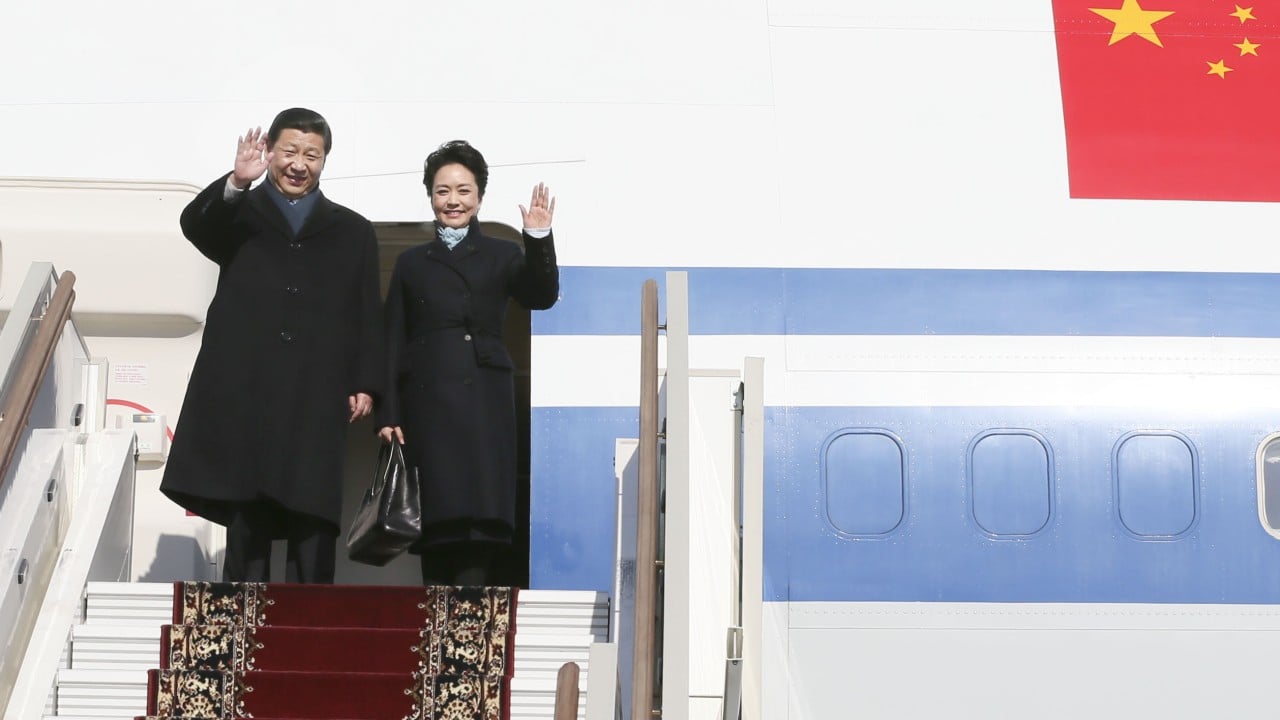
When Xi made his first foreign trip as president in 2013, Peng stepped off the plane in Moscow holding his arm. Images of her in a dark coat and pale blue scarf circulated widely in China.
It was a high-profile debut for a first lady in a country where the wives of recent leaders had generally kept a low profile.
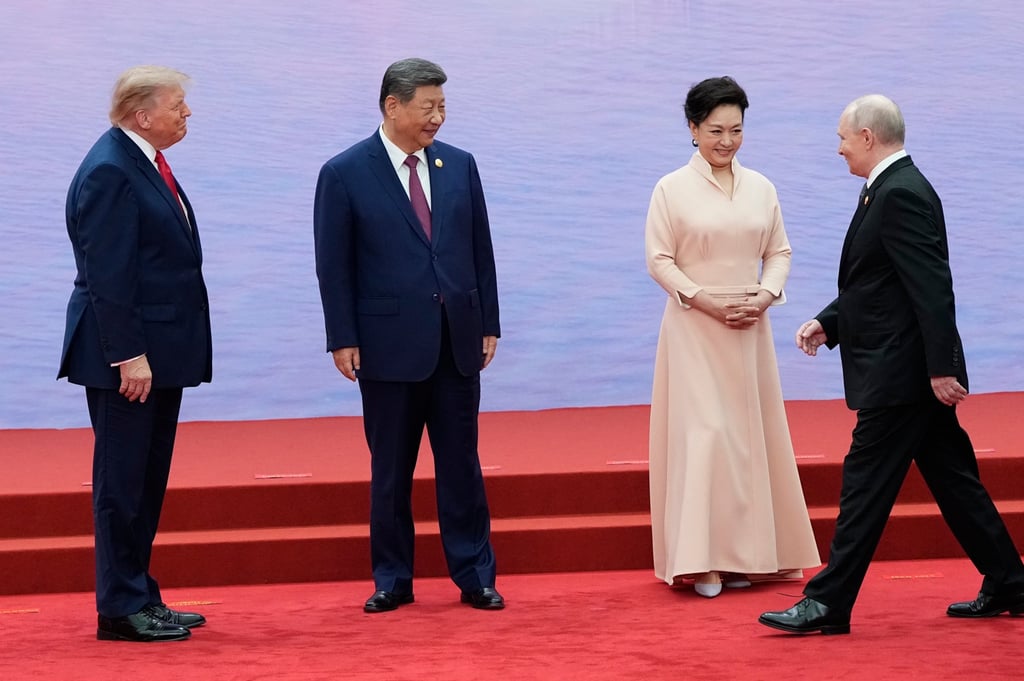
At the Apec welcome banquet in Beijing the following year, the couple posed for a group photo with visiting leaders and their spouses. Peng raised a hand to wave and glanced at Xi. He then raised his hand too.
The moment inspired a music video called “Xi Dada Loves Peng Mama”, which included photos of the couple, some capturing quiet exchanges of glances. The title pairs their nicknames, with dada meaning “uncle” or “father”, and mama meaning “mother” in Chinese.
It soon became an online hit in China, attracting 150 million views within three weeks of its release in 2014.
As the video went viral, the Communist Party’s official newspaper, People’s Daily, shared an article on social media framing Peng’s unusually visible role on state visits as an asset to China’s “soft power”.
“Peng Mama’s beauty, poise and elegance brought warmth, charm and a more approachable face to Chinese diplomacy, giving China an image with greater power to resonate with, inspire and unite people,” it read.
The voice that made Peng a household name in China reached a different audience the following year. As a Unesco special envoy for girls’ and women’s education, she addressed a United Nations event in English in 2015.
In Washington in September, she toured the Smithsonian’s National Museum of Asian Art with Melania Trump, chatting with her in English without an interpreter.
Peng also spoke in English with Donald Trump as she and Xi welcomed him to the Apec banquet on Wednesday.
KioskNews shows a cleaned-up reading view extracted from the publisher’s page — the original always lives on their site, not ours.