DeepSeek engineer defends push for open-source AGI despite higher risks
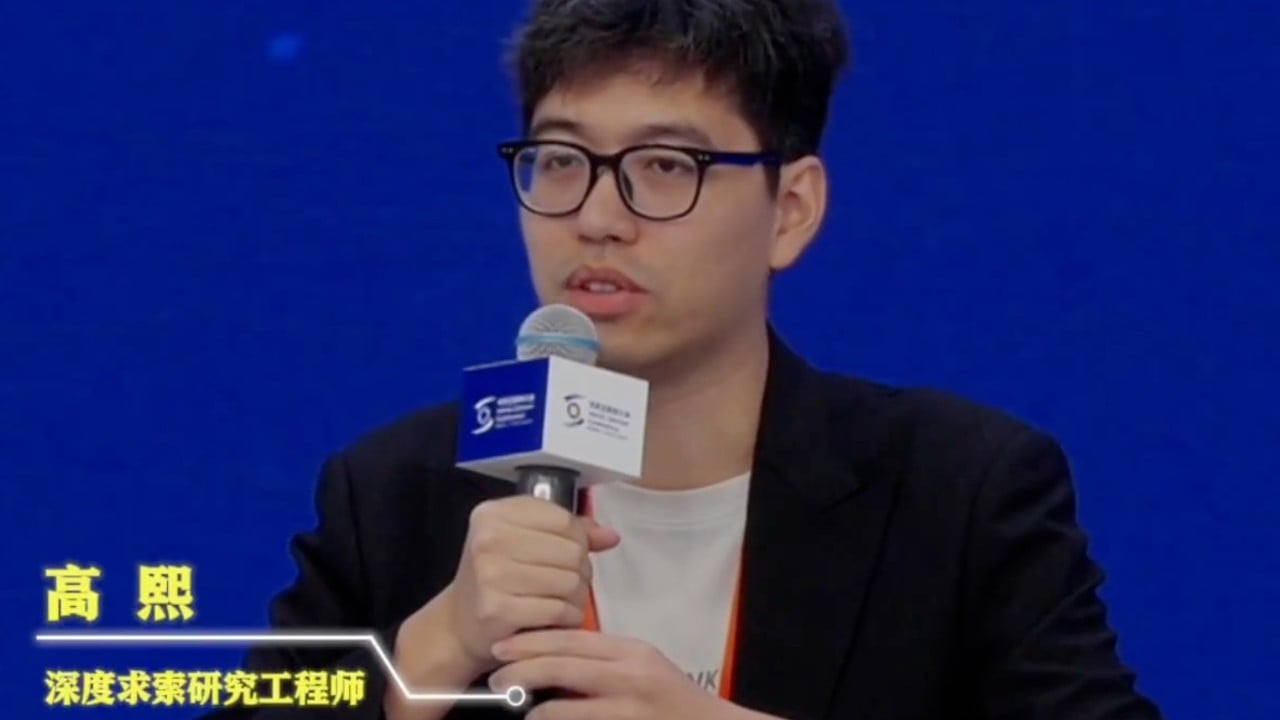
DeepSeek is committed to open-source artificial intelligence to accelerate the arrival of artificial general intelligence (AGI), even if it heightens safety risks, a company engineer says, defying growing safety concerns from the US and scrutiny in China over whether the strategy poses national security risks.
Speaking on Tuesday on an AI panel at the World Internet Conference (WIC) in Wuzhen, DeepSeek engineer Gao Xi said open-source development promoted shared innovations and technical breakthroughs, framing the technology’s rapid progress as a race against the clock, rather than against rival firms.
“If AGI is going to arrive in 10 years, then I hope we can bring this forward to one year. If it is going to arrive in one year, then I hope it can arrive tomorrow,” Gao said, in rare remarks from a DeepSeek representative.
“AI is developing faster every year. For AI model companies, the real competitor in the AI race is not other companies, but time,” Gao said. He added that technical barriers erected by competitors would only temporarily slow competition, not stop the inevitable arrival of AGI.
Gao’s remarks come as China’s open-source push emerges as a key flashpoint in the US-China tech rivalry. Unlike closed-weight systems championed by American front-runners such as OpenAI and Anthropic, open-weight models allow anyone with sufficient hardware to download and modify the code without vendor oversight.

While Beijing has supported open-source ecosystems as a viable way to counter US tech containment, security experts have cautioned that releasing model weights could lower the barrier for rogue actors to conduct cyberattacks or develop bioweapons.
At the same time, some AI pioneers – including Turing Award winners Geoffrey Hinton and Yoshua Bengio – have warned that AGI may escape human control.
Acknowledging that open-source releases “may amplify the impact of safety issues”, Gao said DeepSeek was working to strengthen safety features, including classifications for its models, though he did not provide specific details.
The “irreversible” nature of open-weight models presented additional safety challenges, acknowledged Liu Dayiheng, project lead for Alibaba Group Holding’s open-weight Qwen models, who also appeared on the panel.
However, Liu pushed back against the closed ecosystem model favoured in the West, arguing that the solution lay in a comprehensive governance regime and industry standards rather than technological gatekeeping.
“Without open source, the core technologies of large language models would only be in the hands of a few companies,” Liu said. “Open source allows developers around the world to contribute technology and innovate together.”
Alibaba owns the South China Morning Post.
WATCH: Democrat James Talarico to speak after flipping Texas Senate seat
Beijing is balancing both sides. While authorities proposed new export controls last month targeting frontier AI models with advanced cyber-offensive capabilities, top officials maintained support for open-source software.
Both DeepSeek and Shanghai-based MiniMax completed domestic registrations to open-source their latest models, state media reported last month.
This year’s WIC, convened under the theme “Open Source and Openness”, drew around 1,800 delegates from 138 countries and regions, according to official figures.
Addressing the opening ceremony on Tuesday, Premier Li Qiang said China would continue to pursue “open innovation, promote technology transfer ... and work with all to build an open, inclusive and dynamic global ecosystem for digital innovation”.
The AI panel was moderated by Wang Jian, an academician at the Chinese Academy of Engineering and chairman of the WIC’s AI committee, as well as founder of Alibaba Cloud. Other panellists included Wen Feng, chief architect and head of open platform at MiniMax, and John Higgins, chairman of the International AI Governance Association.
At a separate WIC forum on Wednesday, Unitree Robotics founder Wang Xingxing said much of the data collected by robots remained underused, adding that self-improving physical AI models could help make better use of the data to accelerate technological advances.
KioskNews shows a cleaned-up reading view extracted from the publisher’s page — the original always lives on their site, not ours.