Opinion: Opinion: Jensen Huang's Rise, Fall And America's Silicon Achilles' Heel
In his seminal book Chip War: The Fight for the World's Most Critical Technology, my former graduate-school professor, historian, Dr. Chris Miller, a scholar of Russia and the Kremlin, makes a compelling argument: the next great geopolitical contest will not be fought solely with conventional weapons, but over control of the world's most critical technology.
The contest for semiconductor supremacy, Miller argues, is not merely about commercial conquest or corporate balance sheets. It's about the geopolitical balance of power.
The Cold War shaped an entire generation of foreign-policy thinkers in Washington. But one aspect of that rivalry is often forgotten. Silicon Valley was once a nerve centre of America's military-industrial complex, long before ride-hailing apps, self-driving cars and social media platforms became synonymous with the region.
Indeed, America's mastery of advanced computing helped transform precision-guided weapons, giving Washington a technological edge over Moscow's military. The Pentagon's relationship with Silicon Valley was instrumental in that transformation.
The Cold War may be over, but Washington now finds itself competing with another Communist Party-led power; China. The world's second largest economy, with its distinctive blend of state control and market capitalism, or what one might cheekily call "capitalism with Chinese characteristics".
The weapons have changed; the stratagem remains the same.
Oil powered the industrial age. Semiconductors power the digital one. Data is the new oil, so the ability to process it, through these innocuous-looking wafer-thin chips of silicon (pun writes itself). The light chips are a heavy tilt for the geopolitical balance of power.
America designs the best chips but depends on others to make them. For 33 years, Taiwanese-born entrepreneur Jensen Huang laid the bricks at Nvidia that built the global chips.
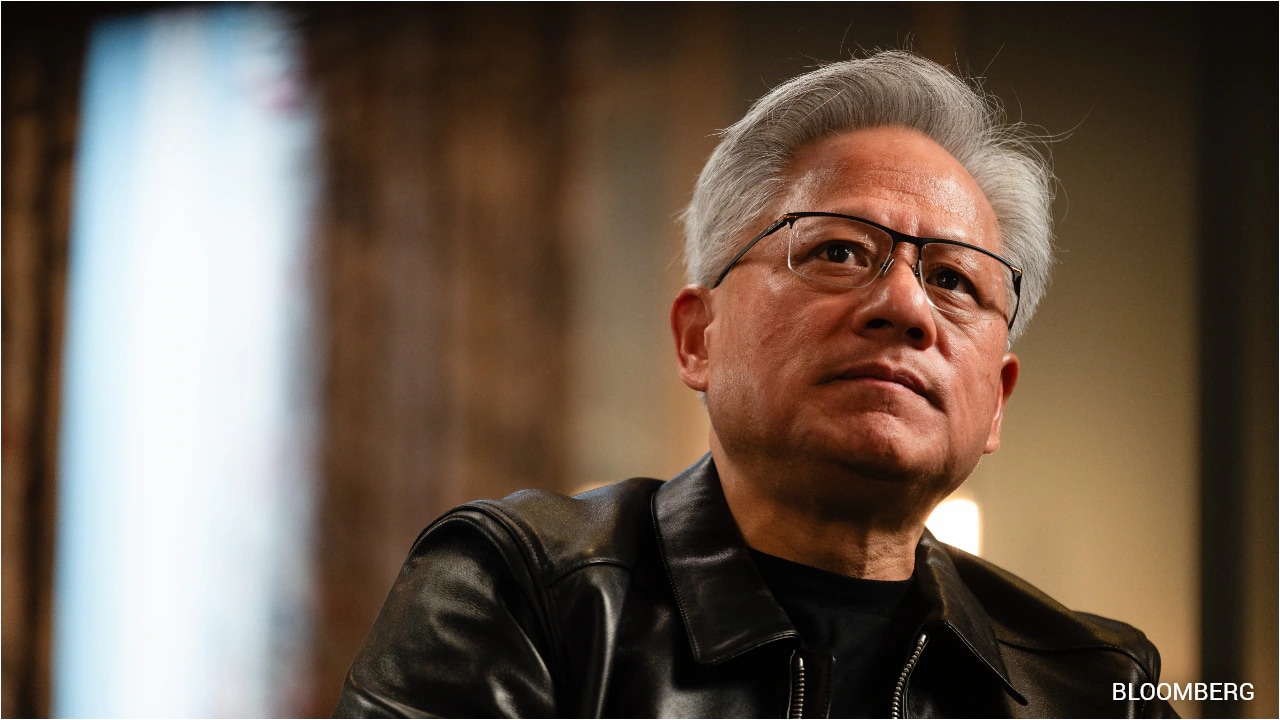
The company's transformation from designing graphics processors for video games into the undisputed champion of the AI revolution has been seismic. Like all maverick Silicon Valley visionaries, he came with his innovation and his eccentricities. Think Steve Jobs and the turtleneck, think Mark Zuckerberg and the hoodie and think Jensen Huang and his trademark leather jacket.
Huang's industry trends were viewed by many as prognostications, his technology mentions moved markets, his perspicacity on the future of computing attracted Washington and Wall Street's finest.
Jensen Huang co-founded Nvidia in 1993; so, for many, Jensen is Nvidia and Nvidia is Jensen. An article on Nvidia this time last week would merely be a hagiography of a Silicon Valley titan and Nvidia's chip prowess. But instead, this one is not a grand epithet but a corporate eulogy.
Rome wasn't built in a day, but legend has it, Nero burned it in one.
Like a house of cards, Jensen Huang's entire Nvidia career of almost four decades came crashing down in four days. His resignation as chief executive, president and board member on November 12 was the final nail in the coffin. The coup de bordgrace began earlier, the unraveling of salacious extra-marital affairs with not just two corporate executives, but another, with one such Alice Huang, whom American intelligence agencies reportedly suspect of being an asset of Beijing.
I said the Cold War was over, but this seems redolent of Cold War era espionage in the chicanery of honeytraps. Huang is no Johnny-come-lately, but many remain flummoxed at a sense of "naivety", this even as a contrite Huang, who in his corporate memo atoned for his unfaithfulness and the hurt he has caused his family.
However, he unequivocally denied knowing any alleged intelligence connection. The Nvidia Board which began its own investigations, had said, at this point, neither corporate secrets nor American national security were compromised. Beijing, didn't mince its words and rejected the espionage allegations as a smear campaign.
But this is where the story goes beyond corporate infamy and an executive mea culpa.
This is a story that spans Silicon Valley technology to Washington's most influential address in the White House, to Wall Street investors, to a Singapore company to Beijing espionage and of course, to Taiwan's chip supremacy. Rarely has a story captured the global imagination, covered all hemispheres, and the geotech, geoeconomic and geopolitical ecosystem like this one. I don't think a butterfly effect suffices to describe one extramarital affair and the subsequent ramifications.
This is a story that unravels the intersection of corporate governance, national security and the enormous concentration of computing power in a handful of American companies and their clout in Washington.
And that is where Miller's Chip War becomes seminal.
Former National Security Adviser (NSA) Jake Sullivan famously described the Biden administration's approach to protecting critical American technologies as a "small yard, high fence." The astuteness behind the aphorism was that Washington would not sever every technological connection with China but rather identify a relatively narrow category of technologies considered indispensable to national security and erect formidable guardrails around them.
And advanced semiconductors were central to that strategy.
Nvidia's graphics processing units (GPUs) are the lifeline of the AI revolution. They train large language models (LLMs), fuel data centers and underpin the expanding gamut of commercial applications.
But computing power is not just restricted to commercial applications. The same processors capable of training sophisticated AI models can support intelligence analysis, military simulations, cyber operations and weapons research. Lest we forget that AI is the first national security tool built entirely by the private sector and not in a military lab at the Pentagon.
Nvidia is not merely another publicly traded company. Its products sit at the heart of America's technological competition with China. Its leadership decisions therefore carry implications far beyond its shareholders.
Ergo the method in the madness of export controls and why Washington has restricted the exports of certain advanced chips to China, even as Huang had argued that access to the Chinese market remains essential for America's commercial competitiveness.
The conundrum was if American companies sold the most advanced technology to China for their commercial benefits and global market share, then Washington would risk strengthening a strategic competitor. If the Cold War was about the space race between the US and the USSR, then today's geopolitical competition is about the AI race and American companies without one of the world's largest markets, would inadvertently accelerate Beijing's own indigenous semiconductor capabilities.
For years, Huang argued that keeping Chinese developers within the American technology ecosystem served American interests better than pushing them towards alternatives at home.
The Spy Who Came in From the Cloud?
At the centre of the controversy is Alice Huang, a Singapore-based businesswoman previously associated with Megaspeed International, a company that purchased Nvidia computing products and subsequently attracted scrutiny over possible chip diversion to China.
American intelligence officials reportedly suspected her of providing information to Beijing. The controversy also reached Washington's highest political echelons. Secretary of State Marco Rubio reportedly briefed President Donald Trump on intelligence concerns surrounding Huang's alleged relationship with a woman suspected of links to Beijing. That alleged intelligence elevated the matter from a Silicon Valley corporate scandal to a question of American national security.
So, from Washington's perspective, the questions are: who knew what, when, where and how did they act or choose not to act on the intel available?
Democrats and Republicans spar tooth and nail on most issues. But they coalesce on some: especially when it's a trifecta of national security, critical technology and China.
And in a bipartisan inquisition, we have Republican committee chairmen Brian Mast, John Moolenaar and Rick Crawford, who have sought answers from Huang concerning possible foreign intelligence exposure and Nvidia's safeguards for sensitive technology. While Democrats in Senators Elizabeth Warren and Chris Coons have called for the preservation of government records concerning Nvidia's China-related business and the administration's handling of export controls.
The incoming 120th congress under a Democratic led House and Senate could consider additional restrictions on advanced AI chips and semiconductor manufacturing equipment, including proposals that could be incorporated into defense legislation.
Huang's resignation has not eliminated the need for that congressional scrutiny.
According to reports, President Trump too approved tougher measures against suspected chip diversion to China, only for disagreements involving Commerce Secretary Howard Lutnick to impede implementation.
Export controls come under the purview of the Commerce Department.
The Trump administration wants American technology companies to remain globally dominant. It also wants to prevent China from acquiring computing capabilities that could undermine American military and intelligence advantages.
When the chips are down, Wall Street feels the dip. Nvidia shares' volatility has rocked markets this week.
Nvidia's technology has not suddenly become obsolete. The global appetite for computing power shows little sign of disappearing.
When one individual has shaped an organization for more than three decades, Wall Street asks, how much of Nvidia's valuation was built around the company, and how much around the founder's charisma?
Huang was more than a leader at the helm. He was Nvidia's technological evangelist, many would say responsible for the AI boom, even though his own future now writes gloom.
The company's prospects are therefore not around product, but person.
There will be no doubt that the board will find a replacement. Who and when aside, what kind of leader is the other question? Will it be a steady hand during turbulent times, or unearthing a visionary technologist? Ironically, unlike Nvidia chips, visionary tech evangelists are not designed in labs.
That's why Jensen Huang's downfall is not just another spectacular Silicon Valley exit involving personal conduct, a board investigation and Wall Street shock.
Chris Miller's central thesis in Chip War is that semiconductors are not merely components inside electronic devices. They underpin the economic and military power of modern states. A modern-day superman today, would not be made of steel, but of semiconductors. That's the Jensen influence.
This story is about the Jensen chapter; the sequels subsequently have other chapters.
Such as should there be an extraordinary concentration of technological influence, where a relatively small number of American companies design the most advanced AI processors and a handful of Asian manufacturers produce them? And should a few enormously influential executives determine where that computing power flows?
How should Washington reconcile commercial competitiveness with national security? How can export controls remain effective when data crosses borders faster than planes? The chips may be down for Nvidia, and the political chips are too high for Washington to gamble with. In the contest for geotech supremacy, the real question is not simply who makes the chips. It is who has access to them and what they decide to do with them?
(Akshobh Giridharadas is the Consulting Editor, US Desk, NDTV)
KioskNews shows a cleaned-up reading view extracted from the publisher’s page — the original always lives on their site, not ours.