Another taste of honey: Shelagh Delaney’s long-lost play about a teenage truant is a little gem

Was Shelagh Delaney a one-hit wonder? Absolutely not. Aside from A Taste of Honey which, in the words of Dominic Dromgoole, “has a rock-solid heart and the gleam of the natural”, she wrote the screenplays for the films Charlie Bubbles and Dance With a Stranger, TV series including The House That Jack Built and several radio plays. But now a 30-minute piece, Catch Me Who Can, has come to light, been released as an audio drama and turns out to be a little gem.
Its origins are fascinating. It deals with a teenage truant and was discovered by Delaney’s daughter, Charlotte, after her mother’s death in 2011. But why did it lay hidden for so long? According to Charlotte, who has adapted it for audio: “It imagines my last few hours on the lam having run away from home and school when I was 14 in 1978. I was gone for three days and two nights. I’d suggest it’s a racing certainty that the reason nothing has ever been heard of it is that it’s about me and my mum had rules about that kind of thing.”
The bulk of the play consists of a testy confrontation between the runaway Hattie (Ivy Sheehan) and her maths teacher (Toby Jones) who tries to persuade her to return home. Although the teacher is only out jogging in a park because he is on strike, he stands for a world of order, discipline and control; Hattie, on the other hand, embodies the need for freedom, anarchy and self-expression. But Delaney imbues the situation with its own ironies. The teacher argues for the sanctity of family life but is himself a conspicuous loner; Hattie’s urge for self-discovery conceals a total disregard for other people including her anxious parents.
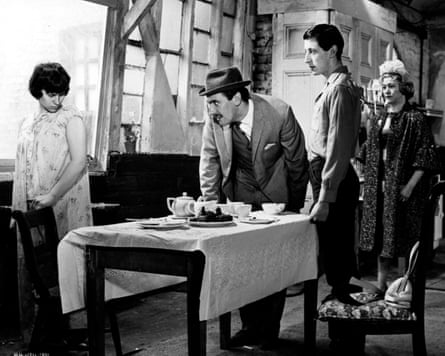
Several things make the play worth listening to. One is the ease and naturalness of the dialogue. Hattie, not unlike the teenage Jo in A Taste of Honey, asks endless questions. At one point she taxes the teacher as to whether he ever did anything to find out what it was like just for the sake of it since “you once told us curiosity was divine”. Delaney also introduces an itinerant bag lady – played by none other than Rita Tushingham who was Jo in Tony Richardson’s film of A Taste of Honey – who says of a relative: “They took him into hospital and took his leg off – just like President Tito.”
As well as a collision between self-restraint and teenage truancy, the play offers – in Charlotte Delaney’s words – a snapshot of London life in 1978, with oblique references to the IRA, the Vietnamese “boat people” and Rock Against Racism: a reminder of the turbulence of the times.
Deftly produced by Polly Thomas, the piece is very well acted by Jones as the audibly repressed teacher and by Sheehan as the experience-hungry Hattie. What you come away with is a reminder of Delaney’s remarkable gift for dialogue and her equal understanding of the value of education and the exuberance of youth.
KioskNews shows a cleaned-up reading view extracted from the publisher’s page — the original always lives on their site, not ours.