Who is Jess Wilson? The millennial Liberal leader on the cusp of history in Victorian election
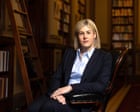
At 5am, Jess Wilson had a moment of panic. In two hours, the Victorian opposition leader’s team was due to post a video of her in a swimsuit, leaping into a pool.
“I was just like, what was I thinking? I’m in my Speedos. This is going to be so embarrassing. People are going to say awful things,” she says. “Oh my God, we’ve got to not post it.”
But she shook it off and posted it anyway.
The March video, timed to coincide with the day the 2026 Commonwealth Games would have opened in Victoria, featured much of the Victorian Liberal party room taking part in would-be Games events, and it went viral. It attracted more than 2m views on Wilson’s social media accounts alone and revived a story many had stopped talking about: the $600m cost to taxpayers of cancelling the event. And, in a political environment where women in public life are routinely subjected to scrutiny over their appearance, Wilson was largely spared.
It was a win for the 36-year-old politician tasked with bringing the Coalition back to power in Victoria after 12 years in opposition characterised by poor polling and rotating leadership.
Allow Instagram content?
This article includes content provided by Instagram. We ask for your permission before anything is loaded, as they may be using cookies and other technologies. To view this content, click 'Allow and continue'.
If current polls are any guide, the first-term millennial MP could be on the cusp of making history as Victoria’s youngest leader since federation and the first woman to be popularly elected as the state’s premier – a feat that neither Labor’s Joan Kirner nor Jacinta Allan achieved.
George Hasanakos from DemosAu says the firm’s September poll has the Coalition leading Labor 52% to 48% on a two-party preferred basis, with Wilson securing the highest personal rating of any Victorian leader, on +8 (the premier, Ben Carroll, by comparison sits on -14).
Her party is so confident in her popularity it has styled itself as Jess Wilson’s Liberal Victoria, with her face rarely absent from campaign material.
While voters are “warming” to Wilson, Hasanakos says many still don’t know her. They are, however, “willing to give her a hearing”.
Speaking from her parliamentary office, under a portrait of Henry Bolte, the Liberal premier who led the state for 17 years, and with her two-year-old son Patrick’s blanket draped over her chair, Wilson says social media is just one way she’s trying to show people the person behind the politician.

With close to 100,000 Instagram followers – about six times that of Carroll – she shares pictures of herself with her toddler and speaks of her passion for the Collingwood Football Club – alongside monologues on crime, corruption and taxes – from her kitchen bench, her office, and the passenger seat of a car.
“People want to know who you are,” she says. “You do probably have to let the barriers down a little bit and show who you are.”
‘She’s just one of those people’
Wilson may only have been elected in 2022, but she first visited Victorian parliament at nine years old, to see her father, Ron Wilson, who represented the seat of Bennettswood in Melbourne’s eastern suburbs from 1999 to 2003. She can still remember his shared office at the top of the grand building.
As she grew older, she began discussing politics with her father, occasionally debating him at the dinner table. But she never assumed she would follow in his footsteps.
“It wasn’t something that I thought I would do,” Wilson says.

As a child, she wanted to be a police officer, inspired by the TV series Blue Heelers. Her younger sister, Sarah, remembers Wilson dressing in a police uniform, setting up a counter with an ironing board and asking her to report crimes.
“I’d be off playing shops or something and she’d say: ‘Come report a crime.’ And I’d come up with crimes at my shop and she’d investigate,” Sarah says.
“She had a police badge and everything.”
Sarah says her sister was both sporty and clever – sometimes frustratingly so. While Sarah locked herself away for weeks to study for exams, Jess worked hard but also managed to fit in television and friends – and then go on to blitz them.
“She’s just one of those people,” Sarah says.
Wilson joined the Young Liberals while studying a double degree in law and arts at Monash University and became president of the university’s Liberal club. There she met Evan Mulholland, now the opposition’s deputy leader in the upper house, who led the equivalent club at La Trobe University. Their circle included the Victorian Liberal senator James Paterson, former Institute of Public Affairs staffers Gideon Rozner and Simon Breheny, and Wilson’s now-husband, Aaron Lane.

Mulholland remembers Wilson as an effective organiser who could draw crowds to events, mobilise volunteers during campaigns and hold her own against political opponents – from within the party and outside it.
“There’s no better place to cut your teeth in politics,” he says. “If you can make it through student politics, then you’re well prepared for anything.”
Path to politics
Wilson then followed a well-trodden path for a future Liberal MP: a stint at KPMG, a brief period advising Josh Frydenberg when he was the federal environment minister, then five years at the Business Council of Australia.
But it wasn’t until the Covid pandemic, which she says exposed the extent to which state governments could shape people’s daily lives, that she was convinced to enter politics herself.
Her brand of politics has been moulded by her father. She says he taught her to stand by her convictions, work hard and “never, ever take anything for granted, particularly your time in politics”. The elder Wilson lost his seat unexpectedly in 2003.
“He’s also someone who’s always taught me to treat all people equally, regardless of who they are, where they’re from,” Wilson says.

She describes herself as a “classical Liberal”, focused on the economy, providing essential services but otherwise keeping government out of people’s lives. In other words, she has little time for culture wars or fringe issues.
“I have a view that individuals are best placed to determine what happens in their lives,” Wilson says.
Wilson has championed marriage equality, marched with Liberal Pride, backed climate action and the transition to net zero, and was the only Victorian Liberal to publicly support the yes vote in the Indigenous voice to parliament referendum.
She says these aren’t “ideological” positions but reflect the fact she’s a millennial and a mother. From the more conservative corners of her party, these stances have earned her the labels “Labor-lite” and “a teal in blue clothing”.

Yet, on her first day as leader, Wilson made clear that the party would stand by its proposal to scrap Victoria’s treaty – the first of its kind reached between First Peoples and an Australian government – within its first 100 days in office.
She denies it is hypocritical, describing the Victorian treaty and the body it established as “very different” to the voice, given its access to cabinet and independent budget that bypasses normal budgetary processes.
“Also, Victoria had their say on the voice, and they voted no, and I understand and I respect that.”
Despite her climate credentials, she is also committed to scrapping the VNI West – a proposed 240km transmission line connecting Victoria to New South Wales and linking several renewable energy projects along the way – and to “throw open the doors” to gas exploration.
On gender, Wilson’s views and actions reflect a complex stance. She is against quotas, but under her leadership more women have been preselected as candidates, and many in winnable seats.
Does that make her a feminist? “If I can inspire other women to know that they can do it, then I guess if that makes me one, sure,” she says.

The young leader says she has never experienced sexism in the job. Pressed on this, she clarifies that she was referring specifically to “overt sexism”.
When asked about the subtler slights other female politicians are quick to raise – mansplaining and subtle undermining – she says: “It’s not something I think a lot about.”
“I’m the first female leader of the Liberal party, and I had unanimous support of my party room to get there,” she says. “I’ve only ever felt supported in this role from my team.”
When Labor began to lay the groundwork for an election campaign centred on abortion rights, Wilson quickly issued a statement reaffirming her support for current laws, under which abortion is legal up to 24 weeks and later if the agreement of two doctors is obtained.
“I could see what Labor were planning to do. I could see that they were going to go down the path of what I think is a pretty disgusting gutter politics,” Wilson says.
Then, when Labor announced plans to reduce out-of-pocket costs for abortion care, Wilson matched its commitment within hours. Given the deep divisions within the Liberal party room on abortion in the past, the speed of her response – and the lack of significant public dissent – was notable.
Speaking before Wilson announced the abortion commitment, Mulholland described Wilson’s “razor-sharp instincts”.
“Where we need to make a decision on a bill or a tricky issue, she’s been two steps ahead of what the ramifications might be,” he says.
A shift in the party
Wilson has also moved swiftly to contain internal disputes that under previous leaders dragged on for months, if not years. Her leadership coup was relatively bloodless, concluded within 48 hours and including an offer of a senior role to her predecessor, Brad Battin. When Moira Deeming made headlines in June by alleging, inaccurately, that Matthew Guy had placed her in a headlock, Deeming was disendorsed as a candidate.
Liberal sources, who spoke on the condition of anonymity, point to two factors behind the shift: Wilson’s broader institutional support compared with previous leaders, and the team she has assembled around her.
That team includes experienced hands such as the former federal Liberal director Brian Loughnane, who agreed to chair the state executive at her request, and Alyson Hannam, appointed as the party’s state director last November. Both have overseen election victories while Loughnane’s wife, Peta Credlin, once a supporter of Deeming, has also adopted a different tone in her commentary on the Victorian Liberals. Senator Paterson is also joining her on the campaign trail.

Wilson has also made room for conservatives, including Bev McArthur in the upper house leadership.
“There was a recognition that the winner-takes-all approach, which has happened under the last two leaders, wasn’t working for our party room,” one source says.
After three leaders, lawsuits and years of internal warfare, can Wilson guarantee those days are behind the party?
“We’re demonstrating it every day,” she says. “People can look at us and see that we are united, that we’re focused, and I’m incredibly proud of my team.”
Wilson is tight-lipped about possible cabinet positions (“we’ll see where we land after 28 November”) and is similarly guarded when asked about preferences or potential deals with One Nation, saying the Coalition is running for majority government.
The Coalition needs 16 seats to form a majority, which Hasanakos estimates will require a statewide swing of about 7%. “Given current polling, it may not be much of a hurdle,” he says. “But for those seats on small margins, where One Nation’s a real chance, it could derail their campaign for majority government.”
Wilson’s agenda for the first 100 days of government is already laid out. Parliament would be recalled to sit the week of Christmas to pass “adult crime, adult time” youth justice laws and introduce a one-strike rule for bail, as well as abolish treaty, the emergency services levy and payroll tax for private schools and GPs. Then work on the budget begins.
She is also keen to examine ways to support parents navigating the “juggle” of work and parenting as she is, though what that actually entails is vague. Better childcare could be one option – alongside the Nationals MP Annabelle Cleeland and Labor’s Martha Haylett, Wilson helped establish a carers’ room at parliament for their young children.
For all the challenges ahead, those around Wilson say she is under no illusion about the scale of the task. She has repeatedly told reporters, business forums and community events that there are “difficult decisions” to come.
“She’s very aware of the massive job ahead of her,” Sarah says of her sister. “But she’s not scared of it.”
KioskNews shows a cleaned-up reading view extracted from the publisher’s page — the original always lives on their site, not ours.