Energy sector’s inefficiencies are deepening Ghana’s fiscal and social inequalities — Ben Boakye
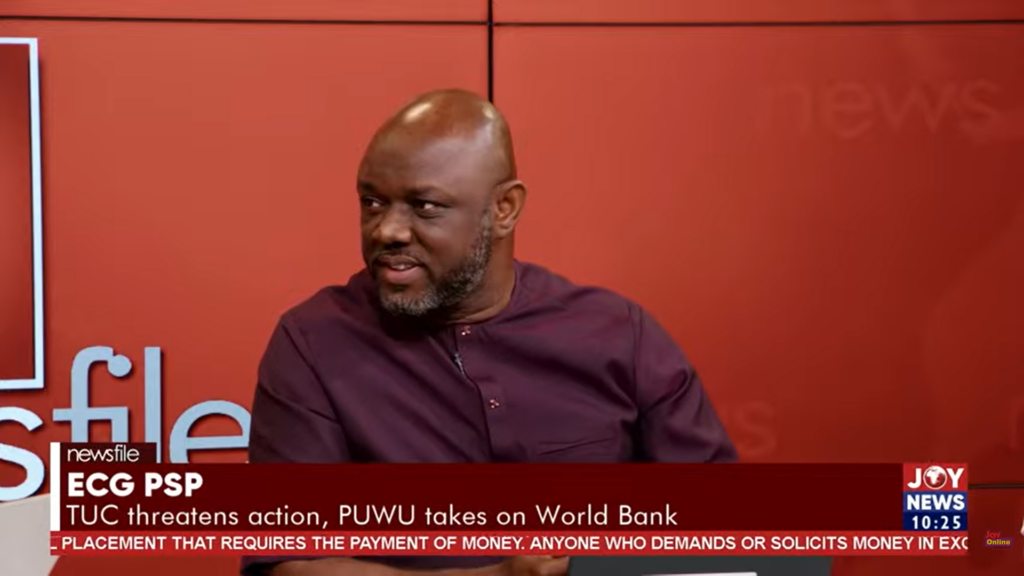
The Executive Director of the African Centre for Energy Policy (ACEP), Ben Boakye, has warned that Ghana’s persistent inefficiencies in the energy sector are not only draining public finances but also worsening inequality among citizens.
Speaking on JoyNews’ Newsfile on Saturday, September 12, Mr Boakye said the country already knows the fundamental problems affecting the sector and should focus on fixing them rather than continuing to finance their consequences.
His comments come amid growing controversy over proposed reforms to the Electricity Company of Ghana (ECG), with the Trades Union Congress (TUC) threatening action and the Public Utilities Workers’ Union (PUWU) raising concerns with the World Bank.
Mr Boakye said the financial burden of the energy sector is far greater than the headline figures contained in government expenditure.
He pointed to about GH¢3.5 billion in annual spending, arguing that this becomes relatively insignificant when compared with the scale of waste and financial losses within the sector, particularly at ECG.
According to him, ECG alone records losses of more than GH¢20 billion annually, with the resulting burden ultimately absorbed by the national budget.
He cautioned, however, that even the GH¢20 billion figure does not fully reflect what the country is committing to keeping the energy system running.
Mr Boakye said government has increasingly relied on borrowing to finance obligations to independent power producers (IPPs) and meet fuel costs for electricity generation.
Ghana, he explained, has raised cedi-denominated bonds on the domestic market, sometimes at interest rates above 20 per cent, while also turning to Eurobond borrowing. Some of those funds have been used to settle IPP debts and pay for fuel used to generate electricity.
When the interest costs on those borrowings are combined with recurring debts generated through ECG, Mr Boakye estimates that the total annual cost of how Ghana has managed the energy sector could approach GH¢40 billion.
The ACEP chief said the debate must also consider the social consequences of the sector’s financial problems.
He argued that Ghana is failing to confront the full implications of what he described as an existential threat to the national budget, while the cost of inefficiency is also reinforcing existing inequalities.
According to Mr Boakye, ordinary citizens are effectively contributing towards servicing and amortising energy-sector debts through public finances, yet some of those same citizens do not have access to electricity.
He said this makes the issue not simply a question of how much government spends on energy, but also of who bears the cost and who benefits from the system.
For him, continuing to accumulate debt to sustain an inefficient system creates a cycle in which taxpayers shoulder an increasing financial burden without necessarily receiving commensurate improvements in electricity services.
Mr Boakye also addressed concerns that allowing greater private-sector participation in ECG could result in the state losing control of a strategic national asset.
He rejected that premise, arguing that ownership and regulation are separate issues.
“The state is the ultimate regulator of everything that happens in this country,” he said.
He maintained that the central consideration should be whether a proposed arrangement can deliver greater efficiency and resolve the problems confronting the electricity distribution sector.
“I believe in efficiency. I believe in the right way of doing things,” he added.
Rather than allowing the ownership debate to dominate discussions, Mr Boakye said Ghana must identify the appropriate institutional and commercial structure capable of addressing ECG’s financial and operational challenges.
“We just have to define the vehicle that addresses the problem,” he said.
His position comes as organised labour mounts opposition to proposed changes in the electricity sector. The TUC has threatened action, while PUWU has taken its concerns to the World Bank.
For Mr Boakye, however, the scale of ECG’s losses, accumulated energy-sector debt and borrowing costs means Ghana cannot afford to preserve an arrangement that continues to impose a heavy burden on the national purse.
He argued that the ultimate test of any reform should be whether it reduces waste, improves efficiency, protects consumers and makes the energy sector financially sustainable, while ensuring that the state retains effective regulatory oversight.
DISCLAIMER: The Views, Comments, Opinions, Contributions and Statements made by Readers and Contributors on this platform do not necessarily represent the views or policy of Multimedia Group Limited.
Tags:
DISCLAIMER: The Views, Comments, Opinions, Contributions and Statements made by Readers and Contributors on this platform do not necessarily represent the views or policy of Multimedia Group Limited.
KioskNews shows a cleaned-up reading view extracted from the publisher’s page — the original always lives on their site, not ours.