Netflix’s 2-Season Sci-Fi Masterpiece Fixes 'Westworld's Biggest Mistake

Giovana Gelhoren is a High-Trending Topics Writer at Collider, covering the most-talked-about stars, movies, and TV shows. Before joining Collider, she was a Digital News Writer at People Magazine and served as Associate Editor at SheKnows, where she honed her expertise in celebrity coverage and entertainment journalism.
A proud Latina from Rio de Janeiro, Brazil, Giovana graduated from Northwestern University with a degree in Journalism and International Studies. She has interviewed countless celebrities, including Anne Hathaway, Halle Berry, Pamela Anderson, Jamie Lee Curtis, and Brenda Song, and is known for her encyclopedic knowledge of film, TV, and pop culture.
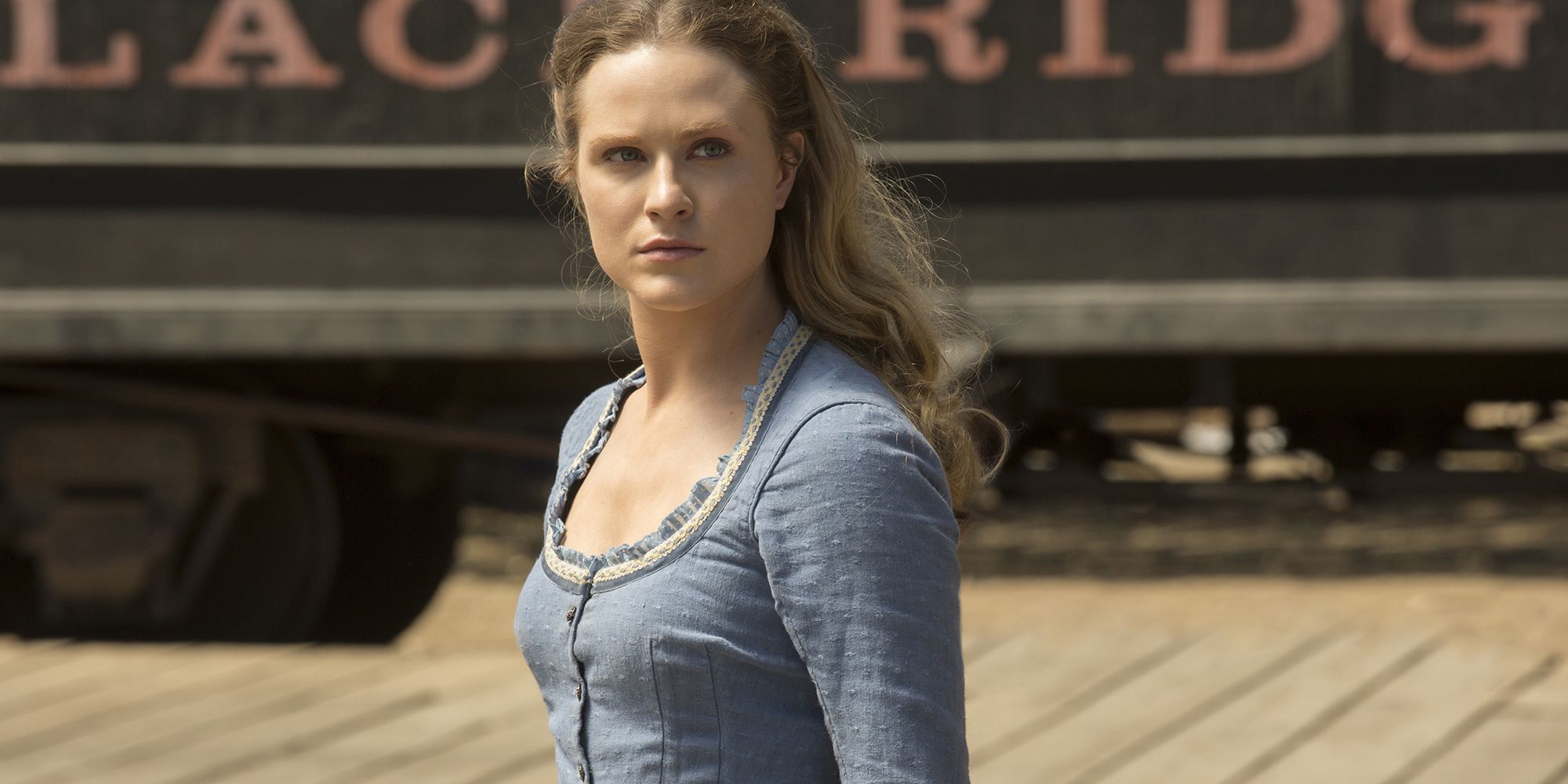
When it comes to TV, it's not exactly uncommon for a show's first season to be its best. Especially when it comes to sci-fi series, the first season is where the characters and settings are introduced, and where the mechanisms and plot points begin to take place. That was especially the case for Westworld, an HBO series that first premiered in 2016 and blew viewers' minds with its first installment.
With that said, however, the next three seasons of the show that followed famously lost track of what made Season 1 so compelling. With increasingly complicated plot mechanics and a world that was ever-expanding, Westworld de-prioritized the emotional depth and character development that made Season 1 such a standout. The show was then canceled after Season 4. But as fans of the series still mourn the ending, and how the storyline panned out over the seasons, one Netflix series could be the perfect replacement. Pantheon, which premiered on September 1, 2022, is a must-watch for Westworld fans.
What Is 'Pantheon' About?
Pantheon centers around a lonely, heavily bullied teenager named Maddie Kim (Katie Chang), who is going through a journey with grief after losing her father, David (Daniel Dae Kim), two years prior. The series kicks off when, after receiving mysterious messages online and getting worried that she's been hacked, Maddie realizes that the person trying to contact her is her deceased father — well, sort of. As it turns out, David, once a brilliant software engineer, had his mind uploaded to a computer before his death and lives on through technology.
By doing so, David became a UI, or uploaded intelligence: an AI variant referring to digitized human consciousness. In Pantheon, a person's mind can be scanned and uploaded onto a computer network, allowing it to live on digitally—interacting with other UIs or even shaping the physical world through technology. When Maddie and David reunite, he discovers that his reality has completely changed. He has missed two years of his daughter’s life; she’s grown and evolved, and he’s missed it all. Moreover, his daughter and wife have had the chance to mourn him and now have to readjust their entire lives to his return to existence.
In addition to Maddie and her family's storyline, the series also follows Caspian (Paul Dano), who seems like a typical teenager obsessed with his computer and dealing with a rough situation at home with his mother and an abusive father. Things are not as they seem, and the little family might be closely tied to these large tech companies and the technology they use. Eventually, Maddie and Caspian’s paths cross, and we start on a journey questioning what humanity is, whether an uploaded brain is ethical, whether the uploaded person is human or just code, and all the other questions that come with this kind of technological advance. The cast of the series also includes Rosemarie DeWitt, William Hurt in one of his final performances, Taylor Schilling, Aaron Eckhart, Raza Jaffrey, Scoot McNairy, Ron Livingston, Maude Apatow, and Anika Noni Rose.
'Pantheon' Is a Satisfying and Emotionally Grounded 'Westworld' Replacement
With the synopsis of Pantheon alone, it's clear that both the animated series and Westworld are adding to the ongoing discussion about AI, the rise of technology and the existential questions of what it means to be human. While Delos in Westworld is all about manufacturing physical robotic bodies who, with time, began gaining their own consciousness, Logorhythms in Pantheon does it the other way round, using Uploaded Intelligence to bring human thinking and emotion into computers as the next step in human evolution.
Most importantly, Pantheon delivers on its premise in a way that doesn't falter or disappoint like Westworld ultimately did to its viewers. Throughout its two seasons, the series expands on its ideas and on Logorhythms' mission to take over the world, all while keeping the emotional story surprisingly intimate. So, while Westworld had the bigger budget and the flashy robot bodies, Netflix's animated series takes similar (if not, the same) questions and makes them feel much more personal and emotionally grounded. Westworld’s biggest mistake was becoming more interested in its puzzle than its people. Pantheon makes sure that the same mistake doesn't happen, and that people and their relationships are at the forefront at all times.
Ultimately, while both series question the idea of robots gaining consciousness, and what that could mean for the future of society, both series approached its stories in different ways. While Westworld inevitably expanded its world looking for "gotcha" moments and twists, Pantheon took that idea and delivered a concise, emotional story, one that was consistent and entertaining all throughout.

- Release Date
- 2022 - 2023-00-00
- Network
- Prime Video, AMC+, HIDIVE
- Directors
- Melchior Zwyer, Ed Tadem, Micah Gunnell, David Dwooman Woo, Mari Yang
- Writers
- Michael Taylor, Scott Gunnison Miller
KioskNews shows a cleaned-up reading view extracted from the publisher’s page — the original always lives on their site, not ours.