The 6 Best Sci-Fi Books Released Since 2000, Ranked

Sign in to your Collider account
Sci-fi still is like the genre serious literary awards politely ignore because it is harder to pull off when you do not have visual effects helping you. However, these six completely changed the game and spent the last two decades proving that wrong one prize at a time. A Booker-shortlisted author, a Hugo winner translated from Chinese, a self-published debut that out-researched actual NASA engineers, all sitting on the same list.
None of them lean on space battles or laser guns or all those cliche stories to land their spot. The connecting rope between them is patient thinking about what happens to people once the rules of reality shift under them. These six books are the best of their game and will probably hook you till you read that last page.
6 'Annihilation' — Jeff VanderMeer

An unnamed biologist joins the twelfth expedition into Area X, a quarantined stretch of coastline where nature has started behaving in a weird way. Every expedition before hers ended in mass suicide, unexplained deaths, or people returning home changed. Her own husband came back from the eleventh expedition already dying, and finding out why pulls her deeper into the zone than any training prepared her for.
Jeff VanderMeer never explains Area X in any conventional sense, you get confused as you read it and it is kind of the whole point, the book trusts dread over answers. It won the Nebula Award and got adapted into a 2018 film by Alex Garland, though the novel's creeping, page-by-page unease is a harder thing to translate to screen than the plot alone suggests.
5 'Children of Time' — Adrian Tchaikovsky

Humans try to terraform a distant planet using monkeys and a nanovirus designed to speed up evolution, but the monkeys never survive the trip, and the virus ends up working on the planet's spider population instead. Generations later, an entire intelligent spider civilization has developed language, tools, and its own complicated politics, while the last surviving humans drift through space looking for anywhere left to land.
Adrian Tchaikovsky makes you root for giant spiders more than the actual humans by the book's second half. It won the Arthur C. Clarke Award, and the generational spider chapters alone justify the whole concept even before the two storylines finally collide.
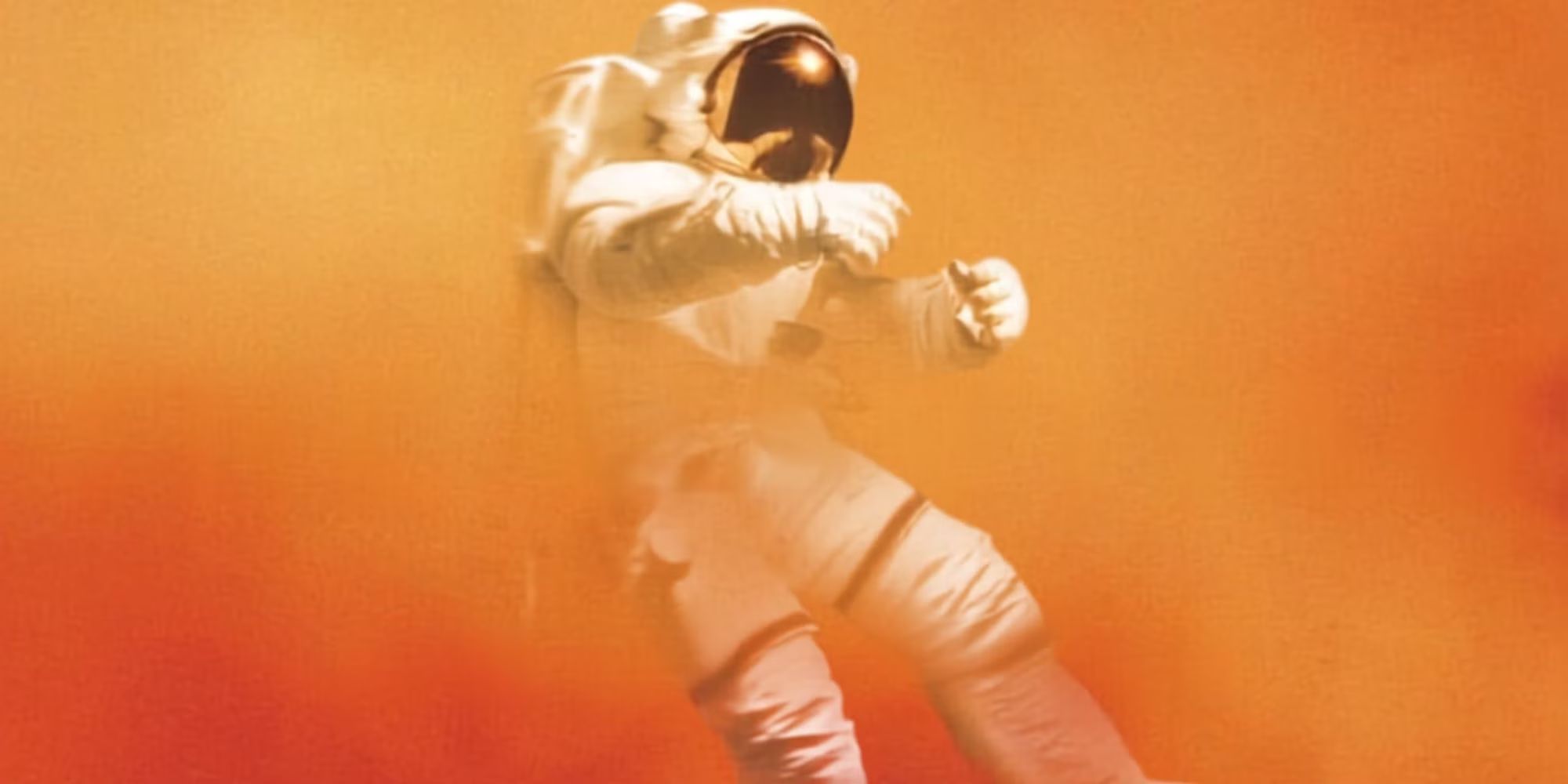
4 'The Martian' — Andy Weir
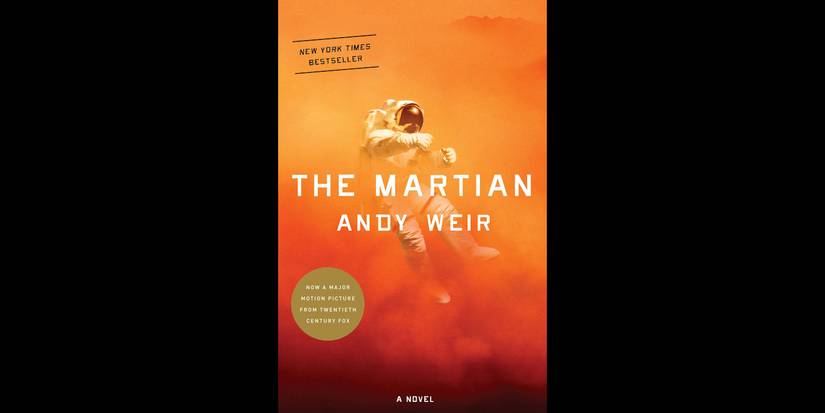
Mark Watney gets left behind on Mars after a storm forces his crew to evacuate without him, and he has to keep himself alive using nothing but engineering knowledge, a ruined greenhouse, and his own waste as fertilizer. Andy Weir originally posted the book free online, one chapter at a time, before it ever got picked up by a publisher.
The science is researched down to the smallest detail, orbital mechanics, chemistry, actual NASA procedures, and Weir apparently loved getting corrected by readers who caught mistakes along the way. It became a Matt Damon movie a few years later, but the book's dry, sarcastic first-person voice cannot be replicated with CGI and practical effects.
3 'Never Let Me Go' — Kazuo Ishiguro

Kathy H. narrates her own childhood at Hailsham, a boarding school in the English countryside, where she and her classmates are being raised for one specific, horrifying purpose none of them ever really question. Kazuo Ishiguro barely explains the actual science behind any of it, no labs, no technical jargon, just the quiet, accepted reality these characters have grown up inside.
That restraint makes the book devastating, the horror comes from how calmly everyone accepts a fate most readers would fight against immediately. It won multiple major literary prizes and got adapted into a film in 2010, though the book's slow, understated dread is unmatchable.
2 'The Three-Body Problem' — Liu Cixin
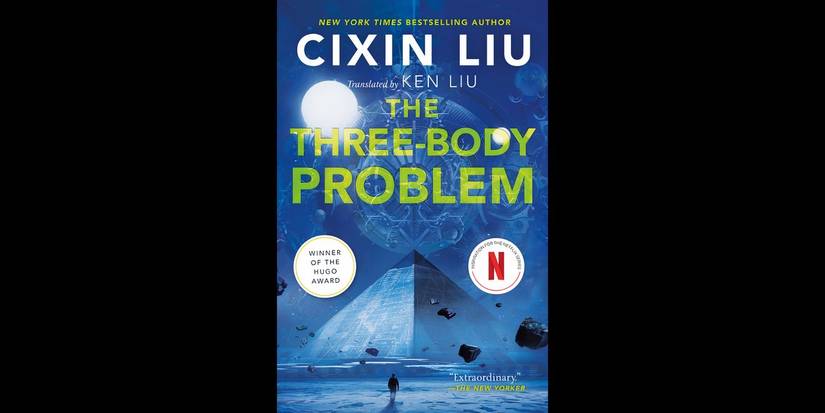
A string of scientist suicides pulls present-day researcher Wang Miao into a strange virtual reality game called "Three Body," where players try to survive on a planet whose orbit is being wrecked by an unsolvable physics problem. Liu Cixin cuts back and forth between that mystery and Ye Wenjie's story during China's Cultural Revolution decades earlier, where one bitter decision ends up shaping the fate of the entire planet.
It became the first Asian novel to win the Hugo Award for Best Novel, translated into English by Ken Liu, an acclaimed sci-fi writer in his own right. Liu Cixin reportedly wrote much of the trilogy while still working full-time as a computer engineer at a power plant, squeezing in chapters around an entirely unrelated day job.
1 'Cloud Atlas' — David Mitchell

Six separate stories nest inside each other here, a Pacific sea voyage in the 1850s, a composer in 1930s Belgium, a journalist thriller in the '70s, a present-day publishing farce, a cloned worker in dystopian Korea, and a post-apocalyptic future in Hawaii. Each story gets interrupted halfway through and picked back up later in reverse order, like a set of nested dolls being opened and then closed again.
David Mitchell writes every single section in a completely different genre and prose style, and the whole thing still reads like one connected story about souls echoing across centuries. The Wachowskis and Tom Tykwer adapted it into a film in 2012, but the book's structure, six stories folding into each other like a puzzle box, is something only the page could really pull off.
Collider Exclusive · Sci-Fi Survival Quiz Which Sci-Fi World Would You Survive? The Matrix · Mad Max · Blade Runner · Dune · Star Wars
Five universes. Five completely different ways the future went wrong — or sideways, or up in flames. Only one of them is the world your instincts were built for. Eight questions will figure out which dystopia, galaxy, or desert wasteland you'd actually make it out of alive.
💊The Matrix
🔥Mad Max
🌧️Blade Runner
🏜️Dune
🚀Star Wars
01
You sense something is deeply wrong with the world around you. What do you do? The first instinct is often the truest one.
02
In a world of scarcity, what resource do you guard most fiercely? What we protect reveals what we believe survival actually requires.
03
What kind of threat keeps you up at night? Fear is useful data — if you're honest about what you're actually afraid of.
04
How do you deal with authority you don't trust? Every dystopia has a power structure. Your approach to it determines everything.
05
Which environment could you actually endure long-term? Survival isn't just tactical — it's physical, psychological, and very much about where you are.
06
Who do you want in your corner when things fall apart? The company you keep is the clearest signal of who you actually are.
07
Where do you draw the line — if you draw one at all? Every survivor eventually faces a moment that tests what they're actually made of.
08
What would actually make survival worth it? Staying alive is one thing. Having a reason to is another.
Your Fate Has Been Calculated You'd Survive In…
Your answers point to the world your instincts were built for. This is the universe your temperament, your survival instincts, and your particular brand of stubbornness were made for.
The Matrix
You took the red pill a long time ago — probably before anyone offered it to you. You're a systems thinker who can't help but notice the seams in things.
- You're drawn to understanding how the system works before figuring out how to break it.
- You'd find the Resistance, or it would find you — your instinct for spotting constructed realities is the machines' worst nightmare.
- You function best when you have access to information and the freedom to act on it.
- The Matrix built an airtight prison. You'd be the one probing the walls for the door.
Mad Max
The wasteland doesn't reward the clever or the well-connected — it rewards those who are hard to kill and harder to break. That's you.
- You don't need comfort, community, or a cause larger than the next horizon.
- You need a vehicle, a clear threat, and enough fuel to outrun it — and you're good at all three.
- You are unsentimental enough to survive that world, and decent enough — just barely — to be something more than another raider.
- In the wasteland, that distinction is everything.
Blade Runner
You'd survive here because you know how to exist in moral grey areas without losing yourself completely.
- You read people accurately, keep your circle small, and ask the questions others prefer not to answer.
- In a city where humanity is a legal designation rather than a feeling, you hold onto something that keeps you functional.
- You're not a hero. But you're not lost, either.
- In Blade Runner's world, that distinction is everything.
Dune
Arrakis is the most hostile environment in the known universe — and you are precisely the kind of person it rewards.
- Patience, discipline, and political awareness are your core strengths — and on Arrakis, they're survival tools.
- You understand that the long game matters more than any single victory.
- Others come to Dune and are consumed by it. You'd learn its logic and earn its respect.
- In time, you wouldn't just survive Arrakis — you'd begin to reshape it.
Star Wars
The galaxy far, far away is vast, loud, and in a constant state of violent political upheaval — and you wouldn't have it any other way.
- You find meaning in being part of something larger than yourself — a cause, a crew, a rebellion.
- You'd gravitate toward the Rebellion, or the fringes, or whatever pocket of the galaxy still believes the Empire's grip can be broken.
- You fight — not because you have to, but because standing aside isn't something you're capable of.
- In Star Wars, that willingness is what makes all the difference.
KioskNews shows a cleaned-up reading view extracted from the publisher’s page — the original always lives on their site, not ours.