Little real contact with Modi, but there is some common ground: Sonia Gandhi in memoir Belonging
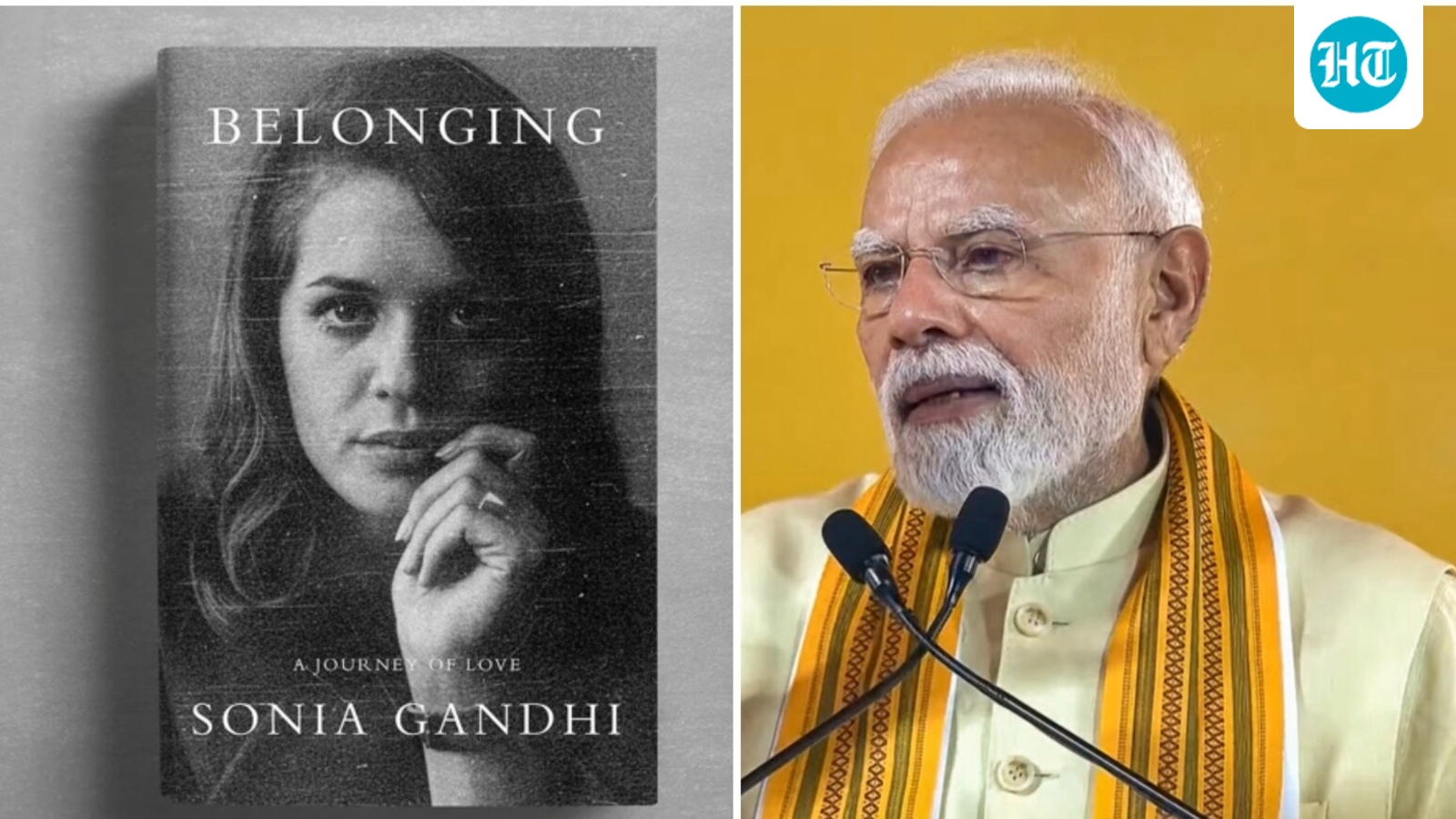
For over a decade, they were top political adversaries, squaring off on India’s electoral battlefield. Yet, in her 544-page memoir, former Congress chief Sonia Gandhi reveals she has had very little real contact with Prime Minister Narendra Modi, while acknowledging some common ground with the Bharatiya Janata Party leader.
“To this day, I’ve had practically no real contact with him. We meet at semi-official gatherings-for instance, at the Speaker’s chamber,” she writes in her memoir Belonging, which hits the bookstores on Tuesday. “When he comes face-to-face with me, we greet each other with a formal namaste. This is different from the past, when leaders across party divides would treat one another with cordiality. He tends to look away, avoiding eye contact.”
ALSO READ | 'Wanted to portray my family honestly': Sonia Gandhi explains reason behind writing her memoir
She acknowledges that their ideologies and world view are different. “He was fighting for his vision of India, and I for mine: an India against hegemony, an India that stands for inclusiveness, secularism, and social justice. It wasn’t personal,’’ she writes.
Still, she sees some common ground.
“There were elements of his discomfort with the ruling elite of our times that I, too, had come to understand well. I often found myself ill at ease in a drawing room in Delhi in the midst of a political discussion-feeling that the opinions expressed were very far removed from the reality of India,’’ she writes, even going so far to acknowledge that, “he had certainly worked his way to power within the RSS from an underprivileged world.”
ALSO READ | Sonia Gandhi recalls pleading with Rajiv not to become PM after Indira’s assassination: ‘They will kill you’
Gandhi, 79, also blames the prime minister’s sharp comments on Jawaharlal Nehru, India’s first PM, on his “conditioning” by the Rashtriya Swayamsevak Sangh.
The book – which draws a long arc from her birth in Italy, life in the UK and meeting her husband, arrival in India and eventual ascension to power – is replete with other intimate details – from how Rajiv Gandhi convinced her reluctant father to allow her to come to India before their wedding and yet refusing to attend the ceremony, how former PM Indira Gandhi was as a mother-in-law, the tragic loss of her first-born child, and her fight against breast cancer and its treatment in Milan.
KioskNews shows a cleaned-up reading view extracted from the publisher’s page — the original always lives on their site, not ours.