6 Best Bryan Cranston TV Shows (That Aren't Breaking Bad)

Ben Sherlock is a Tomatometer-approved film and TV critic who runs the massively underrated YouTube channel I Got Touched at the Cinema. Before working at Screen Rant, Ben wrote for Game Rant, Taste of Cinema, Comic Book Resources, and BabbleTop. He's also an indie filmmaker, a standup comedian, and an alumnus of the School of Rock.
Breaking Bad is the kind of success that overshadows all the other successes that one might have. George Lucas has forever been associated with Star Wars; Phoebe Waller-Bridge will forever be associated with Fleabag. Bryan Cranston was already one of TV’s most iconic actors long before he turned Mr. Chips into Scarface, thanks to his sitcom roles in Seinfeld and Malcolm in the Middle, and since Breaking Bad, he’s been in both dark dramas like Your Honor and lighter comedies like The Studio.
But Breaking Bad isn’t just Cranston’s most acclaimed work; it’s not hyperbole to say it might be the finest TV series ever created (although The Sopranos, The Wire, Six Feet Under, and its own spinoff Better Call Saul would all like a word). Nearly two decades later, Breaking Bad still regularly tops lists of the greatest TV shows of all time, and we continue to see its influence in shows like Barry and Narcos and Your Friends and Neighbors.
Walter White will always be Cranston’s greatest role — it brought together Cranston’s comedic and dramatic abilities, and allowed him to chart a character’s gradual transformation over the course of 63 episodes — and, by extension, Breaking Bad will always be his crowning professional achievement. But Cranston has starred in a bunch of great TV shows that weren’t Breaking Bad, and they deserve their due flowers; they deserve their moment in the sun, away from the shade of Heisenberg’s formidable shadow.
Sneaky Pete

After a monstrous success like Breaking Bad, there’s a lot of pressure on what the key creatives do next. When Matt Groening created his second series after The Simpsons, it had a lot to live up to (and Futurama lived up to it). Cranston’s immediate follow-up to Breaking Bad was a show called Sneaky Pete. Cranston isn’t the star — that would be Giovanni Ribisi; Cranston is just a supporting player — but Cranston was heavily involved behind the scenes: he co-created the series with House’s David Shore and even has a story credit on the pilot.
Ribisi plays a con man who assumes the identity of his prison cellmate to evade a ruthless gangster, played by Cranston. Cranston only ever acted in the first season of Sneaky Pete, but the whole thing was a delightfully pulpy crime caper. It shared some of Breaking Bad’s dark humor, but it was less overtly comedic and more focused on the gritty thrills.
Your Honor

After playing a recurring role in Sneaky Pete and a handful of guest roles elsewhere, Cranston’s first starring role in a drama series post-Breaking Bad was in Showtime’s two-season gem Your Honor. Much like in Breaking Bad, Cranston plays a seemingly good man whose morals are tested when he’s unexpectedly thrust into extreme circumstances. In this case, Cranston plays a distinguished New Orleans judge whose teenage son accidentally kills the teenage son of a mob boss.
The story is all about how far you would go for your kids, in either direction. Cranston’s judge abandons his long-standing lawfulness to help his son out of a criminal jam, while the mob boss will stop at nothing to avenge his late offspring. Your Honor is nowhere near as riveting or complex as Breaking Bad, but it satisfies purely as a ripping yarn (and, of course, Cranston never disappoints).
Better Call Saul

From the moment Better Call Saul premiered, there was speculation about how and when and why Walter White would show up in the spinoff. In the end, Walt didn’t reappear until the back end of the final season, because there was no reason for him to appear any earlier in this prequel timeline. Better Call Saul went back to show us why Saul decided to represent Walt in the first place, what happened in the RV after that initial confrontation in the desert, and gave us an extra scene of Walt and Saul hiding out at the vacuum store.
Much like he did in the movie spinoff El Camino, Cranston slipped effortlessly back into the role of Walt. That scene in the basement, in particular, highlighted all of Walt’s worst qualities, namely his arrogance, his temper, and his impatience for the less intelligent. Better Call Saul is a rare spinoff that may have actually surpassed the original. By the end, the spinoff had become so gripping that it didn’t even need Walt (but it was nice to see him again, nonetheless).
Seinfeld

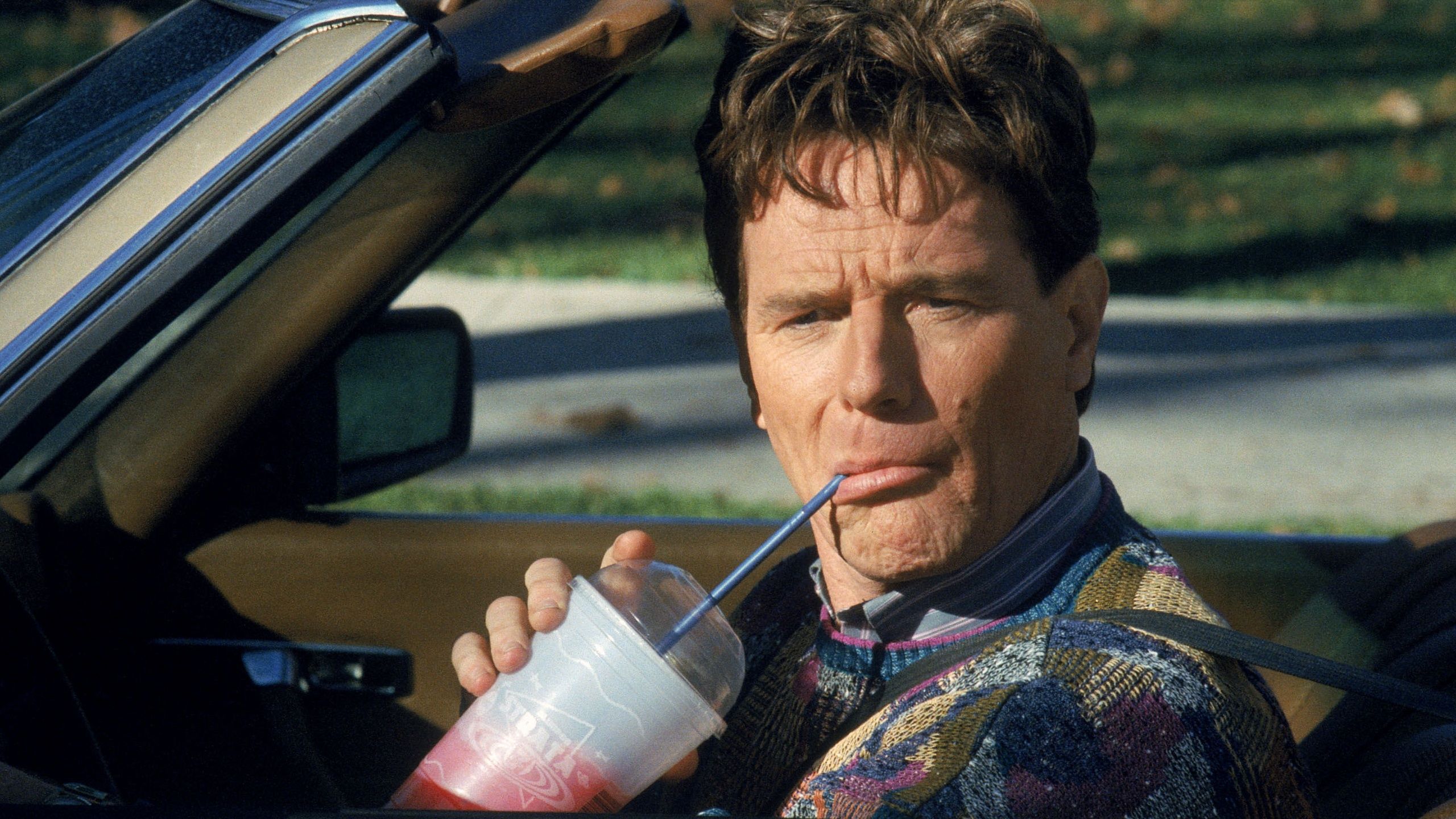
Long before Breaking Bad, long before Malcolm in the Middle, the first show to put Bryan Cranston on the map was Seinfeld. Cranston played the recurring role of Tim Whatley, a dentist who started out as a love interest for Elaine, but quickly became something else entirely.
Whatley turned his dental office into an anything-goes sexual bazaar; he accused Jerry of being an “anti-dentite” with a prejudice against dentists. Whenever Cranston showed up in Seinfeld, you knew it was going to be a funny episode. Whatley is responsible for “regifting,” one of the greatest and most universally applicable Seinfeldisms.
The Studio

When Seth Rogen and Evan Goldberg realized that Hollywood is more absurd than ever, and yet there hasn’t been a really great Hollywood satire in at least a decade (arguably not since Tropic Thunder), they set out to make it themselves. With a fast-moving Larry Sanders vérité style, The Studio has encapsulated the ridiculousness of the modern movie business, with storylines involving soulless sequels, generative A.I., and the plundering of useless I.P. like Kool-Aid and Minecraft.
Cranston popped up in the first and last episodes of The Studio to steal the show. He plays Griffin Mill, the CEO of Continental Studios, who promotes Rogen’s Matt Remick to replace Catherine O’Hara’s Patty as the head of the studio in the pilot. After setting up all that exposition in the series premiere, Cranston got to have a lot more fun when he returned for the two-part finale. After unwittingly ingesting several pounds of magic mushrooms, Griffin collapses into a drug-induced spiral, and all his underlings have to get him on his feet for the big CinemaCon presentation that will save the company in just a few hours.
In those last couple of episodes, Cranston really throws himself into the physicality of a mushroom trip. It’s a physical comic performance on par with Charlie Chaplin or Buster Keaton or Jackie Chan, and I don’t make that comparison lightly.
Malcolm In The Middle

Even before he’d played Walter White in Breaking Bad, Bryan Cranston could’ve retired a TV legend, because he’d already played Hal in Malcolm in the Middle. In all the ways that Cranston’s turn as Walt is one of the finest dramatic performances in television history, his turn as Hal is one of the finest comedic performances. Hal is the ultimate portrait of the doofy, dorky dad; everyone could see their own father in that character. From the roller-skating episode to the speed-walking episode, Cranston always committed 100% to the absurdity and physicality of whatever comic scenario the Malcolm writers threw at him.
Breaking Bad obviously hits on a much deeper emotional level than Malcolm in the Middle, but relatable, sweet-natured comedy like this has its place, too. (Having said that, Malcolm wasn’t totally family-friendly; it was basically a punk-rock sitcom, with a lot of pitch-black humor.) Where most Hollywood depictions of family life enjoy white-collar wealth, Malcolm in the Middle accurately reflected a working-class existence where both parents have full-time jobs and all three kids share a bedroom.
KioskNews shows a cleaned-up reading view extracted from the publisher’s page — the original always lives on their site, not ours.