Forget ‘Black Mirror,’ Prime Video’s 10-Episode Sci-Fi Series Is the Perfect Replacement

Amanda M. Castro is a Network TV writer at Collider and a New York–based journalist whose work has appeared in Newsweek, where she is an Associate Editor, and The U.S. Sun, where she previously served as a Senior Consumer Reporter.
She specializes in network television coverage, delivering sharp, thoughtful analysis of long-running procedural hits and ambitious new dramas across broadcast TV. At Collider, Amanda explores character arcs, storytelling trends, and the cultural impact of network series that keep audiences tuning in week after week.
Born and raised in Puerto Rico, Amanda is bilingual and holds a degree in Communication, Film, and Media Studies from the University of New Haven.
If you finished watching Black Mirror but aren't in the mood for yet another story about technology taking over your life, it is time to dive into Electric Dreams. Based on the work of Philip K. Dick, one of the most eminent science fiction writers, Electric Dreams turns 10 of his stories into standalone episodes filled with complex topics such as artificial intelligence, virtual reality, political paranoia, alien invasions, and more.
The series aired in 2017-2018, and its cast made it even more impressive. Looking at the cast, one would think it is not an anthology but a blockbuster. The series features Bryan Cranston, Steve Buscemi, Anna Paquin, Terrence Howard, Juno Temple, Janelle Monáe, Richard Madden, Holliday Grainger, Maura Tierney, Greg Kinnear, Vera Farmiga, among others.
What Is 'Philip K. Dick’s Electric Dreams' About?

The show’s biggest strength is its variety. Each episode has a different focus: “The Hood Maker” follows a telepath recruited by the police in a society that treats people with mind-reading abilities as a dangerous underclass; “The Commuter” turns an ordinary train station into the gateway to an impossible town where people’s troubles can seemingly disappear; “Real Life” dives into virtual reality and identity, while “Human Is” asks whether someone who comes back from an alien planet is still the same person.
Then there are stories like “Autofac,” which imagines a post-apocalyptic world where an automated factory continues churning out products long after humanity has effectively disappeared, and “Kill All Others,” a particularly pointed story about political propaganda, conformity, and a population becoming disturbingly comfortable with dehumanizing rhetoric. That’s a lot of ground to cover in 10 episodes. It’s also exactly why Electric Dreams works so well as a binge; if one story doesn’t click, another is only an hour away.
'Electric Dreams' Is More 'Blade Runner' Than 'Black Mirror'

Black Mirror frequently takes a piece of technology and asks what happens when humanity uses it in the worst possible way, while Electric Dreams is more interested in the philosophical mess underneath the technology. Its stories repeatedly circle questions about memory, identity, grief, love, free will, and the definition of humanity itself.
Dick’s work has influenced some of the most recognizable science-fiction movies and television shows of the past several decades, including Blade Runner, The Man in the High Castle, and Minority Report. His stories explored the possibility that reality itself might be unreliable—and that humans might not be particularly good at recognizing what is real.
Several episodes make that idea particularly unsettling. “The Father Thing” follows a young boy who becomes convinced that an alien has replaced his father, and the aforementioned “Human Is” similarly centers on a man who returns from an alien world seemingly transformed, only for his wife to discover that the person she thought she knew may no longer be there.
These Are the 'Electric Dreams' Episodes You Shouldn’t Miss

Like most anthologies, Electric Dreams has its share of uneven installments. “The Commuter” is arguably the season’s standout, with Timothy Spall giving the story an emotional center as a father desperate to escape the pain surrounding his family. The episode has the eerie simplicity of classic The Twilight Zone, but its real power comes from its refusal to treat an easier life as automatically better.
“Impossible Planet” is another highlight, blending space adventure with a surprisingly tender story about memory, aging and grief. Meanwhile, “Autofac” benefits enormously from the pairing of Temple and Monáe, turning a familiar story about automation and corporate excess into one of the season’s most entertaining hours.
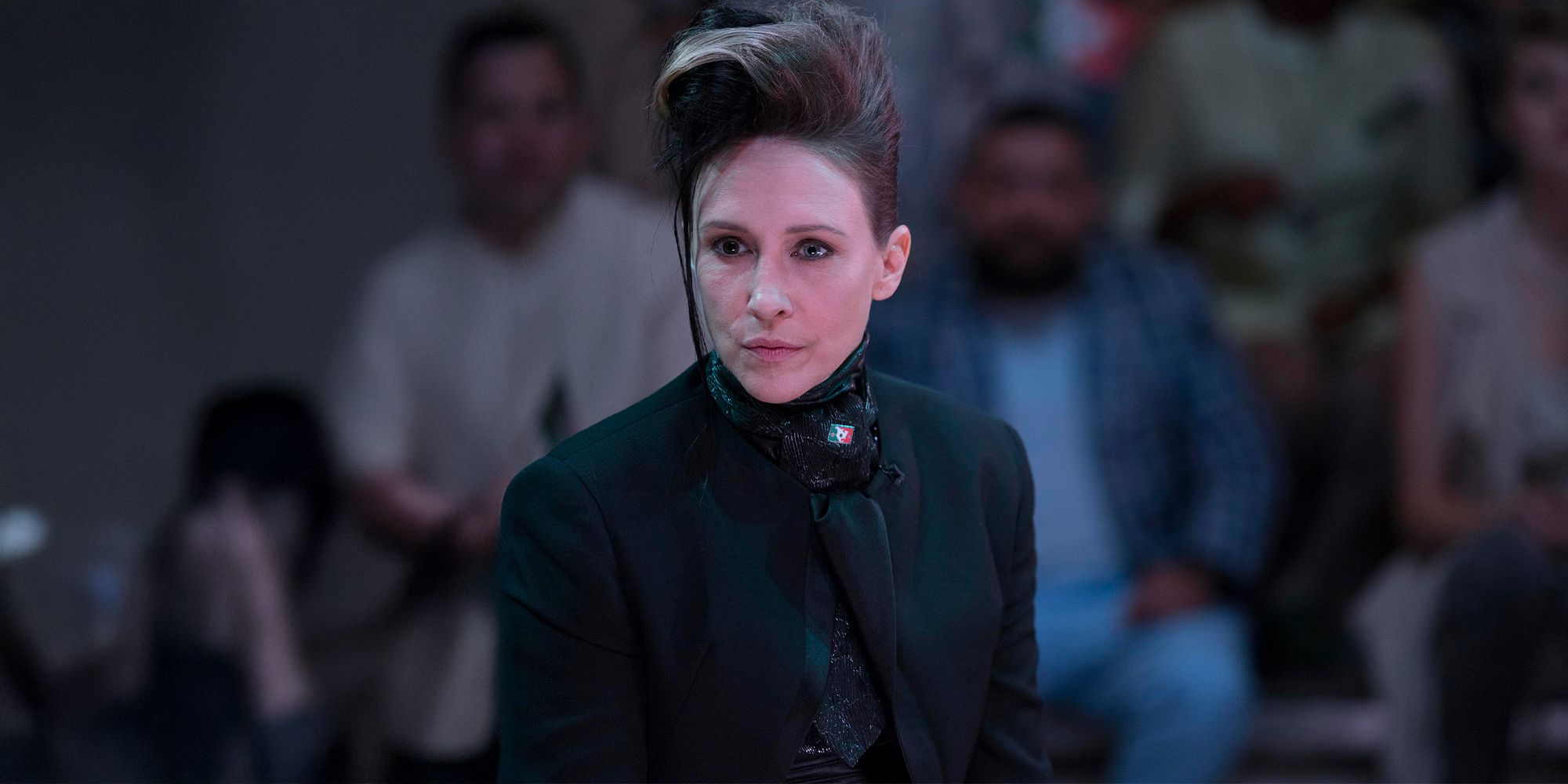
“Kill All Others” feels especially difficult to ignore now. Mel Rodriguez plays an ordinary man who hears a political candidate deliver a horrifying command that everyone else seems willing to dismiss. As the phrase spreads, the episode becomes a grim examination of propaganda, racial division, and the danger of treating increasingly extreme rhetoric as background noise.
For anyone missing smart, unsettling science fiction that isn’t afraid to get weird, Electric Dreams remains one of Prime Video’s most overlooked genre offerings. It may not be as consistently brilliant as the best of Black Mirror, but with 10 self-contained stories and a ridiculous amount of talent packed into them, it’s an easy recommendation for anyone looking for something that will make them question reality — and possibly themselves.
KioskNews shows a cleaned-up reading view extracted from the publisher’s page — the original always lives on their site, not ours.