Block parties and boxing clubs: Martine Barrat’s tough and tender New York – in pictures
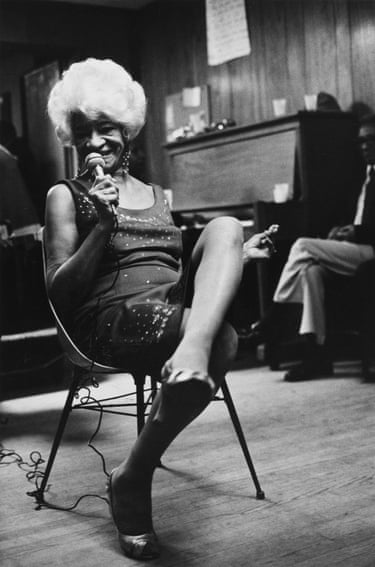
From Series: Harlem – Mabel Albert, 1982
An artist with many lives, Martine Barrat has developed a body of work outside traditional photography circles, centred on New York. Driven by her enduring curiosity about the streets, Barrat is an integral part of the neighbourhoods she photographs. She knows that, despite the occasional harshness of their environment, the residents continue to live and love, and that it is her responsibility to photograph them with respect and commitment. Martine Barrat’s Soul of the City is at Arles, France, to 4 October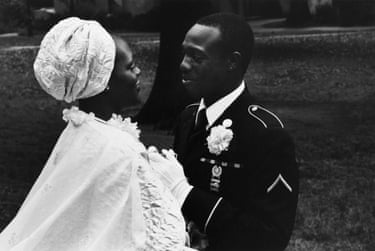
From Series: Harlem – Say I Do, 1978
In Harlem, Barrat is known as ‘Picture Girl’. She visits the neighbourhood every day to see loved ones and share moments in their lives. ‘I met this couple one day while stuck on a stalled subway train,’ she says. ‘We had a lot of fun and became friends instantly. They were getting married the next day and invited me to the wedding.’ Barrat’s friend Yves Saint Laurent loved this photo, and had it displayed in his bedroom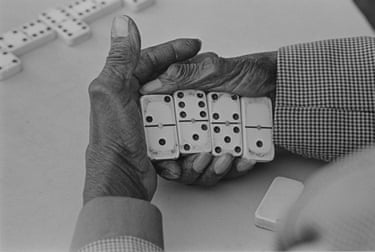
From Series: Harlem – Eric Williams, the Domino Champion, 1983
For Barrat, Harlem represents the energy of the streets, where she photographed domino players and breakdancers at block parties during the early days of the cultural and musical revolution that was hip-hop. Barrat loves what she called ‘focus men’ such as musicians, dominoes players or boxers. They allow her to take pictures without noticing her as long as she knows how to stay invisible. Many times, she photographed their hands as a way to tell their stories and lives without necessarily showing their faces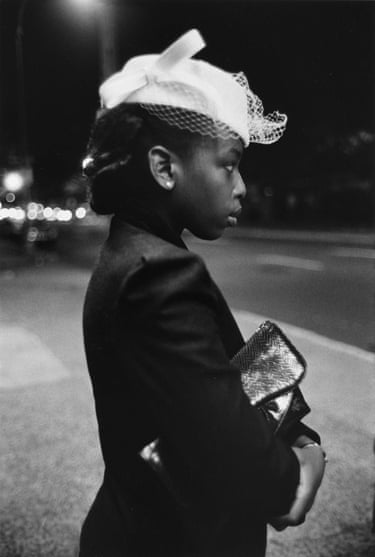
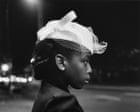
From Series: Harlem – Saturday Night, on Her Way to Church on 116th Street, 1985
When she first discovered Harlem in 1970, Barrat was fascinated by the African American vernacular spoken, which she found poetic, musical and full of vivid expressions. She recorded audio tapes with the neighbourhood children, who became her teachers and taught her new words. Martine eventually came to be part of their lives, taking them on trips to the countryside and even letting some of them stay at her home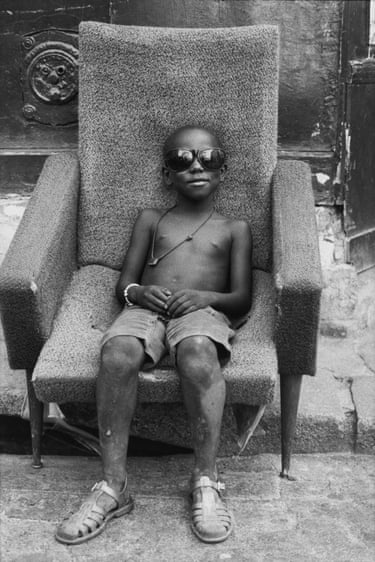
From Series: La Goutte d’Or, Paris – Mamadou has chosen his armchair on Rue Polonceau, 1982
In the Goute d’Or neighbourhood, Martine Barrat met Mamadou Yaffa, then four years old, with whom she formed a close friendship and whom she watched grow up through her lens. When Yaffa was a teenager in the 1990s, Barrat invited him for a three-month visit to New York so he could experience the social reality of American life. In this way, she built a human bridge between two worlds she knew and loved. Nowadays, Mamadou Yaffa serves as deputy mayor of Paris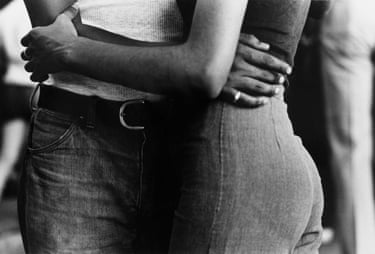
From Series: South Bronx – 1977
In the early 1970s, through a neighbour at the Chelsea Hotel, Barrat met Pearl, leader of the Roman Kings in the South Bronx. Barrat discovered a neighbourhood plunged into chaos and desolation, abandoned by the public authorities. Its residents seemed trapped in an open-air wasteland, just a few blocks from Manhattan. The gang members who took her in initially intended to steal her equipment, but changed their minds, amused and charmed by Martine’s boldness and authenticity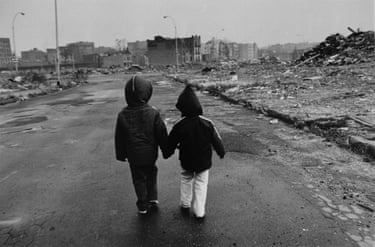
From Series: South Bronx – Children of the Roman Kings from Hunts Point, circa 1978
Rather than photographing the poverty and violence that exist in the South Bronx, Barrat highlights the beauty of its residents, the love that unites couples and the joy of children playing and finding relief from the heat on sweltering days in streets that are often dilapidated. In this way, she continues her project of highlighting the gap between the beauty and intelligence of the South Bronx residents and the dilapidated environment in which they survive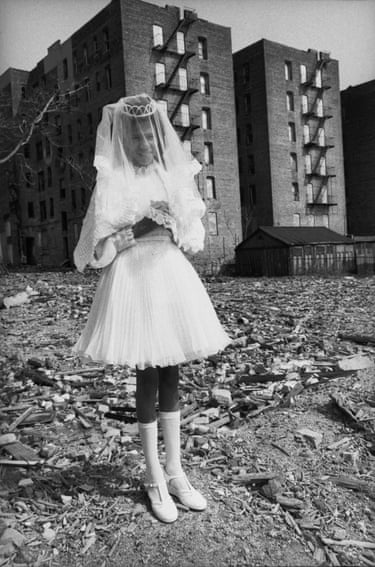
From Series: South Bronx – First Communion Day, 1977
In 1977, after a drug-addicted neighbour stole Barrat’s video camera from her home, Pearl, Barrat’s new friend, gave her a camera. She embraced this new medium and discovered that, unlike video, she could not share it with others, as she alone had control over what she wanted to convey through her images. She began photographing the bodies and gestures of her neighbours up close, in an almost cinematic style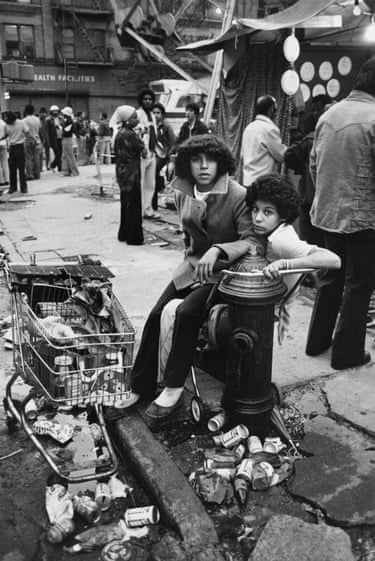
From Series: South Bronx – Friends of Vickie, circa 1979
Aged between 14 and 18, these young Black and Latino-American teenagers, mostly from the Puerto Rican community, find in gangs a way to compensate for the lack of structure in their neighbourhood. Their daily lives are marked by violence, drugs, stints in jail and the loss of loved ones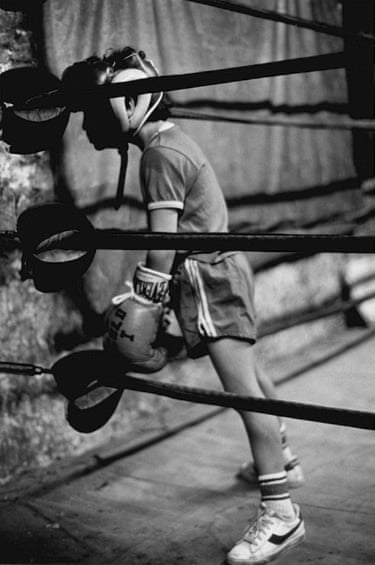
From Series: Do Or Die – Carlos Villafane, Artemio Colon Gym, Harlem, 1981
In 1979, a young girl from the South Bronx asked Barrat to photograph her at her boxing club on 167th Street. There, she discovered a whole new world – that of amateur boxing clubs for children – and was immediately moved by Carlos Villafane, a six-year-old boy whose adult mouth guard was far too big for him. She would later say of this little boy: ‘His eyes pierced my heart’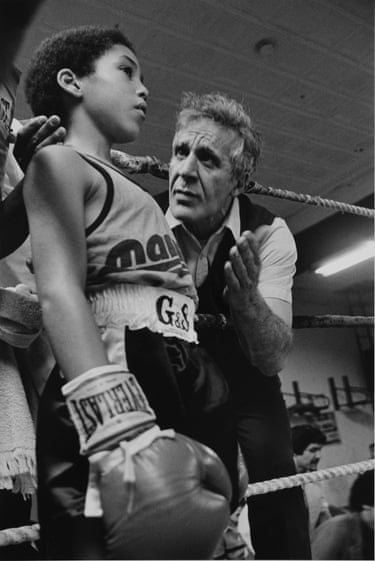
From Series: Do Or Die – Trainer Neil Ferrara and David Brown, nine years old, 45 pounds, 28 fights, and 24 wins, Lunar Gym, Brooklyn, 1980
Barrat was immediately impressed by the determination of these very young boxers, aged three to 12, for whom boxing represented their only hope of escaping poverty. She was also struck by the affectionate relationship between them and their coaches, who were often members of their own families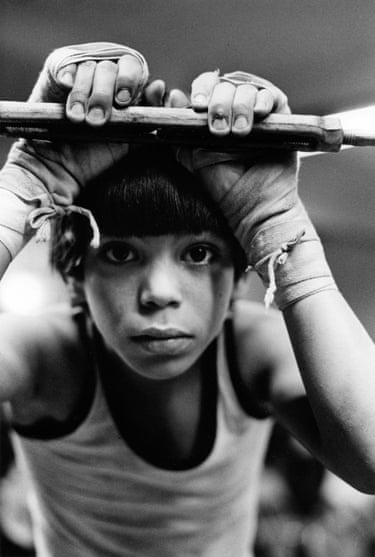
From Series: Do Or Die – Papo Angel Morales waiting to enter the ring, Gleason Gym, Brooklyn, 1981
Barrat understood that the fights in the ring echoed a personal inner struggle: the fight to become a ‘champ’ and escape the ghetto. Far from portraying a world of toxic and violent masculinity, Barrat captures boxing as a fraternal rite where tenderness and adversity meet. All texts by the exhibition’s curator Agathe Cancellieri. All quotes by Martine Barrat. All photographs courtesy of the artist and La Galerie RougeKioskNews shows a cleaned-up reading view extracted from the publisher’s page — the original always lives on their site, not ours.