FUTURE SHOCK: Reserve Bank sounds alarm as SA households burn through domestic savings

South African households are chowing through savings in these tough times, and that bodes ill for their future and that of the wider economy.
This was a flashing red light highlighted in the South African Reserve Bank’s (Sarb’s) biannual Financial Stability Report (FSR) released this week.
“Household resilience has been tested since the June 2026 FSR. Although backward-looking indicators of aggregate debt-servicing pressures and retail credit risk have not deteriorated materially, forward-looking assessments point to intensifying distress,” said Sarb.
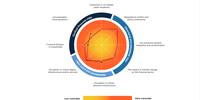
It noted that “a growing share of households have limited capacity to absorb further shocks” because of a range of factors, including the use of savings in the face of tepid income growth. There is also a growing reliance on short-term, unsecured credit.
In short, South Africans are having to dig into their savings or turn to short-term borrowing without collateral – which typically comes at a premium well north of prime – just to make ends meet. And the end of that potholed road is looming.
According to the FSR:
“Real disposable income growth has stalled as labour market conditions have deteriorated, while households have increasingly used savings to maintain spending. The savings ratio has been negative since 2022 and has recently moved into deeper negative territory.”
This is a big deal and has ominous implications for the investment flows needed to accelerate woeful rates of economic growth. South Africa’s dismal domestic savings rates are a key reason for the low levels of investment in the economy.
The savings problem
Gross fixed capital formation – a broad measure of investment – declined in the first two quarters of this year and in four of the past six quarters, according to Stats SA data.
A vicious cycle is at work here. As households eat into their savings, less capital is available for the investment required to kickstart the economy, create jobs, and lift incomes.
The FSR highlighted that retirement fund assets have grown steadily in recent years, reaching a record assets-to-GDP ratio of 98% in the fourth quarter of 2025. But pointedly, this was a reflection of market performance and asset valuations rather than new contributions.
The “two-pot” retirement reforms are clearly playing a role on this stage.
“Contributions remained below benefits paid and withdrawals throughout the period, resulting in persistent net outflows from retirement funds,” said the FSR.
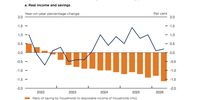
“The gap widened following the implementation of the two-pot retirement system in September 2024, when withdrawals increased in the third and fourth quarters of 2024 and the ratio fell to its lowest level. Although the ratio improved during 2025, its decline in the first quarter of 2026 suggests renewed pressure from outflows.”
Returning to borrowing, the FSR said that households are increasingly relying on credit to maintain consumption, a state of affairs “indicating limited scope to rebuild financial buffers or absorb unexpected increases in expenditure”.
The bottom line is that when a rainy day comes, many South African households will find that their savings have dried up. DM
KioskNews shows a cleaned-up reading view extracted from the publisher’s page — the original always lives on their site, not ours.