Warm words, limited deals: Trump-Xi summit puts focus on managing US-China rivalry
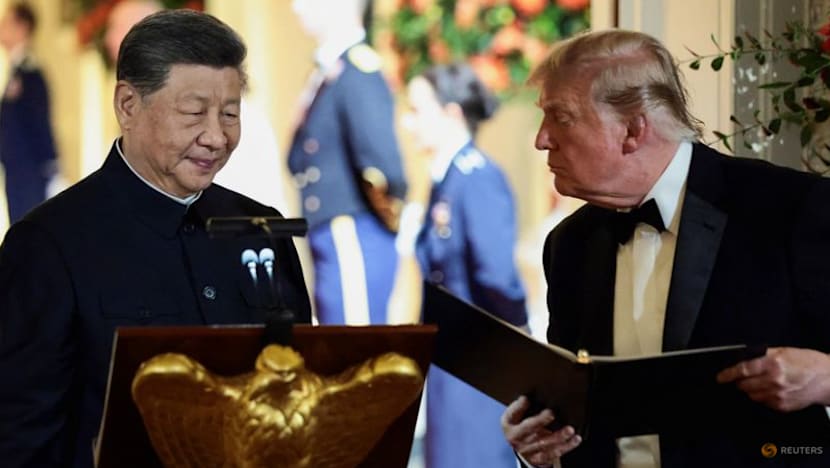
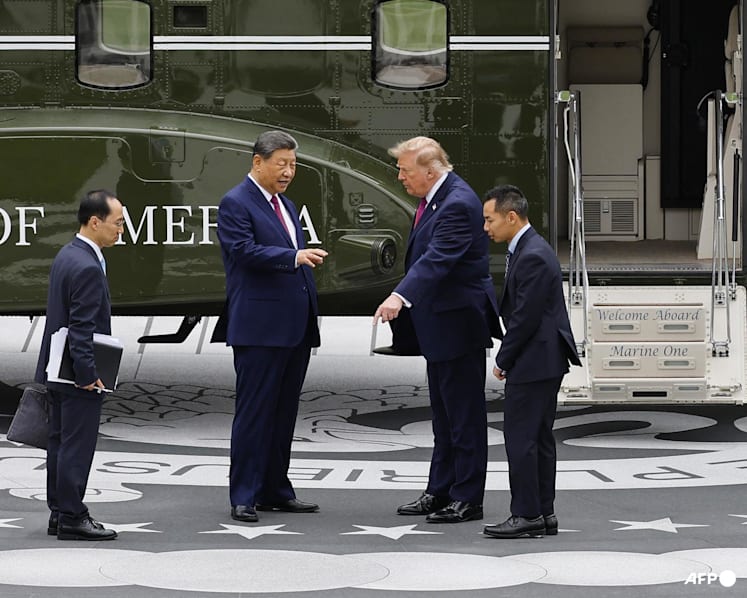
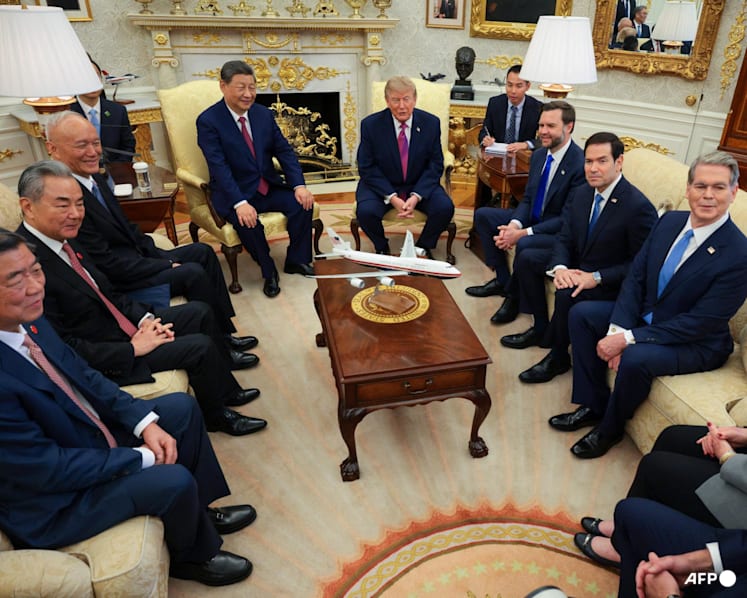
BEIJING: There was a grand airport welcome, a military flyover and no shortage of warm words as US President Donald Trump hosted Chinese President Xi Jinping in Washington.
The elaborate reception - and repeated declarations of friendship - underscored how much political capital both leaders are investing in keeping US-China ties steady.
But for all the pageantry, the summit produced relatively little in the way of immediate breakthroughs. A two-month extension of the trade truce fell short of what some observers had expected, while deeper disputes between the two powers remained unresolved.
That contrast may offer a clearer picture of where the relationship is heading, analysts say: not towards resolving the differences driving an increasingly intense rivalry, but towards finding ways to manage them.
“What has emerged from this summit so far is that both leaders are committed to maintaining the positive rapport they have established,” William Yang, senior analyst for Northeast Asia at the International Crisis Group, told CNA.
Xi is on a reciprocal state visit to Washington, four months after Trump travelled to Beijing.
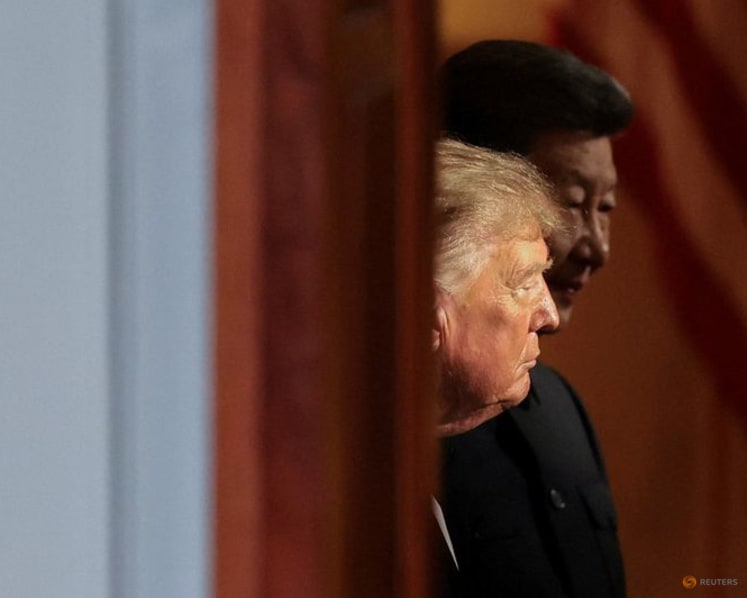
During his visit, Xi reaffirmed the “constructive relationship of strategic stability” that Beijing said the two leaders had agreed to build during Trump’s visit to China back in May.
He also called for competition to be kept within bounds and differences managed.
Trump however, struck a warmer and more personal note, observers said - repeatedly emphasising relations with Xi while describing their friendship as “truly great”.
“The decisions we make in these areas today can promote peace and prosperity for decades and decades to come,” Trump said at the White House on Thursday (Sep 24).
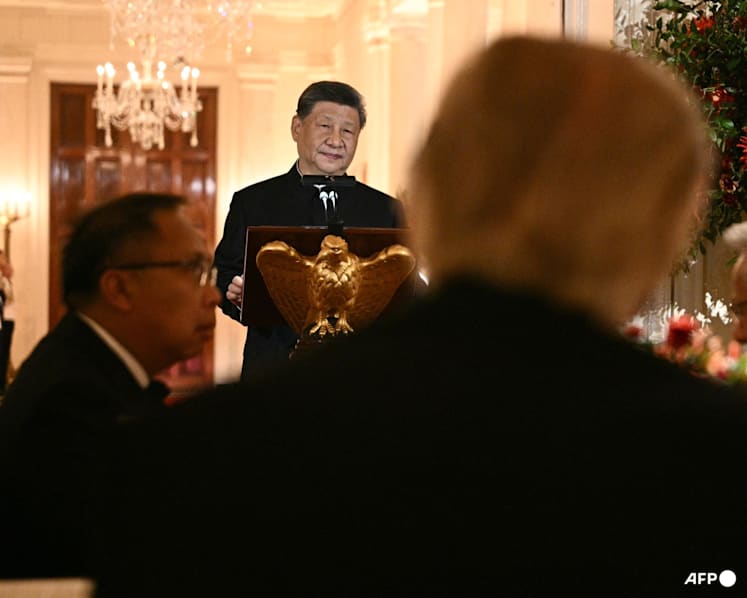
Xi said at the state dinner that evening that the two leaders had held "sincere and in-depth exchanges" and "reached common understanding on many issues".
WARM AT THE TOP, COMPETITION UNDERNEATH
The US and China agreed to extend their existing trade truce by two months to Jan 10, US Treasury Secretary Scott Bessent said.
“The fact that the US and China ended up agreeing only to a two-month extension of the trade truce suggests they likely did not resolve their mutual frustration over export controls and other contentious trade issues,” Yang said.
Sean King, senior vice-president at New York-based business advisory firm Park Strategies, was more sceptical.
“After all this time and preparation, a supposed two-month truce extension seems like an underwhelming economic deliverable,” he told CNA.
Bonnie Glaser, managing director of the Indo-Pacific Program at the German Marshall Fund, believes Washington had sought a longer reprieve while Beijing might have wanted greater predictability over future tariffs.
The shorter extension nevertheless allowed Washington to “gain some leverage over Beijing” - particularly over the delivery of rare earths and magnets to American companies, she said.
But analysts also saw efforts to keep the relative stability in ties less dependent on the relationship between Trump and Xi themselves.
“Personal diplomacy between the two leaders is important but the emphasis on working-level contacts, military dialogue and crisis-management mechanisms also suggests an effort to make that stability more durable and institutionalised,” said Wang Zichen, deputy secretary-general at the Center for China and Globalization, a Beijing-based think-tank.
Hou Yichao, a researcher of China’s political economy and former research assistant at the S Rajaratnam School of International Studies, drew a similar distinction.
“The personal rapport between both leaders is an important insurance policy, or lubricant, for the relationship, but it is not institutional,” he said.
Xi also called for more regular contact between government departments and the two militaries, as well as stronger crisis communication and continued dialogue on artificial intelligence.
Xi said that the US and China should cooperate with sincerity and share a responsibility to ensure AI remains under human control and serves the well-being of people.
AI was a particularly revealing example, said Wang.
“Beijing does not want the AI relationship to be framed solely around containment, security or preventing worst-case scenarios, but also around what the two countries can constructively achieve together,” he said.
The willingness to discuss AI and national security is also “a positive sign”, said Su Yue, principal economist for China at Economist Enterprise, the business research arm of The Economist Group.
“It shows that both sides are willing to cooperate in selected areas even as they continue to compete more broadly,” she told CNA.
David Wroe, resident senior fellow and head of the AI and Security Program at think tank Australian Strategic Policy Institute, called the talks “moderately encouraging”.
“But we do need to keep some caution on it though,” Wroe said, adding that it was “in China’s interests for the US to slow down”.
Hou pointed to a shift in how Beijing talked about the rivalry itself.
"As recently as last year, Beijing was distinctly reluctant to speak of US-China competition, on the view that naming it might turn it into a self-fulfilling prophecy," he said.
Chinese officials are now increasingly acknowledging competition while arguing that it should remain bounded and non-zero-sum, Hou added.
Yang from the International Crisis Group said Beijing viewed the growing frequency of meetings with Trump as working in its favour - because it helps keep the personal relationship on a positive track while giving Xi repeated opportunities to reinforce China's positions.
“The priority with the US now is to keep the overarching leadership engagement consistent and use the relative stability in bilateral relations to strengthen their position and capabilities in critical areas,” he said, pointing in particular to China's push for greater self-reliance in advanced semiconductors.
THE TAIWAN TEST
Taiwan remains a harder test of how far that stability can stretch.
In remarks published by China’s Ministry of Foreign Affairs, Xi urged Washington to “adhere to the correct position of opposing ‘Taiwan independence’” and handle the issue cautiously, saying this would help lay a “solid foundation” for broader US-China strategic cooperation.
Beijing regards Taiwan as part of its territory and has not ruled out the use of force to achieve reunification.
The language is notable because Xi had directly linked Washington's handling of Taiwan to the foundation of stable bilateral ties, said Yang from the International Crisis Group.
“The Chinese readout shows China taking the initiative to crystallise its firm position on the Taiwan issue and proactively set out what it hopes the US could follow,” he said.
Beijing also appears to be trying to establish a framework that could shape future US-Taiwan relations, with Taipei likely to watch closely how Washington handles a pending US$14 billion arms package and how Trump describes US policy towards the island, he added.
James Chen, assistant professor of diplomacy and international relations at Tamkang University in Taipei, noted that Trump had so far avoided directly responding to Xi’s demands on Taiwan.
“Trump does not wish to see Taipei become an obstacle to achieving a broader and more comprehensive agreement with Beijing,” Chen said.
At the same time, he said Trump had “not yet shown any intention to trade Taiwan for a major strategic gain”.
King from Park Strategies also said there was “no indication yet that Trump acquiesced” to Xi's call for Washington to oppose Taiwan independence.
Analysts said the handling of Taiwan would therefore offer an early test of how far the new emphasis on stability can go - and whether it can translate into cooperation on wider geopolitical challenges.
MANAGING RIVALRY - BUT CAN IT TRAVEL?
Trump and Xi exchanged views on the Middle East, Ukraine and the Korean Peninsula during their White House talks, but no significant joint initiatives on those issues have been announced, according to the Chinese government’s official readout of the meeting.
As of Friday evening, the US has yet to issue its own substantive readout of the talks.
Both leaders also agreed to support each other as China hosts the APEC summit in Shenzhen in November and the US hosts the G20 in December, the readout added.
But the summit's limited time and long list of bilateral disputes meant there was little room for substantive movement on wider geopolitical issues, said Yang from the International Crisis Group.
“The summit did not sufficiently touch on any of the geopolitical issues that are important to (US-China) bilateral relations,” he said, adding that the two leaders could possibly address them if they met again on the sidelines of upcoming global summits.
He was also sceptical that warm ties alone would produce breakthroughs in areas such as the conflict in the Middle East.
"Beijing does not see a strong incentive for them to insert themselves into the mix of the ongoing turmoil," Yang said.
He argued that, from Beijing's perspective, prolonged US attention on the Middle East could also create more strategic room closer to home.
Yang said Chinese policymakers may see Washington's continued focus there as an opportunity "to increase pressure on Taiwan".
Chen from Tamkang University offered a more optimistic interpretation.
This month’s summit “further strengthened the ability of both leaders to co-manage not only the Taiwan issue but also other global hotspots”, Chen said.
Even a US-China relationship focused on managing competition could bring benefits beyond the two countries, said Wang from the Center for China and Globalization.
"It reduces pressure on other countries to choose sides," he said, adding that greater stability could create more diplomatic and economic room for businesses and governments dealing with both powers.
But Glaser from the German Marshall Fund cautioned against interpreting smoother relations as a fundamental easing of the rivalry.
She pointed to continuing competition over technology, global governance and the international system.
“Let's remember this is really not a friendly relationship - even (if) the words sound very friendly,” she said.
KioskNews shows a cleaned-up reading view extracted from the publisher’s page — the original always lives on their site, not ours.