Estonia warns of growing Russian hybrid threats, to close remaining road border crossings

Estonia will close its road border crossings with Russia from Dec 1 for at least six months, citing security concerns after accusing Moscow of orchestrating two attempted arson attacks on its defence companies this year.
New: You can now listen to articles.

This audio is generated by an AI tool.

25 Nov 2026 10:56AM
SAATSE, Estonia: In a remote corner of southeastern Estonia, a narrow stretch of road offers a stark reminder of the Baltic nation's complicated relationship with its much larger neighbour, Russia.
The road passes through the Saatse Boot, a roughly 115ha slice of Russian territory that protrudes into Estonia.
Named for its distinctive boot-like shape, the section cuts across about 1km of the Varska-Ulitina road, which connects several Estonian villages near the border.
This left motorists with an unusual choice: take a detour of nearly 20km, or pass briefly through Russian territory without a visa or border checks, provided they did not stop.

Even during a vehicle breakdown, drivers had to remain inside and contact Estonian border guards for assistance. Stepping onto Russian soil could constitute illegal entry into the country.
But that arrangement came to an abrupt halt in October 2025, when Estonia closed the route after armed Russian military personnel were spotted in the vicinity.
Authorities accelerated the construction of bypass roads to skirt around the boot, allowing drivers to avoid Russian territory.
For a country sharing a roughly 340km border with Russia, the episode illustrates how even a tiny geographical anomaly can become a security concern amid heightened tensions between Moscow and the West.
INCREASED VIGILANCE ALONG THE BORDER
Since Russia launched its full-scale invasion of Ukraine in February 2022, Estonia has stepped up efforts to secure its increasingly sensitive frontier.
“We've made changes to our training systems just to be more ready if some sort of crisis happens here,” said Renet Merdikes, head of the Saatse Border Guard Station, whose team patrols nearly a third of the border.
Remote Saatse is far removed from Estonia's major population centres – it is more than 280km from the capital Tallinn. But the proximity of Russian military activity is a regular reminder of the potential risks.
Residents frequently hear Russian military exercises taking place across the border while Estonian guards closely monitor developments.
But officials say the more immediate threat is not necessarily a conventional military incursion, but less visible forms of interference. These include the jamming of surveillance drones, which border guards say occurs almost daily.
Such incidents form part of a broader pattern of hybrid warfare, ranging from cyberattacks and disinformation campaigns to sabotage and electronic interference, aimed at destabilising an adversary without outright military confrontation.
SUSPECTED SABOTAGE RAISES ALARM
Estonian authorities have accused Russia of orchestrating a series of sabotage operations targeting the country's defence industry.
In August, officials blamed Moscow for an arson attack on Tallinn-based Milrem Robotics, which manufactures unmanned vehicles, some of which have been deployed to Ukraine.

Estonia also said it thwarted an attempted arson attack on defence company Threod Systems on Nov 14, which authorities attributed to Russia's GRU military intelligence agency.
In response, Estonia announced it would close its three remaining road border crossings with Russia from Dec 1 for at least six months, saying the move would help address security concerns and limit further attacks.
Moscow has denied involvement in the arson attacks and vowed to respond with political and diplomatic measures, accusing Tallinn of trying to “erect a new Iron Curtain”.
The incidents have fuelled concerns that Russia could step up covert attacks against defence manufacturers and critical infrastructure.
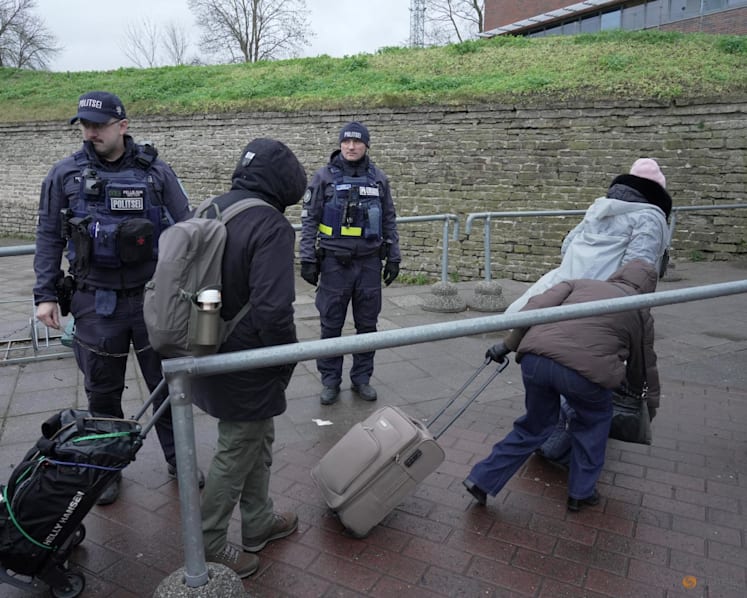

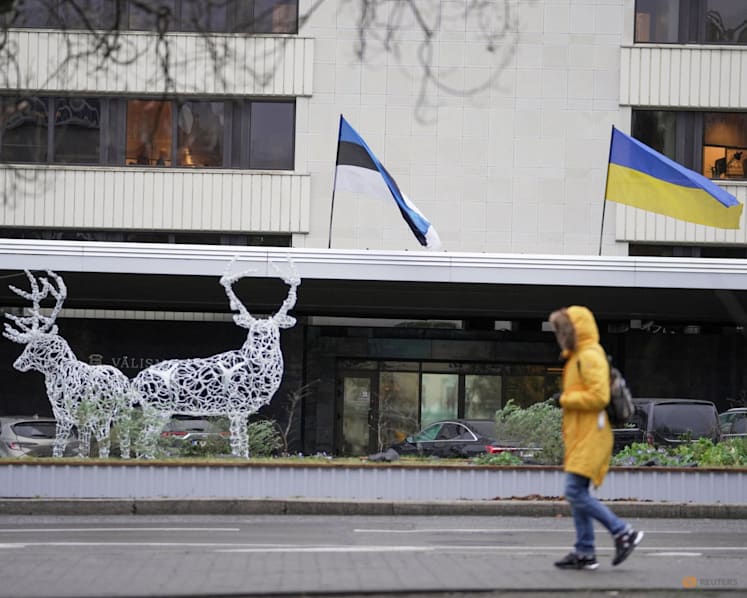
Estonian Foreign Minister Margus Tsahkna warned that Russia could escalate its provocations to test the resolve of the North Atlantic Treaty Organization (NATO).
“We will probably see something more serious like terror attacks or sabotage, anything against NATO to test and push the lines,” he said.
“Estonia is pretty resilient about that, but my question is whether the other capitals in Europe are.”
During a visit to Estonia last month, NATO Secretary General Mark Rutte sought to reassure allies that such incidents would not weaken the alliance's resolve.
“We will react when we need to react. The most important thing is to … stay calm, carry on, invest in defence,” he said.
He also reiterated the need to ensure Ukraine receives the military assistance it requires.
DRONE THREATS ACROSS EUROPE
Across Europe, reports of suspicious drone activity near airports, military installations and other critical infrastructure have prompted governments to strengthen their counter-drone capabilities.
In Germany, authorities have linked Russia to suspected drone incidents at Leipzig/Halle Airport. In August, a drone carrying an explosive device was discovered near Ukrainian cargo planes. The device reportedly failed to explode because of a faulty detonator.
Investigators also suspected that a second drone had collided with a cargo aircraft nearby, while a third was reportedly discovered near the airport about 10 days later.
Russian President Vladimir Putin rejected the allegations, accusing Germany of planting evidence to implicate Moscow.

The incidents have added urgency to European efforts to improve drone detection and defence systems.
Netherlands-based Robin Radar Systems is among the companies working with Ukrainian forces and several NATO allies to counter the threat.
“We've seen a lot of unknown drone movements close to our coast, airports (and) some military air bases,” said its chief commercial officer Marcel Verdonk.
“That increased threat has (made) all of us realise that we need to invest in counter-drone equipment to detect what's happening and also figure out ways to deal with it.”
CALLS FOR TOUGHER MEASURES AGAINST RUSSIA
Estonia has been pressing European governments for a tougher, more coordinated response to Russian hybrid threats.
Saatse border guard chief Merdikes said Estonian border guards have been deployed to assist neighbouring Latvia in responding to what authorities describe as hybrid attacks involving Russian ally Belarus.

Tallinn is also backing calls for an European Union-wide ban on Russian tourist visas, arguing that such travel poses security risks.
However, European countries remain divided, with France, Italy and Spain among those continuing to issue visas to eligible Russian travellers.
Because much of continental Europe operates under the Schengen system, visas issued by one member state can generally allow travel across other participating countries, subject to applicable entry restrictions.
“It's not only a moral question on how you can let Russians go shopping in Paris when Ukrainians are dying every day,” Estonian Interior Minister Igor Taro told CNA.
“It's also a question about security because (Russia is) using these tourists – their citizens – for hybrid attacks.”
Taro said Putin had severely misjudged Ukraine's ability and determination to defend itself, as well as the international support it would receive, and warned that an even greater danger lies in Moscow doing so again.
“He (Putin) miscalculated by a large scale. He thought Ukraine had nothing to fight with – no resources, no army. He thought the Ukrainians were not willing to fight. (Another) miscalculation was that he thought that no one would help,” Taro said.
“The biggest risk is that they (the Russians) can do it again. Obviously, Putin is not getting the real information from the frontline … or they would be out already. That's why they are still hoping to achieve something.”
KioskNews shows a cleaned-up reading view extracted from the publisher’s page — the original always lives on their site, not ours.