Will travel insurance cover cancellations due to ground stops?
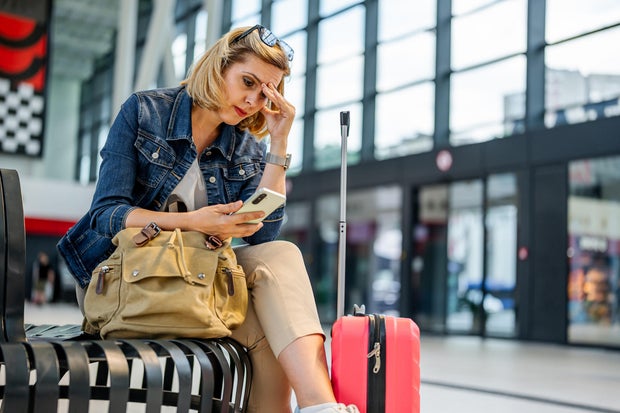
Air travelers know there is always a risk of a flight delay or cancellation, which can occur due to everything from bad weather to mechanical issues. A relatively rare occurrence in mid-November added to the list of potential disruptions: a nationwide ground stop.
The Federal Aviation Administration (FAA) called for a ground stop on November 13 after technical and communication issues made flying unsafe. The ground stop lasted for about four hours before normal operations resumed, but thousands of flights were cancelled or delayed in the process.
Because ground stops of this magnitude are so uncommon, it makes sense to ask whether travel insurance covers cancellations and delays due to such rare events. So, does travel insurance coverage kick in when there are flight cancellations and delays due to a ground stop?
Find out more about your travel insurance coverage options here.
Does travel insurance cover flight cancellations and delays after ground stops?
Travel insurance may cover you in case your flight is cancelled or delayed by a certain number of hours — although how many hours are required exactly depends on the plan. It's important to know, though, that travel insurance typically kicks in if a cancellation or delay happens for a "covered reason," which often includes equipment failure.
The stated reason for the ground stop was a technical malfunction in Arkansas, caused by a maintenance update. This isn't your standard equipment failure that happens during a trip, such as landing gear issues or non-flushing toilets on the plane – but by most standards, it should still qualify.
The question is whether your travel insurance provider would agree, in addition to whether the extent of the delay or cancellation aligns with what your travel insurance policy covers.
Coverage for delays due to ground stops
Most standard travel insurance policies include something called trip delay coverage. That coverage means that if your trip is delayed beyond the policy's minimum threshold, the plan is intended to reimburse you for certain costs, such as meals, hotel accommodations and essential transportation. While those thresholds vary, many travel insurance policies will cover delays of six to 12 hours (or longer), meaning that if the ground stop would need to last at least that long for a travel insurance policy to reimburse you for related expenses.
Many flights that were scheduled to take off during the recent ground stop were cancelled, but some were simply delayed by a few hours. Because a ground stop can last anywhere from a few minutes to several days, your flight may be pushed back long enough that you'd need to leave the airport and stay somewhere overnight. However, in some cases, such as a slight delay of a few hours, may not be long enough for a travel insurance policy to kick in.
Compare various travel insurance policies you can use to cover your trip.
Coverage for cancellations and interruptions due to ground stops
When a flight is cancelled due to a ground stop, you generally have the right to either be rebooked by the airline on a later flight or to receive a full cash refund for the cost of the flight. You may be stranded away from home until that later flight, though, or until you find another way home, even if you accept the rebooking or the refund.
Even if you accept the rebooking or the refund, that only covers the flight itself. You could still be out money you spent on prepaid hotels, tours or a cruise, plus meals, lodging and transportation while you wait. Assuming your policy has trip cancellation and/or interruption coverage, that is where it will come in handy. Trip cancellation coverage reimburses prepaid, nonrefundable costs if a covered reason keeps you from starting your trip. Trip interruption coverage applies once you're underway, reimbursing for certain unused costs and often the cost of transportation needed to get home.
When will travel insurance deny coverage after a ground stop?
You shouldn't just assume that if a ground stop happens, you'll be covered under a travel insurance policy. It's important to understand your policy before an event like this occurs to make sure you won't need to go out-of-pocket to cover expenses. There are scenarios that could still lead to a denial of coverage, and some exceptions may include:
- Basic or "trip cancellation only" plans: Basic travel insurance plans can be useful in some instances, but many do not include trip delay coverage or other benefits that are useful in a ground stop. In general, the more robust the plan, the more likely it is you'll be covered.
- Not meeting the time threshold: Some plans require that your flight is delayed for a certain number of hours, such as six, eight or 12. If your flight is delayed by five hours and your plan's threshold is six, you will not be reimbursed for costs incurred.
- Strict definitions: Some plans may only cover delays if the carrier itself caused the delay, such as if the airline delays the flight due to mechanical failure. An FAA ground stop may not meet that definition.
The bottom line
Ground stops are relatively rare events, but aging infrastructure in our airports and communications systems could mean that they become more common over time. Airlines are often not required to extend hotel vouchers or reimburse other costs due to delays and cancellations that happen outside their control, which is what makes travel insurance all the more useful in such an uncertain situation. Exploring travel insurance plans – and understanding what a given plan actually does for you – is often a good way to make sure you're covered no matter what life throws at you.
KioskNews shows a cleaned-up reading view extracted from the publisher’s page — the original always lives on their site, not ours.