‘Dexter: Resurrection’ Star Breaks Down Episode 3’s Brutal Kill Table Death

Tania Hussain is an Executive Editor at Collider responsible for creative, editorial, and managerial duties. In addition to leading content ideation and development, she works to generate innovative and compelling ideas for feature articles and reviews with her editorial team across Features, Lists, Reviews, and Interviews. She also serves as the primary editor overseeing Collider’s Signature Series profiles, spotlighting some of the most influential voices in film and television. Tania has helped cover and ideate content for major events for Collider, including the Toronto International Film Festival. She has also conducted more than 100 interviews since her start in the business more than 15 years ago. Some favorites include Joel McHale, Charlie Cox, Jennifer Garner, Tina Fey, Kate Winslet, Bob Odenkirk, Andy Richter, Jordan Schlansky, Jamie Dornan, Yeardley Smith, Rafe Spall, Esther Smith, and a reasonable toss-up between Cookie Monster and Kermit the Frog. She has covered set visits, in-person junkets, and red carpets for several films and TV shows, including most recently, The Sheep Detectives, Masterchef, and Star Trek: Starfleet Academy.
Sign in to your Collider account
Editor’s Note: The following contains spoilers for Dexter: Resurrection Season 2, Episode 3.
Summary
- In an interview with Collider, Gabriel Luna opens up about the Sleepy-Eyed Killer's disturbing psychology, his brutal death, and facing Michael C. Hall on Dexter's infamous kill table.
- Luna reveals that Ray Ballard's god complex stems from childhood trauma and abandonment, while his relationship with Prater reflects a desperate need for approval and human connection.
- Luna shares that he may have set a 20-year record for time spent on Dexter's kill table and explains why Ray refuses to beg for his life, even in his final moments.
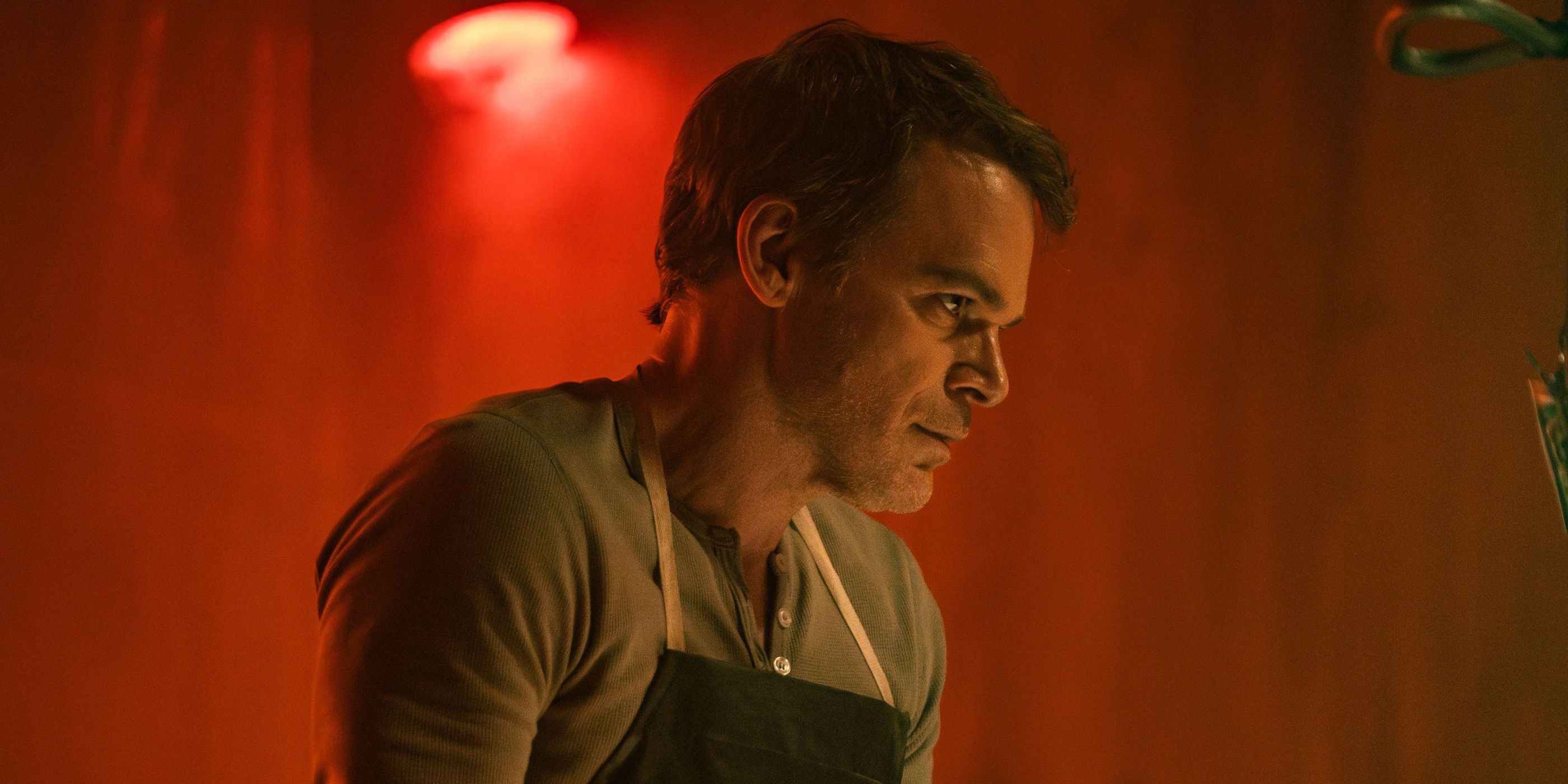
Gabriel Luna is no stranger to playing characters with a dark side, but his latest role in Dexter: Resurrection Season 2 takes things to a very disturbing place. In Episode 3’s “Live Free and Die,” we formally meet Luna’s creepy serial killer character, Ray Ballard — better known as the Sleepy-Eyed Killer. Ray takes pleasure in tormenting his victims long before killing them by sneaking into their homes, rearranging their belongings, and making them question their own sanity. It’s a crazy AF premise that only the Paramount+ series could pull off.
But Ray’s killing spree comes to an end when Michael C. Hall’s Dexter Morgan finally gets him on the Bay Harbor Butcher’s infamous kill table. Before meeting a bloody fate, Ray reveals the twisted reasoning behind his murders, claiming that he’s actually doing his victims a favor. Naturally, Dexter, who knows a thing or two about justifying murder, isn’t buying it. In an interview with Collider about the latest episode, Luna breaks down Ray’s disturbing psychology, the show’s fascination with serial killer culture, and what it was like finding himself on the receiving end of Dexter’s knife.
‘Dexter: Resurrection’s Sleepy-Eyed Killer Has a Twisted Reason for Murdering His Victims
Gabriel Luna believes Ray’s god complex comes from childhood trauma and abandonment.
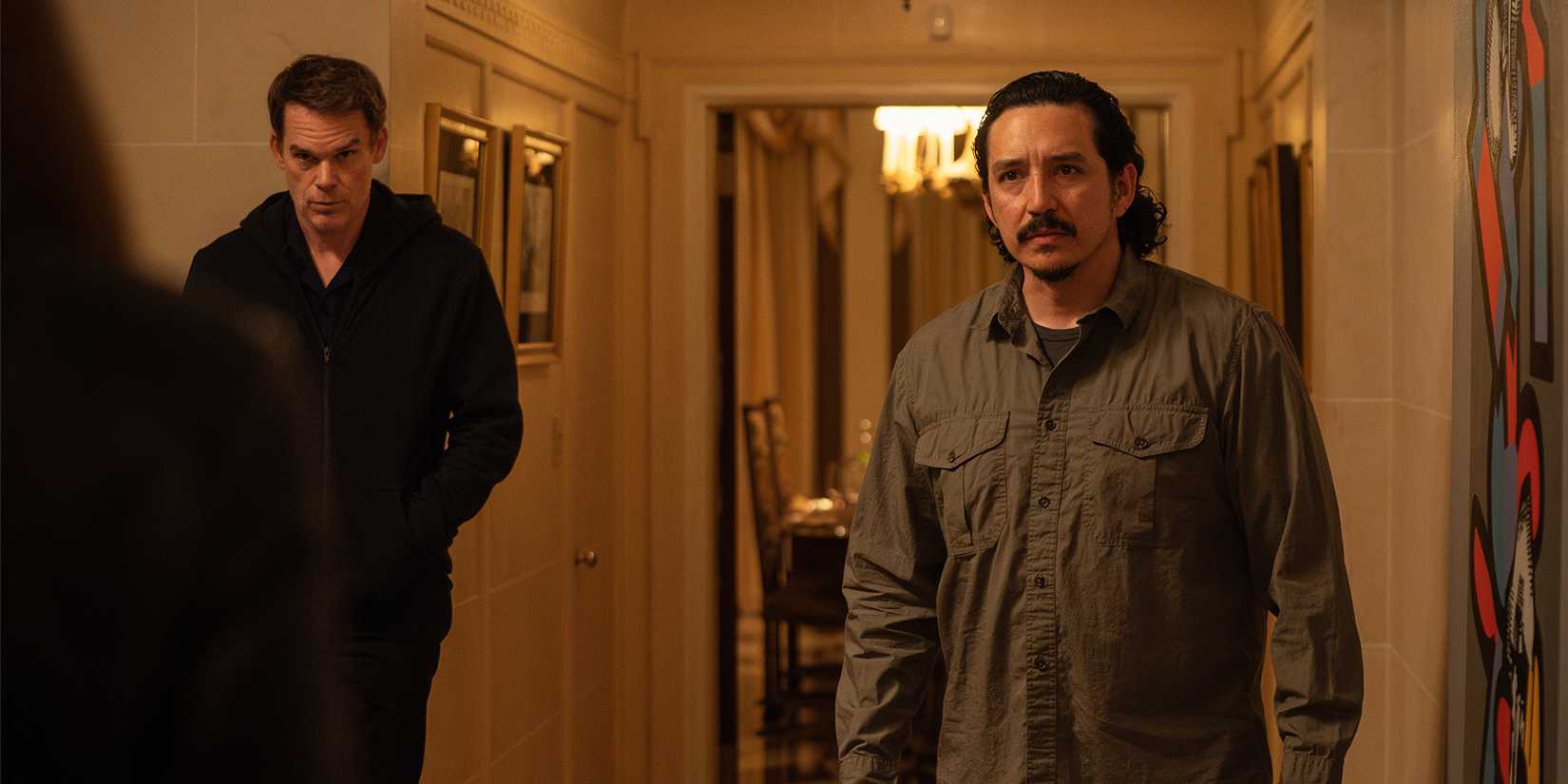
COLLIDER: Congratulations on Dexter: Resurrection! It’s been so fun seeing you in this role. You’re always such a nice, friendly guy — but then playing this very creepy sort of character, I’m wondering what the most disturbing thing was in understanding how your character, Ray’s mind, works? How did you approach someone who takes such pleasure in psychological torture?
GABRIEL LUNA: When I read it, I think it was just that speech by Michael that really informed most of it and where he’s coming from, and how painful his childhood must have been and how terrifying and heinous whatever happened to him must have been for him to have spun out into orbit this far and to be so isolated and to have this “god” delusion that he has. And so, a lot of it is just born from that one speech, the idea that everyone is going to hurt you. All your family, all your friends, all these people, they don’t serve you. They’re not there to help you, and they’re not there to love you. They’re only there to inevitably hurt you. And wow, where does that come from?
COLLIDERInteractive
Rec
Horror/Quizzes/Survival Odds
▶ PlaySP 00:00:00
Survival TestSP · Do Not Rewind
Collider QuizWhich Horror Villain
Could You Survive?8 Questions · 5 VillainsFive villains. Five completely different ways this ends badly if you are not smart enough, fast enough, or self-aware enough to avoid it. Only one of them is the villain your particular set of instincts gives you a fighting chance against. Eight questions will figure out which one.The Lineup
Jason Voorhees
Michael Myers
Freddy Krueger
Pennywise
Chucky
SP 00:02:14Tape 01 / 08
Question 01INSTINCT
01Something feels wrong. You can't explain it, you just know. What do you do?First instincts are the difference between the survivor and the first act exit.
Pick one, then Next
SP 00:07:41Tape 02 / 08
Question 02ENVIRONMENT
02Where are you most likely to find yourself when things go wrong?Setting is everything in horror. Where you are determines which rules apply.
Pick one, then Next
SP 00:13:09Tape 03 / 08
Question 03STRENGTH
03What is your most reliable survival asset?Every survivor has a quality the villain didn't account for. What's yours?
Pick one, then Next
SP 00:19:52Tape 04 / 08
Question 04FEAR
04What kind of fear is hardest for you to fight through?Knowing your weakness is the first step to not being undone by it.
Pick one, then Next
SP 00:26:30Tape 05 / 08
Question 05GROUP
05You're with a group when things start going wrong. What's your role?Horror movies are unsentimental about who survives group situations and who doesn't.
Pick one, then Next
SP 00:34:08Tape 06 / 08
Question 06MISTAKE
06What's the horror movie mistake you're most likely to make?Honest self-assessment is a survival skill. Denial is not.
Pick one, then Next
SP 00:41:37Tape 07 / 08
Question 07ADVANTAGE
07What's your best defense against something that can't be stopped by conventional means?Every horror villain has a weakness. The survivors are always the ones who find it.
Pick one, then Next
SP 00:49:55Tape 08 / 08
Question 08FINAL SCENE
08It's the final scene. You're the last one standing. How did you make it?The final survivor always has a reason. What's yours?
Pick one, then Next
Survival Odds CalculatedYour Best Chance Is Against
Your instincts, your strengths, and your particular way of thinking under pressure point to one villain you have a real fighting chance against. Everyone else: good luck.
Friday the 13thJason VoorheesCamp Crystal Lake · Friday the 13th, 1980Relentless, but he never once changes the plan.
Jason is relentless, but he is also predictable, and that is the gap you would exploit.Why You Last Longer
- He moves in straight lines toward his target. He doesn't strategize, doesn't adapt, doesn't outsmart. He simply pursues.
- Your ability to keep moving, use the environment, and resist the panic that freezes most people gives you a genuine edge.
- The Crystal Lake survivors were always the ones who stopped running in circles and started thinking about terrain, water, and distance.
- You think like that. Which means Jason, for all his indestructibility, would face someone who simply refused to be where he expected.
From The Collider File
- Crystal Lake, the Peacock prequel series, dropped all eight episodes on October 15, 2026.
- It ended a 17-year gap, the longest the franchise has ever gone without a new entry.
Keeps MovingReads TerrainCrystal Lake
HalloweenMichael MyersHaddonfield, Illinois · Halloween, 1978He is already in the frame. You just have to look.
Michael watches before he moves. He is patient, methodical, and almost impossible to detect, until it's too late for anyone who isn't paying close enough attention.Why You Last Longer
- But you are paying attention. You notice the shape in the window, the car parked slightly wrong, the silence where there should be sound.
- Michael's power lies in the invisibility of ordinary suburbia, the fact that nothing ever looks wrong until it already is.
- Your spatial awareness and instinct to map every room, every exit, and every shadow before you need them is precisely the quality Laurie Strode had.
- You are not a target waiting to happen. You are someone who already suspects something is wrong, and acts on it.
From The Collider File
- John Carpenter is producing a new Halloween film with Blumhouse and Miramax.
- The 1978 mask was a store-bought Captain Kirk mask, widened at the eyes and painted white.
Checks ExitsNotices FirstHaddonfield
A Nightmare on Elm StreetFreddy KruegerElm Street · A Nightmare on Elm Street, 1984He needs you rattled. You are hard to rattle.
Freddy wins by getting inside your head, using your own fears, your own memories, your own subconscious against you. That strategy requires a target who can be destabilized.Why You Last Longer
- You are harder to destabilize than most. You've faced uncomfortable truths about yourself and you haven't looked away.
- The survivors on Elm Street were always the ones who understood what was happening and chose to face it rather than flee from it.
- Freddy's greatest weakness is that his power evaporates in the presence of someone who refuses to give him the fear he feeds on.
- Your psychological resilience, the ability to stay grounded when reality itself becomes unreliable, is exactly the quality that keeps you alive here.
From The Collider File
- Paramount set a new A Nightmare on Elm Street in motion in July 2026, with the Wes Craven estate involved.
- Craven built the original on newspaper reports of people so afraid of their own nightmares that they refused to fall asleep.
Stays LucidFaces ItElm Street
ItPennywiseDerry, Maine · It, 1990It eats fear. You are not serving any.
Pennywise is ancient, shapeshifting, and feeds on fear, but it has one critical vulnerability: it cannot function against someone who truly stops being afraid of it.Why You Last Longer
- The Losers Club didn't survive because they were braver than everyone else. They survived because they faced their fears together, and faced them honestly.
- You ask the questions others avoid. You look directly at what frightens you rather than turning away.
- That directness, the refusal to let fear fester in the dark, is Pennywise's worst nightmare.
- It chose the wrong target when it chose you. You are exactly the kind of person whose fear tastes like nothing at all.
From The Collider File
- HBO renewed It: Welcome to Derry for a second season, with Bill Skarsgard back under the makeup.
- The showrunners have said season two reaches further back, to younger versions of the first season's characters.
Asks Out LoudUnrattledDerry
Child's PlayChuckyChicago · Child's Play, 1988Everybody laughs. You are not laughing.
Chucky's greatest advantage is that nobody takes him seriously until it's already too late. He exploits the gap between how something looks and what it really is.Why You Last Longer
- You don't have that gap. You take threats seriously regardless of how they present, and you never make the mistake of underestimating something because of its size or appearance.
- Chucky relies on surprise, on the delay between recognition and response. You close that delay faster than almost anyone.
- Your instinct to treat every unfamiliar thing with appropriate skepticism, rather than dismissing it because it seems absurd, is the exact quality that keeps you breathing.
- Against Chucky, not laughing is already winning. You are very good at not laughing.
From The Collider File
- Don Mancini is writing the next Chucky film and plans to direct it himself, aimed back at the scarier end.
- Brad Dourif has voiced the doll since 1988 and has said he has no plans to stop.
Takes It SeriouslyFast ResponseChicago
Survival Odds
1· · ·0%
2· · ·0%
3· · ·0%
Copied
A Collider InteractiveCOLLIDERMore quizzes at collider.com
So for me, it was really the idea that at some point in his life, maybe around 11 or 12, is where I put it, he was abused or abandoned, and now he’s stuck there. And that’s why he speaks the way he does, and that’s why he is so kind of ... Because he doesn’t really speak to anyone, and all the social contracts have dissolved, and the way you’re supposed to interact with people, he doesn’t really do, so he’s very knee-jerk in the way he responds to people, and he gets very frustrated with people and annoyed with people very quickly. He doesn’t really deal with them. The only reason he’s there is Prater.
And there must be something about Prater that they’ve had in their past, and in these previous parties they’ve thrown for him, to tolerate anyone is interesting. So the fact that he has this kind of need to impress Prater, I think, is also rooted in that 12-year-old somewhere, his father, maybe.
And you mentioned the God complex and the feelings of being abandoned and playing into who he is today. Do you generally believe that he’s above everyone else, or is that sense of power compensating for what he lacked? Like, all the circumstances of his life have led up to where he is.
LUNA: Yeah, no, I think that’s just coping, or there’s more cowardice than anything that is involved in what he does, and he’s compensating. He’s overcompensating. The fact that he can’t see them, that he can’t be awake when he does it, is cowardice. But he frames it, and he presents it as, “Oh, I’m a god and I control everything. They don’t even know I’m there.” So it’s a really interesting way to play it and to understand that, yeah, he’s just a child. He’s just a hurt person, and he’s definitely not used to having to justify his actions to anyone. But there I am lying on Dexter’s table, and he’s calling me out for all my bullshit. And then he gets very defensive, once again, very childlike, and just gets defensive and presents this idea that he’s God.
Luna Explains How ‘Dexter: Resurrection’ Explores Our Fascination With Serial Killers
Ray sees Prater as a father figure, unlike the other killers seeking fame.

I’m so curious to know your thoughts about this. I feel like your character — there’s a throughline this season: We see this superficial fascination with serial killers from the FBK to Don Frampt, where there’s the celebrity aspect attached to it, where everyone wants some kind of attention. And I feel like Ray was trying to get that with Prater — his attention, at least. I’m curious what your thoughts are on playing that thread, ’cause I guess your character wrapped up his arc, but I would have loved to have seen more of that.
LUNA: [Laughs] Wrapped up, yes. That’s a great way to put it.
[Laughs] But there is such a weird fascination in our culture with true crime and hearing the gory details of something, like in a podcast. I am so curious who you saw Ray as.
LUNA: Yeah, that’s really interesting ‘cause a lot of the information and research I have is just how prevalent that is in our society, and how I’ve brushed up against so many of these stories, and I know a lot of the histories of these serial killers. And then, through my own research and through my work that I’ve done and being on Devil in Disguise and having to enter into the mindset of John Wayne Gacy as Detective Tovar, the lead investigator on the Gacy case. And then when I was doing Terminator, I went into this Ted Bundy thing, just the way that he would interact with people and be really charismatic and easily, I guess, a more approachable type version of that Terminator character. But yeah, it’s a big part of the landscape right now, so either purposefully or not, I’ve absorbed a lot of this.
I think as far as the character goes, yeah, [Ray’s] so far removed from all that kind of stuff. He’s just truly isolated, and that’s a nice little juxtaposition with the other side of it. The New York Ripper, he’s kind of relishing in this attention, and everybody’s ... And Brian [Cox] is fantastic in that part. And then Dan [Stevens’] character, he’s somewhere in between there. He’s using the internet and the technology of the day to present his work. But Ray, it’s really just for him, to the point that even people who have forfeited their humanity at some point need human connection. And I think that’s what that small little perceived safe space for him is, and that’s what Prater is. He represents this kind of father figure from whom he seeks approval.
Luna Breaks Down the Sleepy-Eyed Killer’s Death at Dexter’s Hands
The actor may have broken a 20-year record on Dexter’s infamous kill table.
Michael’s made that Dexter kill table such an iconic part of television now. What was your reaction to finding out that Ray would be on that table? Was there anything surprising that you found during filming that sequence with him? Because I will say, the best part is your chemistry, and there’s still a sort of cat-and-mouse dynamic, even though he’s about to meet his fate. But there’s that feeling where he’s like, Dexter doesn’t like what he’s saying, and he’s still trying to fight him with words.
LUNA: Yeah, no, I feel like we have a longer talk than most of the people do. And I love how he ... I’m not really pleading for my life or fighting or anything. I think at that point, it’s just that I’m pissed off at my stepbrother for trying to steal my idea and take my toys — that kind of energy. But apparently when I’m asked about this, I’m only relaying what I was told by Scott Reynolds: He thinks that I set a record for time on the table.
Wow.
LUNA: That’s 20 years of competitors in that regard. But it was mostly because there’s a whole half of the scene that’s between Michael and Uma, and then there’s my scene with Michael. So I’m there for a really long period of time, a lot of covers between them. And then in between the setups, they were like, “Okay, you came back there.” I was like, “No, I’m fine, man.” I was just comfortable. They made it really comfortable. They give you your snacks, and they bring you a sippy cup and a pillow. [Laughs] Also, I’m almost completely naked, so it’s just like I don’t want to get up, and it’s cold on the stage, and I have to go get my room and all this. I just stay here, man. The lights are nice and warm.
I think it was mostly just ’cause I usually like to be doing the thing and feel what it feels like and be ready. And so I think that’s added to my time, and that’s helped me set the record. But it was, yeah, it was awesome. I mean, it was just such a, like you said, it’s just an iconic set. They Velcro it down first, and then they wrap it, wrap it, and then they staple gun it, and then just so I could fight against it a little bit. It was a really fascinating scene. But yeah, I don’t fight him. I don’t beg for my life. I just present my philosophy and almost try to be like, “Dude, I’m doing it the right way. I’m the one.” And at some point I feel like he gets it. There’s just a brief moment of, “Yeah, you understand. I’m always right,” ’cause I’m always talking to myself.
He’s such a great character. I have to say, when we saw that little sneak peek of him in Episode 2, my sister and I watched it and thought, “This might be the creepiest character we’ve ever had on the show!” And I feel like that’s such an honor also because there are so many different characters, but having Ray be this guy who goes into the house, he rearranges things, and then he watches you, and it’s like, I don’t know where the writers come up with this stuff. It’s crazy.
LUNA: Yeah, that was fun ’cause we had the set, there was the house, and I’m just like, “How would I move through this house?” And then it’s just a matter of seeing everything and looking at the life that they’ve built and that you’re about to completely destroy. And all the little toys, the Barbies. At one point, I was like, “I’m going to sit down on this table.” And what’s creepier than a person just making themselves comfortable? You don’t know they’re there, and to actually feel so comfortable as to sit down on your kitchen table while he’s about to kill someone in the house.
And I remember I picked up this little toy. I didn’t realize it squeaked, and it squeaked, and then it occurred to me to just make it squeak again, just testing the limits of just the brink of being caught. And that’s a little bit of a little fun I think Ray was having. But yeah, I think it was important just to go around, to touch everything with intention and deliberately, and move things around. And I think just that flow and that pull towards the victim was what gave it that kind of tension.
Dexter: Resurrection Season 2 is now streaming on Paramount+.

Dexter: Resurrection
8 10
- Release Date
- July 13, 2025
- Network
- Paramount+ with Showtime
- Showrunner
- Scott Reynolds, Clyde Phillips
- Directors
- Marcos Siega
KioskNews shows a cleaned-up reading view extracted from the publisher’s page — the original always lives on their site, not ours.