Commentary: Regional haze casts a pall on ASEAN’s influence
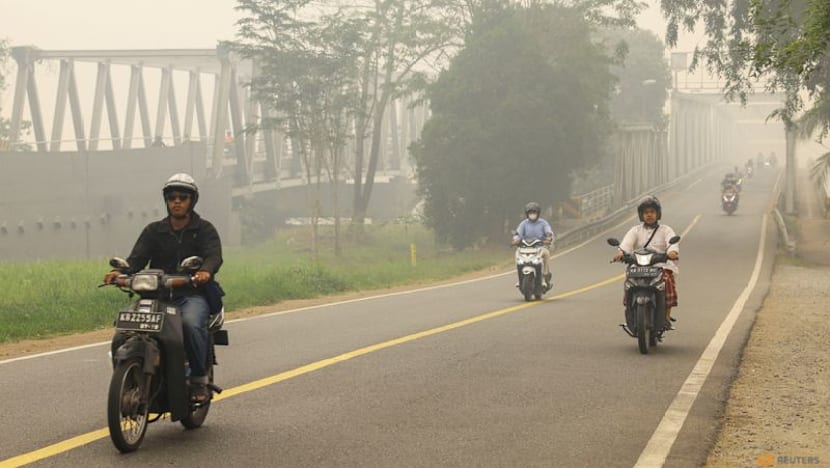
ASEAN’s credibility will ultimately depend on whether it can translate regional commitments into practical results, says an ISEAS – Yusof Ishak Institute fellow.
20 Sep 2026 06:00AM
SINGAPORE: In recent weeks, a thick shroud of smoke has enveloped some Association of Southeast Asian Nations (ASEAN) member states again. While the bloc has instituted some policies to mitigate its effects, enforcement and making them work effectively is critical.
Early this month, haze from forest and peatland fires in Indonesia drifted as far as the Southern Philippines. Closer to the source, visibility at Supadio Airport in Pontianak fell to about 100m, preventing the aircraft carrying Indonesia’s forestry minister from landing.
Since August, the ASEAN Specialised Meteorological Centre has activated its highest alert level, Level 3, after detecting hotspots across Sumatra and Kalimantan. Malaysia has asked Indonesia for permission to conduct cloud seeding over Indonesian territory. Singapore has also issued daily haze advisories to help the public plan activities and events.
The pattern is familiar. For nearly three decades, ASEAN has built mechanisms to prevent, monitor and respond to haze, yet the problem continues to occur. ASEAN introduced the Regional Haze Action Plan in 1997, focusing on prevention, mitigation and monitoring.
In 2002, it adopted the ASEAN Agreement on Transboundary Haze Pollution (AATHP), the region’s first legally binding agreement dedicated to the issue.
Since then, ASEAN has built a relatively comprehensive system for haze cooperation. The ASEAN Specialised Meteorological Centre (ASMC) monitors hotspots, weather conditions and smoke movement, while the AATHP provides a framework for joint responses and assistance when fires escalate.
A REVEALING TEST OF ASEAN CREDIBILITY
The recurrence of smoke haze is an especially revealing test of ASEAN credibility because, unlike many of ASEAN’s other transboundary challenges, it is predominantly an intra-ASEAN problem.
The countries where the fires start and the countries that breathe the smoke are, with few exceptions, the same member states. This distinguishes haze from a challenge like water security in the Mekong River. The river is shared by several ASEAN countries but flows from China, which is not an ASEAN member.
China’s dam-building and water management decisions have major implications for downstream communities and ecosystems, limiting ASEAN’s influence over some of the river’s most consequential decisions.
If haze, unlike the Mekong, is a problem ASEAN’s own members largely cause and largely suffer, it raises an obvious question: Why has the region struggled to address it through its own institutions?
The challenge lies in a basic tension at the heart of ASEAN cooperation. Haze crosses borders, but individual member countries are largely responsible for its occurrence.
The fires are largely concentrated mainly in Indonesia, where land use, plantation licensing, forest management and law enforcement are primarily domestic matters. ASEAN can share information, coordinate responses and provide assistance, but it has limited authority to direct or influence how a member state manages its own territory.
This reflects ASEAN’s long-standing principle of non-interference, which is a double-edged sword: The principle has helped sustain cooperation among countries with different political systems, but which also restricts how far ASEAN can go in addressing a problem whose effects are shared across borders.
ATTRIBUTION FOR LIABILITY
A second related constraint is attribution for liability. ASEAN has considerable technical capacity to detect hotspots and track the movement of smoke haze, but identifying the source of it is not the same as establishing legal responsibility.
Determining who caused a fire requires land concession data, investigation and evidence that can support enforcement. These functions remain largely within national jurisdictions. In essence, ASEAN has far less capacity to determine who should be held responsible and face the consequences.
Singapore has sought to close this gap through its Transboundary Haze Pollution Act, which allows action against entities whose conduct outside Singapore causes or contributes to haze pollution in Singapore. The law tilts towards prevention and deterrence.
During the severe 2015 haze, Singapore’s National Environment Agency used the Act, issuing preventive measure notices and information requests to several regional agribusiness and pulp-and-paper companies.
The Act demonstrates the seriousness of the problem, but also illustrates the limits of relying on national measures to address a regional one: Even where a country has legal powers to act, effective enforcement depends on access to information, cooperation from the source country and sufficient evidence to establish responsibility.
Corporate accountability highlights the same problem. Large plantation companies operate across large areas of forest and peatland, but a fire within or near a concession does not necessarily make them directly accountable.
Holding a company responsible requires transparent concession maps, reliable fire monitoring tied to specific land parcels, credible investigation and enforcement capable of following the evidence to a corporate actor rather than a smallholder. These pertain to national functions, land registries, investigative agencies, courts and local security enforcement that ASEAN has no authority to build or command.
ASEAN can facilitate regional information-sharing, but the decisive steps of investigation, prosecution and enforcement are the prerogatives of member states and remain outside the bloc’s direct control.
ASEAN CANNOT SUBSTITUTE FOR NATIONAL INSTITUTIONS
Forest and peatland fires will remain difficult to prevent, particularly as climate change brings longer and drier periods. But climate change should not become a scapegoat.
Human activities and the strength of national institutions also shape the risk and severity of fires. ASEAN cannot substitute for national institutions responsible for land management, law enforcement and corporate accountability.
After nearly three decades of haze cooperation, the more important question is whether ASEAN has become better equipped to prevent, manage and mitigate the cross-border effects of fires. The region already has a legal framework, monitoring systems, coordination mechanisms and decades of experience responding to haze.
The challenge is making these mechanisms work more effectively. In managing transboundary haze, ASEAN’s credibility will ultimately depend on whether it can translate regional commitments into practical results.
This could mean having common response protocols, compatible communication and data systems and regular joint exercises so that disaster-management agencies can work together more effectively.
It would also mean agreeing in advance how information, equipment and personnel can be shared and deployed across borders when a major fire overwhelms national capacity.
Ideally, this should happen way before the next haze crisis once again chokes the region.
Melinda Martinus is a Fellow at the ASEAN Studies Centre, ISEAS – Yusof Ishak Institute. This commentary first appeared on ISEAS – Yusof Ishak Institute’s blog, Fulcrum.
KioskNews shows a cleaned-up reading view extracted from the publisher’s page — the original always lives on their site, not ours.