The Mexico City neighborhoods where earthquakes are barely felt
Mexico City was built over five ancient lakes. Although those bodies of water dried up during the invasion of Tenochtitlán — the ancient imperial capital of the Mexica — 500 years later, we still grapple with the consequences of that lacustrine past.
The soil in the Mexican capital is remarkably uneven — so much so that the local government classified the city into “zones,” distinguishing the soil types found in each borough.
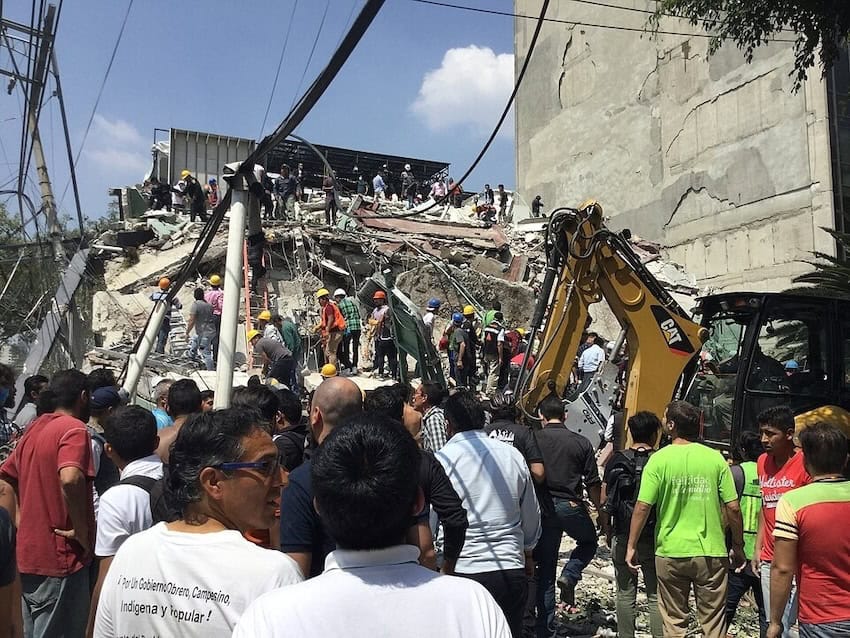
Zone II, for example, is characterized by sandy soils, meaning earthquakes are felt with greater intensity at the surface. What’s more, this type of soil makes buildings prone to collapse if civil protection measures are not followed.
According to a UNAM Global report, the Roma, Condesa and Juárez neighborhoods fall within this zoning area. As such, they are among the neighborhoods that sustained the most structural damage during the 2017 and 2019 earthquakes.
Unfortunately, the Cuauhtémoc borough is among those that have been most ravaged by Mexico City’s earthquakes. Despite being one of the city’s major tourist draws — home to the Historic Center and the iconic Roma and Condesa neighborhoods — it has historically been devastated by these natural disasters, followed by the Benito Juárez, Coyoacán and Xochimilco boroughs.
Which neighborhoods, then, have suffered the least damage from earthquakes? Read on to find out if you live in one of them.
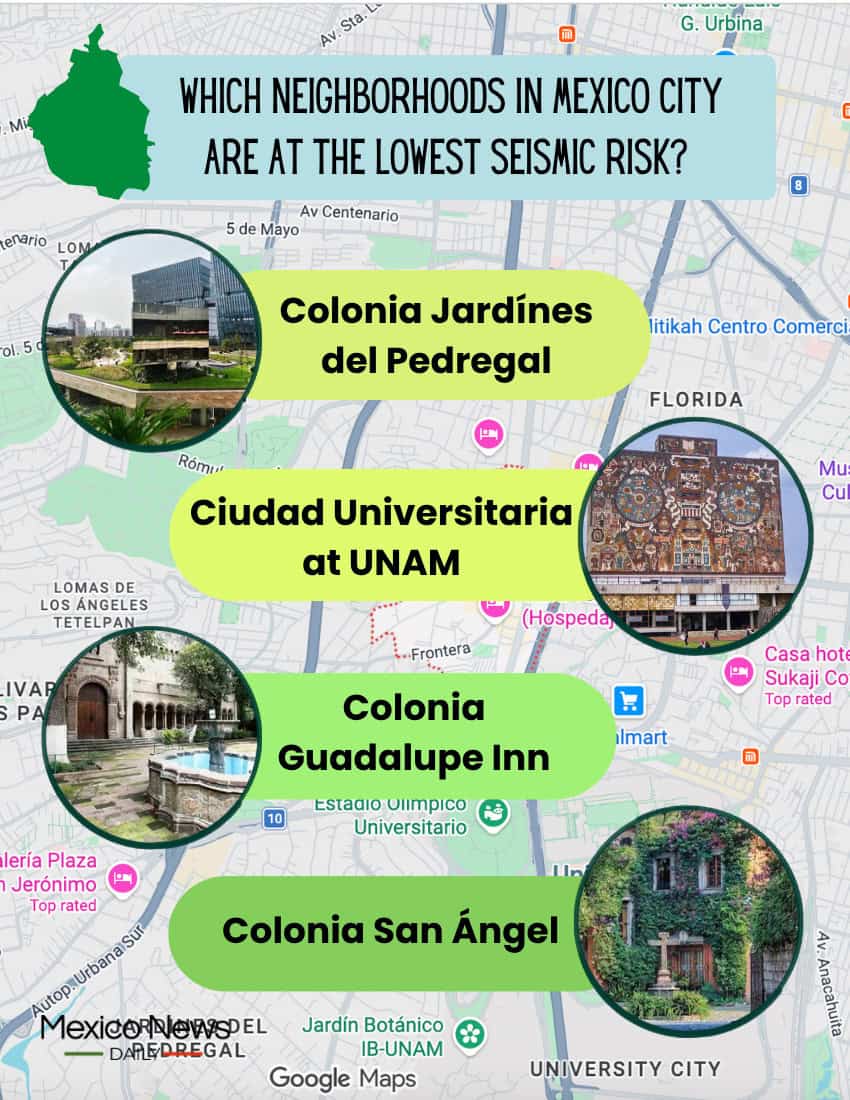
Safest neighborhoods during earthquakes in Mexico City
If you are looking to escape earthquakes in Mexico City, I have bad news for you: it isn’t possible. However, there are neighborhoods, many of which are located in the city’s southern reaches, where the movement is barely perceptible.

This is because, around 1,770 years ago, the Xitle volcano erupted in what is now the city’s south. Even today, the area retains this natural advantage, resulting in stable ground, as documented by the Mexico City government.
Having established that areas in Mexico City’s south, with its preserved volcanic soils, tend to be safer during earthquakes, which neighborhoods experience the least seismic activity?
Colonia Jardines del Pedregal
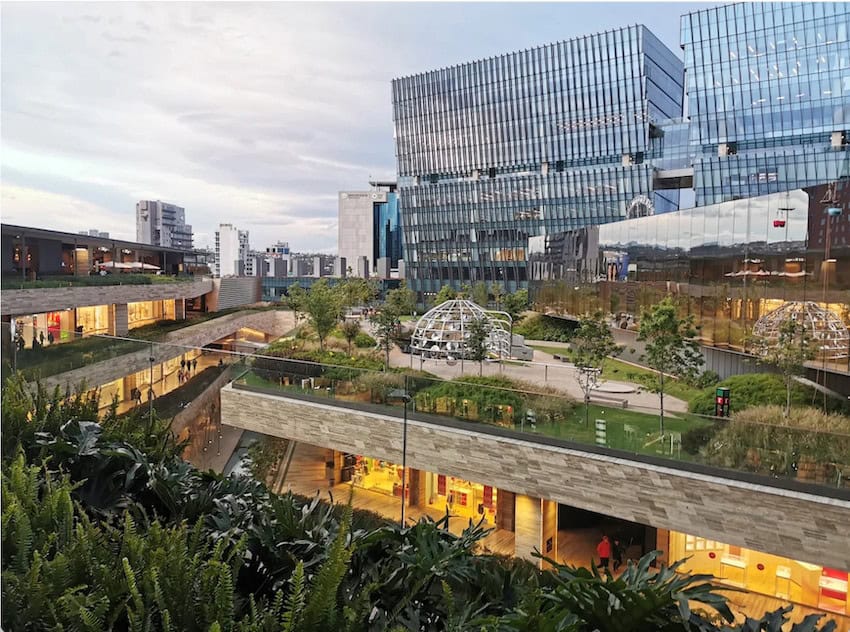
One of the most famous neighborhoods for being “safe during earthquakes” is Jardines del Pedregal. Designed by Diego Rivera and architect Luis Barragán in the 1940s, this area is recognized as one of the city’s wealthiest neighborhoods.
Characterized by huge houses and spacious pavilions and gardens, it sits on volcanic rock terrain that absorbs much of the seismic shock.
As mentioned, the neighborhood features natural volcanic stone details integrated into its urban architecture — and sometimes even into the houses themselves. So, in addition to being one of the city’s most exclusive areas, it also has the wonderful advantage of being barely affected by earthquakes.
Ciudad Universitaria at UNAM
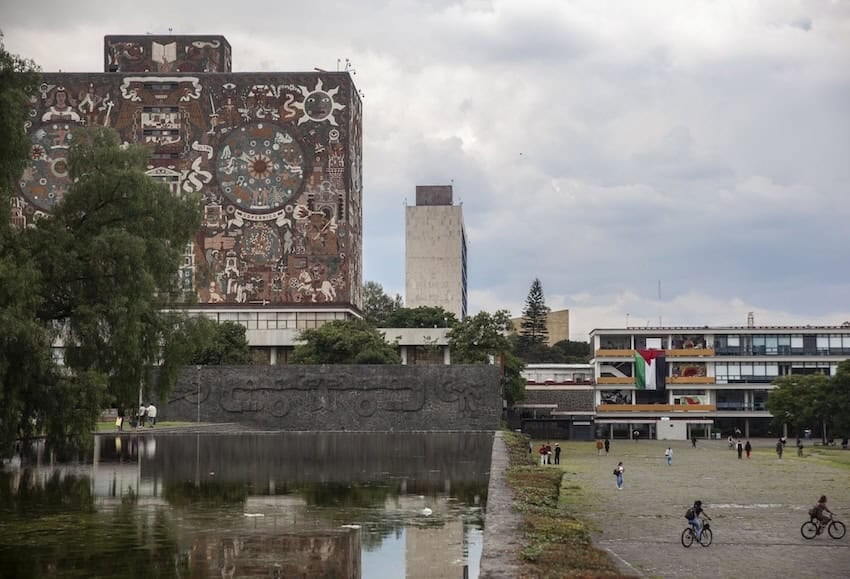
In addition to being home to one of the most beautiful ecological reserves in the south, UNAM’s Ciudad Universitaria (CU) is one of the places in Mexico City where earthquakes are least perceptible.
As seen in El Pedregal, it is common to find large chunks of volcanic rock embedded in the ground, forming part of the area’s natural beauty.
Often, because these materials are so ancient, age-old trees have grown atop the volcanic rocks, providing shade to the university’s community. So yes, you can stroll through its vast green spaces and enjoy its UNESCO World Heritage-listed views in complete tranquility.
Colonia Guadalupe Inn
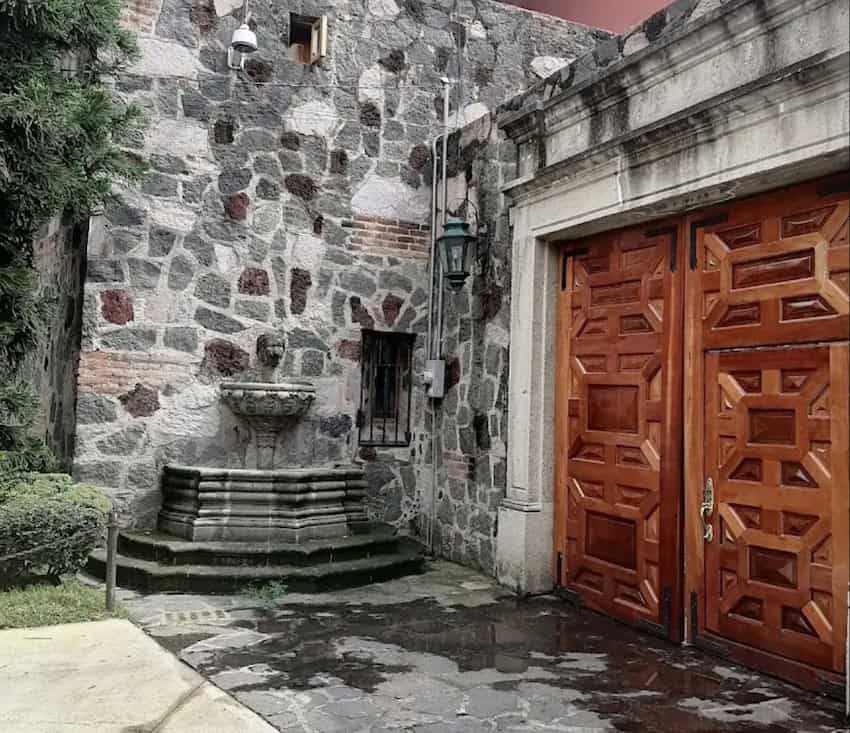
Known as the “little queen of the south,” the Guadalupe Inn neighborhood is one of the most traditional in the southern part of the city. Like its neighbors Chimalistac and San Ángel, it retains a colonial charm in its homes and businesses — a quality few places in the capital have preserved so gracefully.
Established in the mid-20th century on the grounds of the former Hacienda de Guadalupe, its streets bear the names of famous Mexican composers and are often lined with beautiful jacaranda trees, as well as other species found only in southern Mexico City.
Beyond its remarkable architectural and natural beauty, the neighborhood also tends to be spared during earthquakes.
Colonia San Ángel
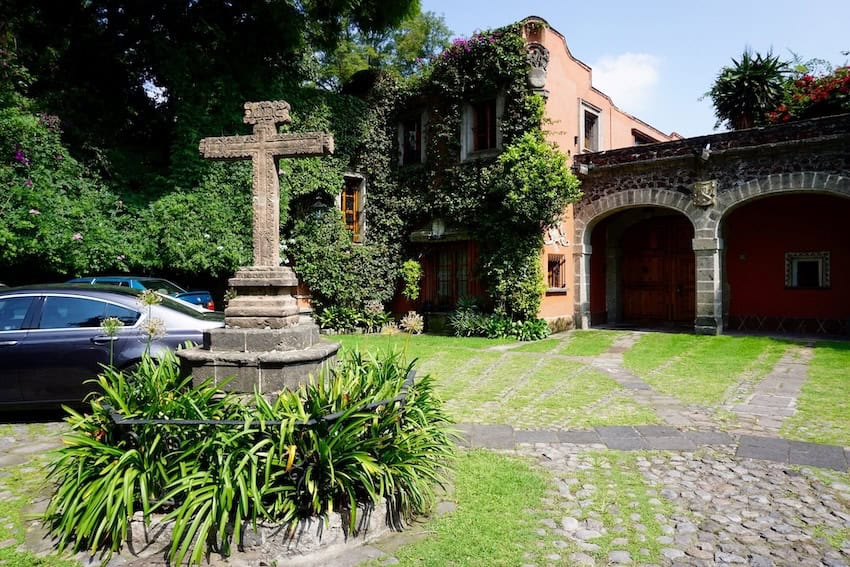
If Guadalupe Inn is the “little queen of the south,” San Ángel is the empress. Classy, upscale and undeniably stylish, it is another neighborhood where Mexico City’s tremors are barely felt.
Like the other southern colonias mentioned in this article, it is situated on volcanic soil, which absorbs much of the seismic impact.
During the colonial era, San Ángel was a small village in its own right, and it shows. The neighborhood boasts a Baroque church at the heart of a stone-paved plaza, a magnificent flower market, and fantastic cobblestone streets. What more could you ask for?
Andrea Fischer contributes to the features desk at Mexico News Daily. She has edited and written for National Geographic en Español and Muy Interesante México, and continues to be an advocate for anything that screams science. Or yoga. Or both.
KioskNews shows a cleaned-up reading view extracted from the publisher’s page — the original always lives on their site, not ours.