‘We did 10 takes of it!’ Kerr Smith on Dawson’s Creek and filming US TV’s first gay kiss
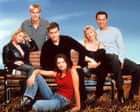
There are worse things to spend a couple of decades chasing than the feeling of being young, successful and surrounded by people who love you. For Kerr Smith, though, the particular magic of Dawson’s Creek has proved just about impossible to replicate.
“I’ve spent the last 25 years of my career trying to re-create that experience,” Smith says of the WB teen drama, on which he played the sensitive jock Jack McPhee for five seasons. “I’ve been trying to measure up to it my entire career.”
Speaking on a Zoom call this October, Smith is now 53, gray-haired and hatted with a brisk demeanor, Smith revisits that pursuit in his new memoir, I Don’t Want to Wait: My Life on Dawson’s Creek. Part oral history and part personal reckoning, the book draws on conversations with former castmates and colleagues, including big-hitters like Katie Holmes, to revisit the series, the protests that followed Jack’s coming-out storyline, and an episode of homophobic harassment Smith had never previously discussed. Highly rhapsodic and wistful about his experience on Dawson’s Creek, Kerr fully embraces the nostalgia in the memoir.
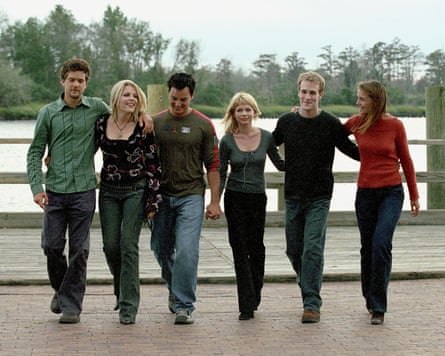
When Smith arrived on the set of Dawson’s Creek in 1998, he had only a handful of acting credits to his name, including a bit part in an episode of Baywatch and an uncredited role in CSI: Crime Scene Investigation. Introduced in Season two as a sexy interloper meant to stir up trouble between Dawson Leery (the late James Van Der Beek) and Joey Potter (Katie Holmes), he was getting his feet wet on set in Wilmington, North Carolina, with no reason to think the arrangement would change.
Then, about eight episodes into his run, creator Kevin Williamson asked him to get coffee. Smith remembers the invitation as ominous. “This is, like, two months into the job for me,” he says. “I’m thinking, ‘Oh crap. Am I getting fired?’”
On the walk to the coffee shop, he began to suspect otherwise. Smith had been thinking about how the show’s characters reflected different parts of Williamson himself: Joey represented one side of the writer, Joshua Jackson’s Pacey the jokester, Dawson the brainy one, and Michelle Williams’s Jen his wild side. But nobody represented Williamson’s sexuality. Still publicly closeted, the creator, Smith suspected, wanted to tell a story that would allow him to come out in some form beyond his family and friends.
At the coffee shop, Williamson confirmed his suspicions. “His exact words were, ‘Kerr, we wanna go down a different avenue with Jack.’” Smith’s immediate reaction was “holy crap,” though he kept that part to himself. He asked Williamson for a day or two to consult people whose opinions he respected. In 1998, playing a gay character on a hit network teen drama felt like a highly consequential proposition.
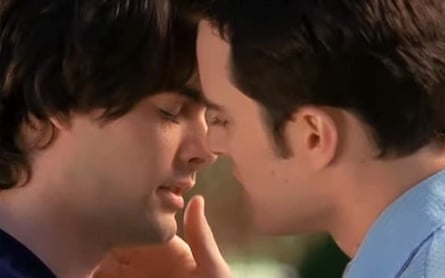
The decision transformed Jack into the center of the show’s groundbreaking gay coming-of-age story. It also made Smith half of what became the first kiss between two men on primetime network television in the United States, when Jack made out with college prep student Ethan (Adam Kaufman) in front of his dorm room in the third season’s finale.
“I was so nervous for that kiss,” Smith says of filming the scene with Kaufman. “We did ten takes of it. Ethan was nervous too, no matter what he says now.”
A director offered the actors a straightforward piece of advice: It didn’t matter whether the couple consisted of two men, two women, or a man and a woman. If the characters were attracted to each other and loved each other, they should simply kiss.
“He was right,” Smith says. “I thought about it, and I was like, ‘Yeah, it’s really that simple.’”
“There was a whole generation where that was a pivotal storyline for them and it was subsequent to them having their own coming out experience,” showrunner Greg Berlanti said in a 2020 interview. “It was nice to think that in some way we had sent a safety line to young people in a way that maybe hadn’t been there for us. It’s easy to forget about how valuable that is.”
Not everyone at the time was so accepting. Dawson’s Creek faced protests outside its Wilmington studio, and Smith remembers driving through crowds of demonstrators to get to work. He was frightened, though he found some reassurance in the fact that the protesters seemed to be directing their anger at the storyline rather than at him personally.
“I didn’t agree with the protests, but I respected that they weren’t actually throwing it at Kerr Smith, which was nice,” he says.
He tried to keep his attention on the work. “I put the blinders on,” he recalls. But the hostility wasn’t always confined to the studio gates. While filming horror film The Forsaken in Yuma, Arizona, around 2001, Smith returned to his car to find it covered in red graffiti, including homophobic slurs. He never discovered who had done it or how they had identified his vehicle.
For years, he kept the incident to himself. Writing about it in the memoir was the first time he’d put it down on paper.
“I had never mentioned that to anybody until I decided to write it down on the page,” he says. “As an actor, I like to be very vulnerable. But as a writer, when you’re writing about your own experiences, it’s a different thing, because it’s you. It’s actually you.”
The experience of writing the book also meant comparing his memories with those of his former colleagues. He came away with a realization: “One of the things that I learned is that no two people remember the same event the same way.”
During the show’s summer hiatuses, Smith deliberately sought roles that would put some distance between himself and Jack (in other words, aggressively straight). One was Final Destination, in which he played Carter Horton, a high school bully whose personality could hardly have been further from Jack’s. Carter, Smith says, was “a complete dick”.
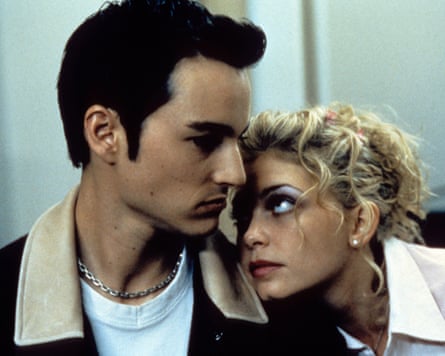
He’s since lived a toned-down life, posting live-laugh-love-isms on Instagram and acting in a smattering of films and TV shows (including a brief stint in Riverdale, where he played, amazingly, the headmaster of a school named Stonewall Prep). But Jack’s story has followed him all the same. Smith was finishing the memoir when Van Der Beek died in February after colorectal cancer. Having already written about the cast’s September 2025 reunion at New York’s Richard Rodgers Theatre, a charity event supporting F Cancer, Smith added a final chapter inviting cast members, crew members, and friends to contribute short recollections of Van Der Beek. “I haven’t spoken with the cast again after his death,” Smith says. He hopes Van Der Beek would have approved of the addition.
More than 25 years later, the response from viewers has remained overwhelmingly positive, with a new generation of fans drawn to the show after it debuted on Netflix in 2020. People still approach Smith to tell him what Jack meant to them.
“The amount of people where that happens versus the negative things that happen is, no joke, a million to one,” he says with a proud smile. “People come up to me and say, ‘Hey, Jack, the storyline changed my life.’ I’ve even had people say, ‘I don’t know if I would be here today if it wasn’t for Dawson’s Creek.’”
-
I Don’t Want to Wait: My Life on Dawson’s Creek is out on 10 November in the US and Australia, and on 26 November in the UK
KioskNews shows a cleaned-up reading view extracted from the publisher’s page — the original always lives on their site, not ours.