Historian in £300k court battle over plans to rebuild Nazi pilot's WWII fighter plane
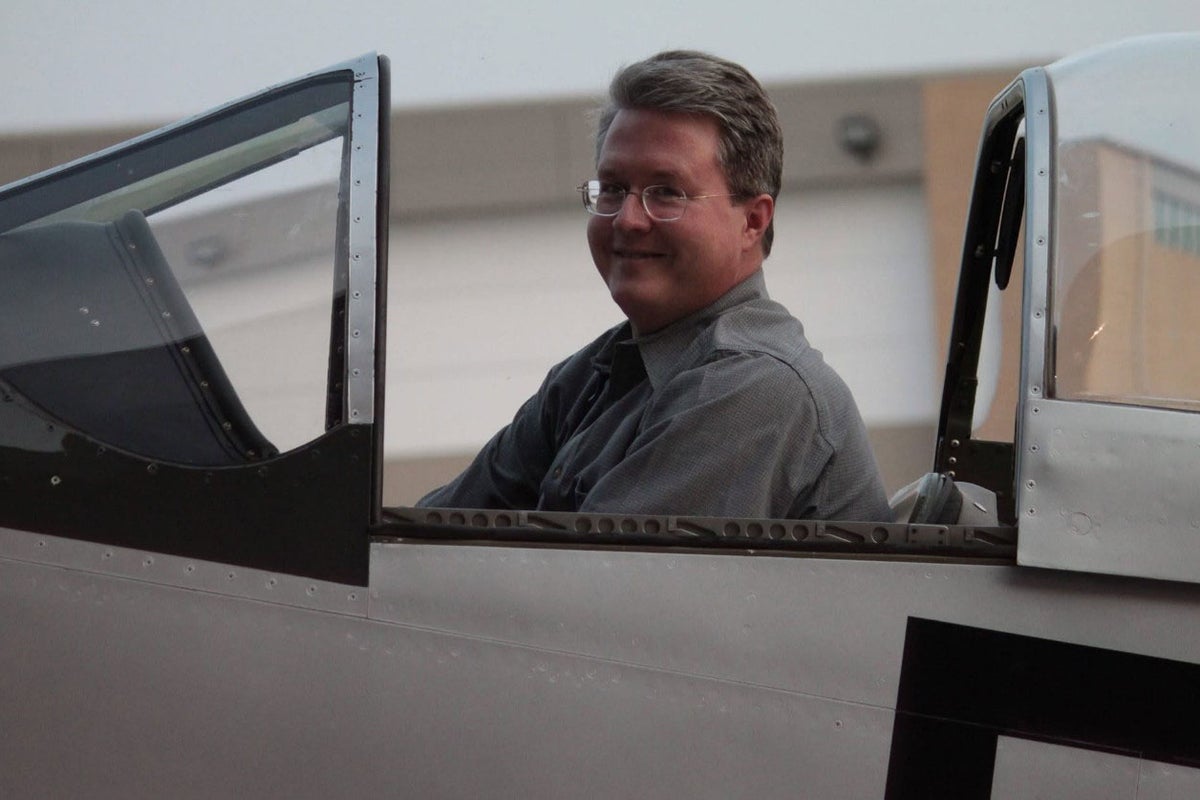
A wealthy historian and retired accountant is embroiled in a £300,000 court fight with vintage aircraft restorers over plans to rebuild a Second World War fighter plane captained by a Nazi flying ace.
Terrence Coakley, a collector of historic planes, is suing specialist restorers Spitfire AA810 Restoration. He claims he provided about £300,000 as part of a scheme to rebuild a German Messerschmitt Bf 109 and paint it in the livery of Luftwaffe pilot Gunther Rall.
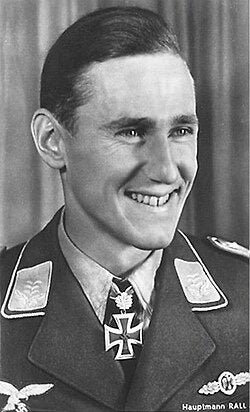
Mr Rall, who died in 2009 at the age of 91, was history's third-highest scoring fighter pilot. He shot down 275 enemy planes in aerial duels while seeing combat during the invasion of France, the Battle of Britain, and on the Russian front.
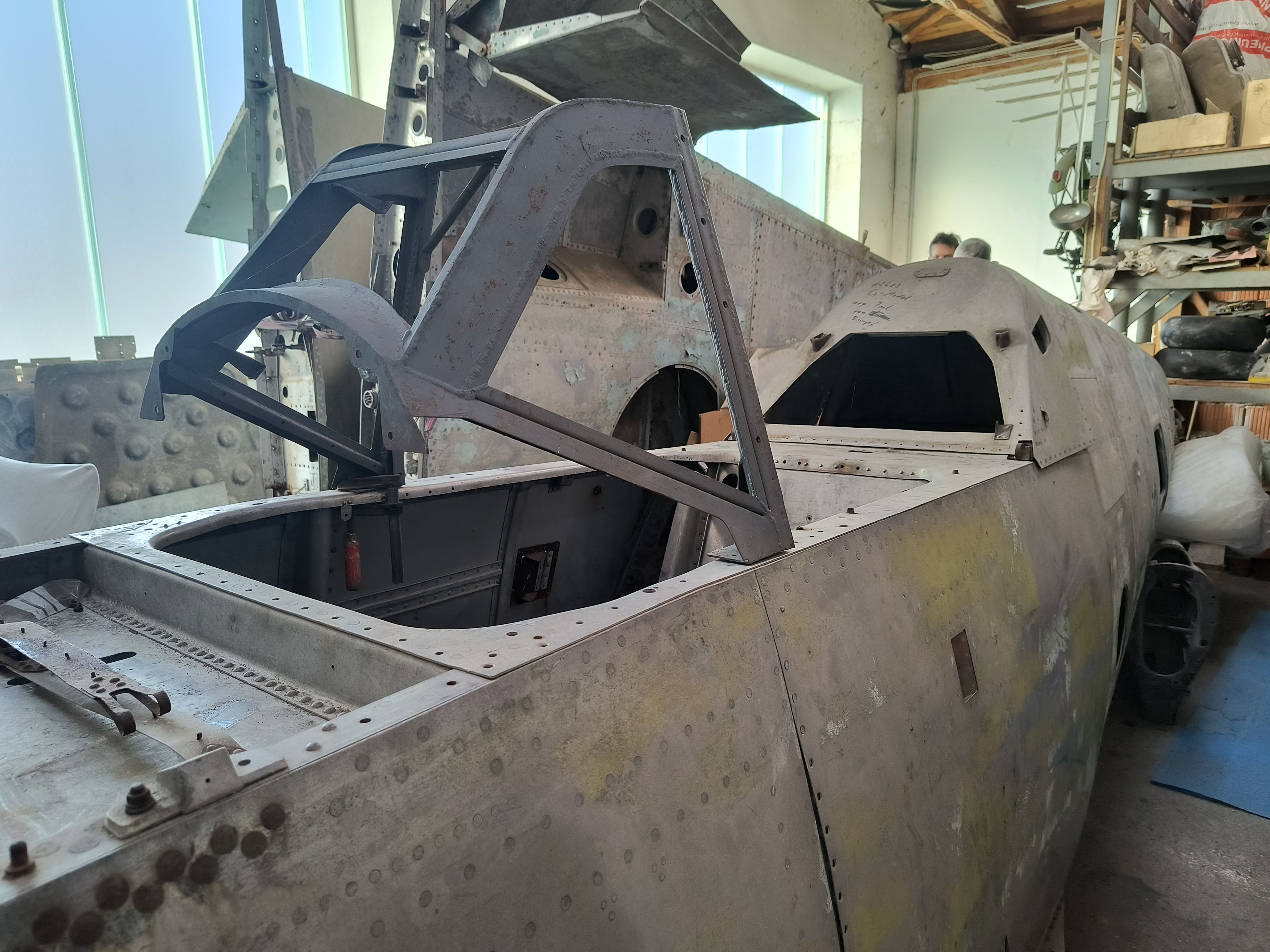
Mr Coakley says he lent the cash to the restorers to enable them to acquire a rare collection of Second World War artefacts, including a similar Spanish Buchon fighter, spare Buchon and Messerschmitt parts, and Messerschmitt Bf 109 wreckage, for a restoration and display he agreed to curate.
However, the historian is now suing for an urgent injunction ordering Spitfire to “deliver up” the historic memorabilia, amid fears that the company has tried to sell off some of the items.
Mr Rall was shot down eight times and wounded on three occasions, breaking his back once before returning to the air nine months later, ultimately racking up 275 confirmed aerial victories.
He flew a Messerschmitt Bf 109, known as the Me109, the workhorse of the Luftwaffe during the War, and considered to be the scourge of the RAF during the Battle of Britain.
As well as being an avid collector, Mr Coakley is president of the Friends of British Aviation Heritage, a charity which supports aviation history, including contributing to major museums.
At Central London County Court, his barrister Tom Beasley said that Mr Coakley, from Illinois, and Spitfire AA810’s boss, Tony Hoskins, travelled to Germany in February this year to buy the package of parts.
Mr Coakley put up around £190,000 by way of a loan, with the balance coming as a donation from his Friends of British Aviation Heritage charity.
The plan was to use parts from the similar Buchon plane – a Spanish fighter which was heavily modelled on the Me109 – in order to refurbish the wreck of the Messerschmitt, which would be painted in Gunther Rall's “Black 13” colours and displayed variously at museums in England and the US.
“The reason for the purchase was to achieve the restoration and display of an actual Me109 G aircraft that was as close as possible to a functioning Me109 G, in tribute to the pilot Gunther Rall,” he said.
“It was intended that the claimant would be the curator of the planned restoration and display.
“This was all agreed with Mr Hoskins and, through him, Spitfire. This objective was the reason that Mr Coakley and his charity, Friends of British Aviation Heritage, funded the purchase.”
But since their purchase, Mr Coakley has lost track of the Buchon and other vintage aircraft parts, prompting his drastic decision to take legal action in the English courts, said the barrister.
Last week, the case went before a judge after Mr Coakley's legal team applied for an urgent injunction ordering Spitire to “deliver up” the historic memorabilia amid fears that the company has tried to sell off some of the items.
Claiming that Spitfire breached the terms of their loan agreement, Mr Coakley is also demanding repayment of any outstanding sums.
“We still have no information about the location of the (Buchon) or about what has happened to the associated spares and the wreck,” Mr Coakley’s barrister told Judge Mark Raeside.
“We don’t even know what country it’s in,” he added.
He said that Spitfire’s boss, Tony Hoskins, had consistently failed to update and communicate with Mr Coakley about the disputed items after their purchase, prompting “initial concerns” about their fate, which deepened when he learnt that Spitfire was allegedly trying to sell some of the items on the quiet.
However, lawyers for Spitfire have denied any impropriety by the company or its boss, and insisted that Mr Coakley has no rights over the artefacts – and especially not the debris of the Me109, which was never part of the loan agreement.
“Terrence Coakley is not entitled to possession of the Buchon, or in fact any of the proprietary assets,” argued the company’s barrister, William Richardson.
Commenting on Mr Coakley’s claims that he had understood he would be “curator” for the plane display, he said this was significant as “he appears to rely on these representations as giving him some sort of possessory interest in the proprietary assets that he does not in fact have”.
And rejecting accusations that the company or Mr Hoskins tried to sell items in breach of the loan deal, the barrister urged that there was no solid evidence to back the claim.
"Tony Hoskins denies selling the Buchon or any of its associated parts, notwithstanding that the loan agreement does not explicitly prohibit him from so doing," he told the judge.
But Mr Coakley’s barrister said there had been several incidents of attempted sale by Mr Hoskins or the company, stating in his written submissions: “It came to his attention that [Spitfire] was secretly trying to sell non-wreck parts of the collateral.
“His investigations have revealed that this was not a one-off, but a sustained effort over months. It appears that they have successfully sold some parts.”
To support his claims, the barrister highlighted evidence he claimed demonstrated Spitfire’s piecemeal efforts to sell some of the parts, including from the manager of Kent’s Spitfire & Hurricane Memorial Museum, who allegedly told Mr Coakley “that Mr Hoskins had been trying to sell the DB 605 engine block and parts”.
Those engine parts had been earmarked for use in rebuilding the Me109, the court heard.
On top of this, messages from Mr Hoskins “showed a general desire to sell as much of the collateral as possible on the continent in an apparently urgent attempt to raise funds”, it was also claimed.
In July, a concerned Mr Coakley secured a court order in Germany to bar Spitfire from exporting any plane parts still in that country, only to discover that the company “was able to get the collateral out before the injunction was obtained”.
Three months later, he learned of attempts to sell off an aircraft “drop tank”, a cockpit canopy and other pieces, while Mr Hoskins had also allegedly indicated that “the broader project itself was available for sale, including a complete but damaged wing, additional large wing sections, and a substantially complete fuselage”.
After two hours in court, both sides ended up hammering out a temporary agreement, through which Spitfire will undertake “not to deal with or dispose of anything including the wreck” until the case returns for a longer hearing later this month.
Speaking outside court, Mr Coakley – who has collected a range of wartime memorabilia, including signatures of the British participants in the Battle of Britain – said that he sees the planned exhibition as a tribute to Mr Rall's plane rather than the Nazi airman himself.
“Maybe others might term it that way, a Rall tribute, I try to be careful, and just focus on the history, as no matter what, Rall was fighting on the wrong side and had contact with the worst of the worst Nazis.
“I think it is for the historian to present the information, ask further questions, and let the observer decide.”
KioskNews shows a cleaned-up reading view extracted from the publisher’s page — the original always lives on their site, not ours.