10 Sci-Fi Shows That Feel Completely Different After the Big Reveal

Diego Pineda has been a devout storyteller his whole life. He has self-published a fantasy novel and a book of short stories, and is actively working on publishing his second novel.
A lifelong fan of watching movies and talking about them endlessly, he writes reviews and analyses on his Instagram page dedicated to cinema, and occasionally on his blog. His favorite filmmakers are Andrei Tarkovsky and Charlie Chaplin. He loves modern Mexican cinema and thinks it's tragically underappreciated.
Other interests of Diego's include reading, gaming, roller coasters, writing reviews on his Letterboxd account (username: DPP_reviews), and going down rabbit holes of whatever topic he's interested in at any given point.
Sign in to your Collider account
The following article contains spoilers.If there's one thing that never fails to make a sci-fi TV show all the more riveting, it's a shocking, well-written, well-placed reveal. This is, after all, a genre that's all about a constant sense of surprise and wonder. Stories of grand space missions, hyper-advanced technology, and fascinating imagined futures, several of the greatest sci-fi series in history end up feeling completely different after their biggest twists.
We're not just talking about a minor plot twist here, but rather about one or more completely game-changing reveals that recontextualize everything that's come before and that comes after. They're the kinds of surprises that instantly make a sci-fi series rewatchable, the kind that make the whole show feel wholly different for good.
10 'WandaVision' (2021)

The Marvel Cinematic Universe had already dipped its toes into the world of television before, but it was Disney+'s WandaVision that served as the first mainline MCU series directly connected to the franchise and its most prominent characters. It takes place after the events of Avengers: Infinity War, with Wanda and Vision leading an idyllic, picturesque suburban life in the quiet town of Westview.
It's a premise that generates an instant sense of mystery and unease, with the series gradually revealing its sitcom aesthetics to be hiding something far darker. The big reveals here are that Wanda created the Hex herself as a result of her grief, and that the quirky Agnes is actually Agatha Harkness, a powerful witch who has herself been secretly manipulating several events in Westview. Leading all the way to one of the best MCU show endings, these reveals make WandaVision feel increasingly emotional and fun.
9 'The OA' (2016–2019)

One of the biggest tragedies in the history of Netflix was the cancellation of The OA, one of many canceled Netflix shows that had immense potential. It's about Prairie Johnson, a young woman who reappears after being missing for seven years. Though the series had to end on a season-two cliffhanger rather than being able to complete its planned five-season arc, it's still one of the streaming giant's best sci-fi shows to date.
The main monumental, shift-inducing reveals in The OA occur at the end of each season. Where season one reveals that Prairie's stories about her disappearance may have been a made-up coping mechanism, season two's finale is a meta twist where the characters are transported to a TV soundstage where The OA is filming. Both twists bring a whole new lens through which to view the show, even if that final cliffhanger reveal wasn't allowed to come to anything substantial.
8 'The Prisoner' (1967–1968)
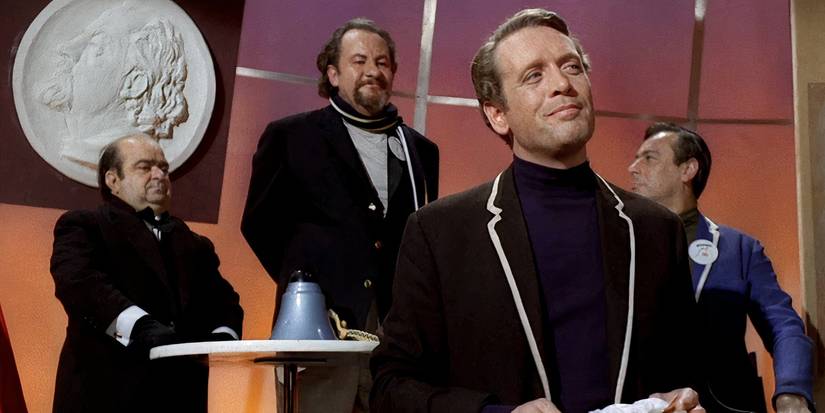
One of the greatest British sci-fi shows of the 20th century, The Prisoner is one of those near-perfect sci-fi shows that nobody remembers, a countercultural cult classic which has only kept getting better with age. With a Kafkaesque scope and a surreal tone, it tells the story of an unnamed secret agent who resigns from his job, is gassed in his home, and suddenly wakes up trapped in an inescapable coastal community named The Village.
Like many of history's greatest sci-fi shows, The Prisoner has a big reveal that has proven highly divisive over the years. The final episode shows that the shadowy man who has been pulling the strings the whole time is actually our own protagonist, and that The Village was always more of a metaphorical space. It's a highly surreal, ambiguous, and metaphysical ending that may not please all sci-fi fans, but nevertheless makes the show feel entirely different on rewatch.
7 'Orphan Black' (2013–2017)
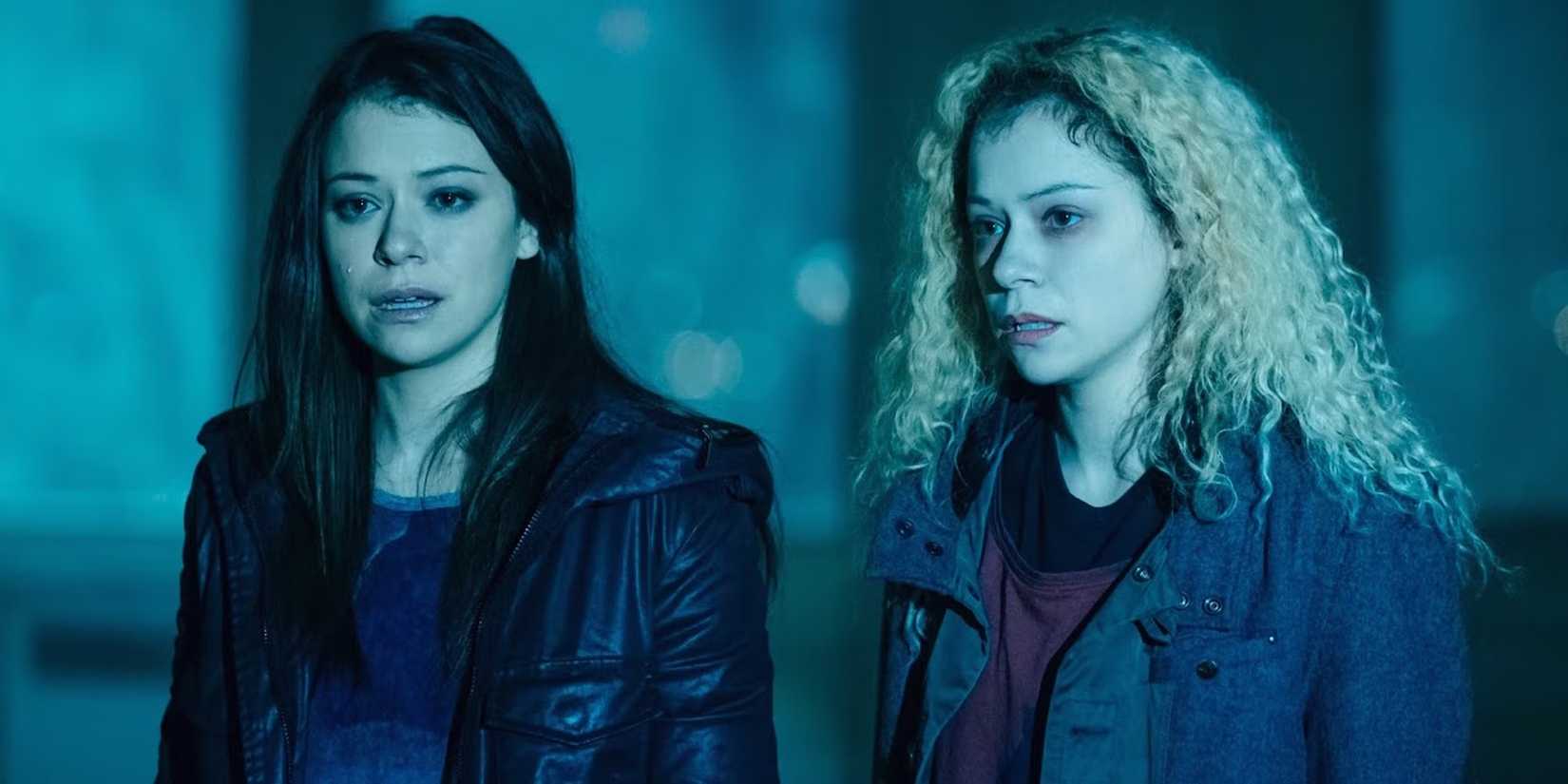
Canadian television is a gold mine for incredible yet often underappreciated sci-fi shows, and the psychological thriller Orphan Black is no exception. It's one of the biggest cult classics that small-screen science fiction has produced in years, following a British con artist who witnesses a woman who looks identical to her commit suicide, prompting her to slowly uncover a clone conspiracy.
For people who love doppelganger sci-fi, Orphan Black should prove to be a blast—and one of those intense thriller shows you need a rewatch to understand. The whole show is built on a series of twists of escalating intensity, from the reveal that the clones are patented intellectual property to the reveal that there's another clone project designed to build male military weapons. Every time a season of Orphan Black throws a shocker like this at the audience, the entirety of the show's plot and character dynamics see a seismic shift.
6 'Dark' (2017–2020)

Netflix's first-ever attempt at a German-language series ended up being one of the greatest multi-hyphenates that the streaming giant has ever produced. Indeed, Dark is a deeply atmospheric mystery, a dark tragedy, and a piece of time travel and parallel universe sci-fi. In it, when a child goes missing in a small German town, the search unearths a multi-generational time-travel conspiracy connecting four families.
The result is one of the best thriller shows since 1990, and arguably perhaps even the single greatest sci-fi thriller in the history of television. From the reveal that Mikkel is Jonas' father in season one to the reveal of the game-changing Origin World in the series finale, every twist in Dark feels like part of a masterfully-constructed chain, every reveal rapidly cascading while recontextualizing the entire story.
COLLIDERInteractive
Long-range scan active
Movies/Science Fiction/Survival Assessment
Collider Survival Assessment
Which Sci-Fi World
Would You Survive?
8 questions · 5 worlds · one honest verdict
Five of the great screen futures, and not one of them is built for comfort. Answer eight questions about instinct, loyalty and the line you would cross, and the scan will tell you which one you would still be standing in. Worlds in range
▦︎The Matrix
◈︎Mad Max
◑︎Blade Runner
▲︎Dune
✦︎Star Wars
Signal lock01 / 08
Question 01 of 08INSTINCT
The world as you know it ends overnight. What is your first move? No wrong answer. There is a wrong hesitation.
Keys 1 to 5 or A to E · Enter to advance
Signal lock02 / 08
Question 02 of 08RESOURCE
You can stockpile exactly one thing. What is it? Choose carefully. You are not getting a second run.
Keys 1 to 5 or A to E · Enter to advance
Signal lock03 / 08
Question 03 of 08THREAT
Which kind of enemy scares you the most? Be honest about what keeps you up.
Keys 1 to 5 or A to E · Enter to advance
Signal lock04 / 08
Question 04 of 08AUTHORITY
How do you handle the people in charge? Every world has them. Even the ones that pretend otherwise.
Keys 1 to 5 or A to E · Enter to advance
Signal lock05 / 08
Question 05 of 08ENVIRONMENT
Pick the place you would rather wake up in: You will be there a while.
Keys 1 to 5 or A to E · Enter to advance
Signal lock06 / 08
Question 06 of 08ALLIANCE
Who do you want standing next to you? Pick one. You only get one.
Keys 1 to 5 or A to E · Enter to advance
Signal lock07 / 08
Question 07 of 08MORALITY
Which line would you cross to survive? Everybody crosses one.
Keys 1 to 5 or A to E · Enter to advance
Signal lock08 / 08
Question 08 of 08PURPOSE
What are you really fighting for? Last question. Make it count.
Keys 1 to 5 or A to E · Enter to advance
Scan completeYou would survive
▦︎ The Matrix The Resistance, Zion You take the red pill, you stay in Wonderland, and I show you how deep the rabbit hole goes.
You would survive The Matrix because you were never fully sold on the version of reality you were handed. You notice the seams. You ask the second question. In a world built to keep people comfortable and incurious, that instinct is the whole fight, and it is why Morpheus would have found you long before you found him. From the Collider file
- The Wachowskis' 1999 film won four Academy Awards, including Visual Effects and Film Editing.
- Bullet time was shot with a rig of roughly 120 still cameras firing in sequence around the actors.
- Keanu Reeves trained in martial arts for about four months before a frame was shot, recovering from neck surgery the whole time.
- It opened the same year as Fight Club and eXistenZ, in a run of films about not trusting the world in front of you.
Red pill energy Pattern spotter Built to question
◈︎ Mad Max The Wasteland Oh, what a day. What a lovely day.
You would survive the Wasteland because you do not waste energy mourning the world that ended. You move, you improvise, and you are very good with whatever is bolted to the thing in front of you. Furiosa would let you drive. That is not a compliment anybody earns easily. From the Collider file
- Mad Max: Fury Road won six Academy Awards in 2016, more than any other film that year.
- George Miller storyboarded the entire film as roughly 3,500 panels before there was a script.
- The chase was shot almost entirely practical in the Namib Desert, with real vehicles and real stunt performers.
- Anya Taylor-Joy and Chris Hemsworth carried the prequel, Furiosa: A Mad Max Saga, in 2024.
Keeps moving Improviser Good with engines
◑︎ Blade Runner Los Angeles, 2049 All those moments will be lost in time, like tears in rain.
You would survive 2049 because you know how to be small in a very loud city. You keep your head down, you do the job, and you hold onto one private thing that belongs only to you. That quiet stubbornness is exactly what both Deckard and K run on, and it is what keeps either of them going when the case stops making sense. From the Collider file
- Blade Runner 2049 won Roger Deakins his first Oscar for cinematography, on his fourteenth nomination.
- The film also took Best Visual Effects, 35 years after Ridley Scott's 1982 original.
- Villeneuve shot it on large-format film and kept the fog and rain practical on set wherever he could.
- Three short films by Luke Scott and Shinichiro Watanabe bridge the 30-year gap between the two movies.
Keeps her head down Private Noir soul
▲︎ Dune Arrakis Fear is the mind-killer. Fear is the little-death that brings total obliteration.
You would survive Arrakis because you think in decades while everyone around you thinks in weeks. You read the room, you learn the customs, you wait. The desert does not reward speed. It rewards people who understand that patience is a weapon, which is the one lesson the Fremen never had to be taught. From the Collider file
- Denis Villeneuve's Dune won six Academy Awards in 2022, including Cinematography and Original Score.
- Hans Zimmer turned down Christopher Nolan's Tenet so he could score Dune instead.
- Dune: Part Two arrived in 2024 and brought in Austin Butler, Florence Pugh and Christopher Walken.
- David Lynch's 1984 version and Alejandro Jodorowsky's unmade one are both their own legends by now.
Plays the long game Reads the room Patient
✦︎ Star Wars A Galaxy Far, Far Away Rebellions are built on hope.
You would survive the galaxy because you never try to survive it alone. You collect people. You end up in the middle of other folks' problems and you stay anyway. Every version of this story, from the Falcon's crew to the Ghost's, runs on somebody exactly like that holding the group together. From the Collider file
- The 1977 original won six Academy Awards plus a special achievement award for sound effects.
- John Williams' score was recorded by the London Symphony Orchestra and became the best-selling symphonic film soundtrack ever.
- Andor took the galaxy somewhere colder and earned Emmy nominations for drama series in both seasons.
- The saga now runs across eleven feature films and a growing shelf of series on Disney+.
Collects people Shows up Hope merchant
Compatibility readout · top three
1
2
3
Copied to your clipboard
Scan filed byCOLLIDERCollider.com · The Sci-Fi Desk
5 'Ascension' (2014)

Whereas sci-fi shows with several seasons usually depend on having several big reveals in order to keep the story fresh and keep audiences excited, sci-fi miniseries like Ascension are able to have a singular Big Reveal with an effect on the narrative so shocking that it's unforgettable. The story begins with the first-ever murder aboard the eponymous starship, which was sent on a covert space mission 50 years prior with the mission of populating a new world. What ensues is one of those near-perfect soft sci-fi shows nobody remembers.
The show is only six episodes long, but they're such perfectly written and masterfully executed episodes that Ascension ends up cementing itself as one of the most engrossing sci-fi miniseries of the 2010s. The second episode reveals that the ship never actually left Earth, and that it's instead an underground bunker operating as a covert experiment. After that, what audiences initially believed was a high-concept deep-space odyssey suddenly transforms into a Truman Show-like shadowy conspiracy thriller.
4 'Severance' (2022–Present)

Apple TV joined the streaming party relatively late into the game, yet they have already enshrined themselves as the producers of some of the greatest sci-fi TV shows currently on the air. Case in point: the engrossing Severance, a psychological thriller where office workers at a biotech corporation undergo a surgical procedure called severance, which splits their consciousness into separate work and personal identities.
All in all, Severance is easily one of the most perfect sci-fi shows of the last five years, and that's largely thanks to how carefully planned-out and masterfully executed its big reveals are. From the reveal that Helly is actually Helena Eagan and that Ms. Casey is Mark's previously assumed-dead wife, every time Severance throws a big twist at the audience, it forces them to re-think everything they've seen thus far and changes the way they'll absorb everything that'll come after.
3 'Westworld' (2016–2022)
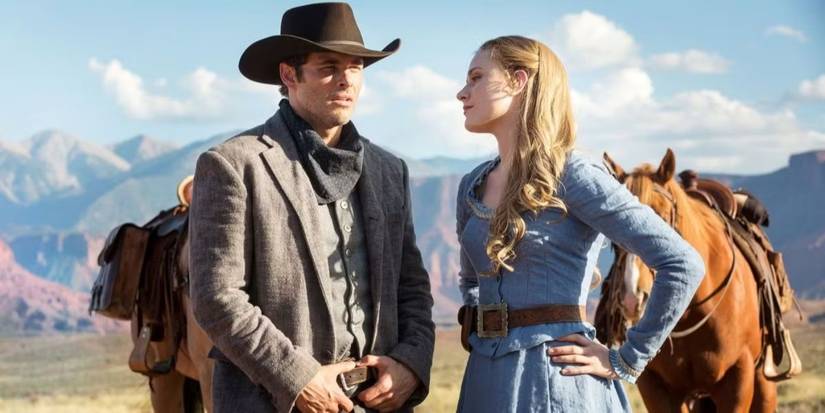
It's almost universally accepted that Westworld gets infinitely worse after its masterful first season, but in fairness, this is one of those HBO shows that are better than you remember. Created by Jonathan Nolan and Lisa Joy and based on the 1973 film written and directed by Michael Crichton, the show is about a futuristic theme park populated by lifelike androids built to fulfill the wildest fantasies of wealthy human guests.
It's mainly the big reveals in the show's first season that set the foundation that alters the rest of the show's entire reality. Whether it's Bernard being revealed to be an android or William being revealed to be the Man in Black, Westworld's biggest twists inevitably alter the way viewers see and interpret everything that happens in the series' subsequent seasons.
2 'Lost' (2004–2010)

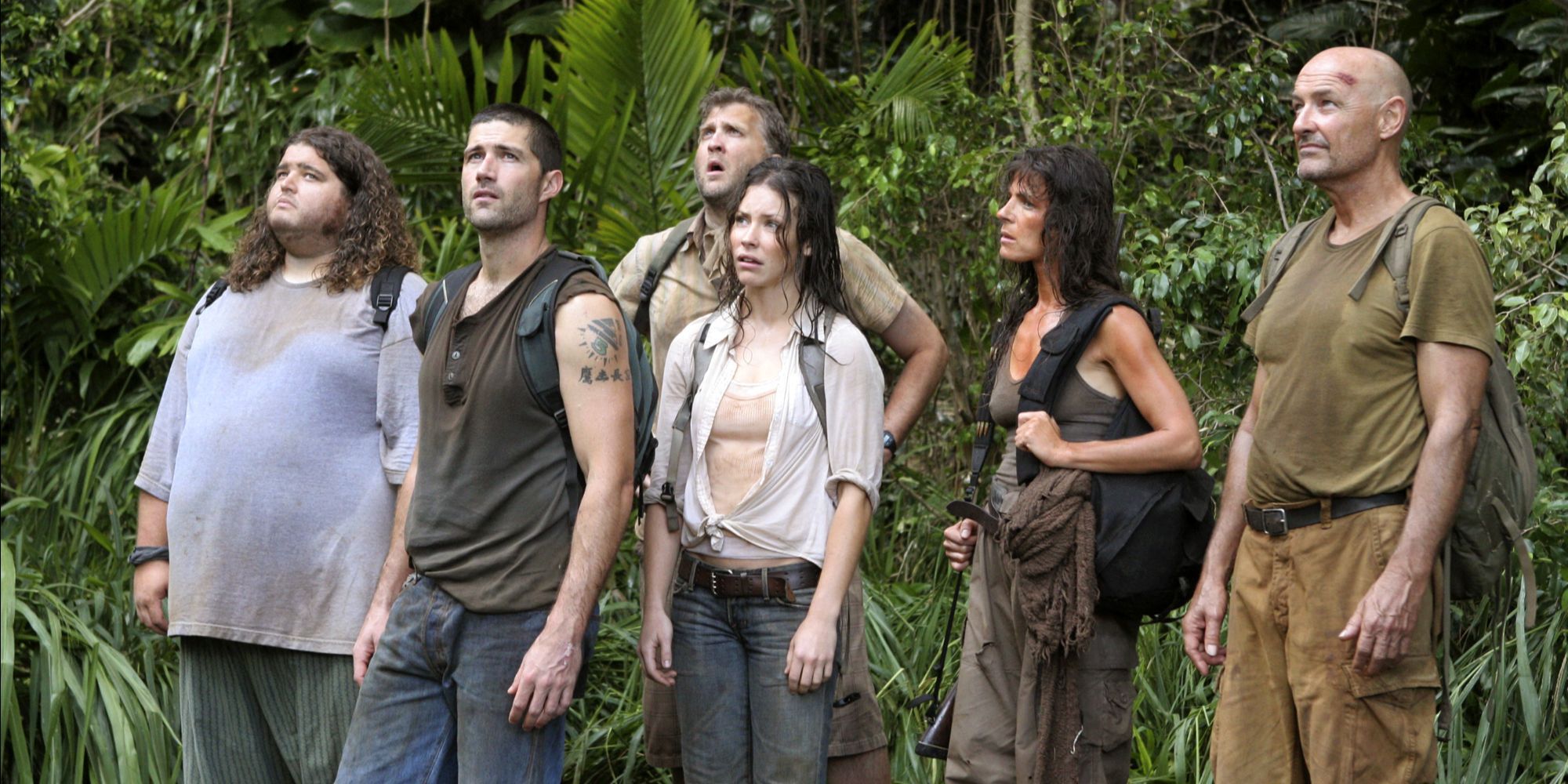
Back when it was on the air, it felt like everyone and their grandmother were watching Lost, one of the biggest pop-cultural sensations in the 21st-century history of sci-fi and fantasy television. This is one of the most essential sci-fi shows and one of the most essential fantasy shows ever made, about the survivors of a commercial jet crash finding themselves stranded on a mysterious, danger-filled tropical island.
As Lost goes on, it keeps gradually revealing itself to be a far more mysterious and more metaphysical series than it may initially seem on the surface. A pioneer of the "mystery box" branch of genre television, Lost is entirely built on big twists, like the reveal that the mysterious hatch is a science bunker or season three's iconic "We have to go back!" moment. These are the kinds of surprises that fuel Lost's entertainment value for the entirety of its six engrossing seasons.
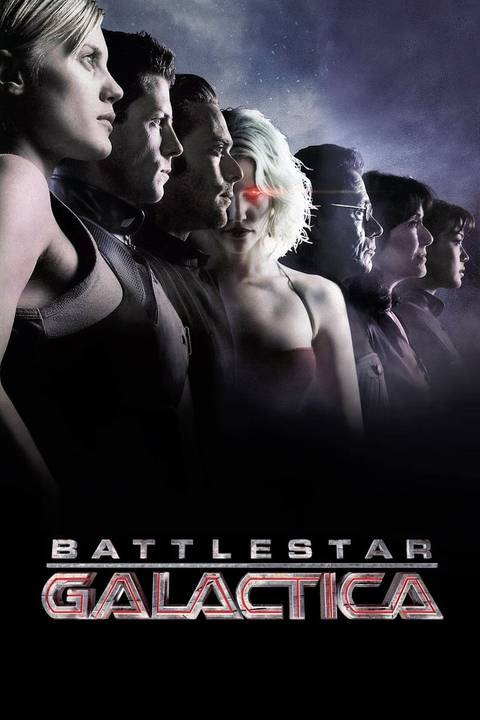
1 'Battlestar Galactica' (2004–2009)

After the incredible 2003 miniseries proved that a remake of 1978's Battlestar Galactica was not only perfectly possible, but a genuinely exciting prospect, came 2004's Battlestar Galactica, nowadays the property that most people know the franchise for. It also happens to be one of the most addictive sci-fi shows ever made, about the final remnants of humanity fleeing aboard a lone surviving military warship after a devastating nuclear attack by a cybernetic race of their own creation.
Grounded in gritty political realism and marvelously-written mysticism, Battlestar Galactica constantly pulls the rug out from under viewers' feet with completely game-changing twists. Though the infamous Final Five twist in season three of the show was—and continues to be—controversial, there's no denying that it was the show's Big Reveal, with capital letters. Indeed, it's the kind of twist that makes everything that comes after feel wholly different, and everything that came before feel recontextualized on rewatch.
Battlestar Galactica
- Release Date
- 2004 - 2009-00-00
- Network
- SyFy
- Showrunner
- Ronald D. Moore
- Directors
- Wayne Rose, Michael Nankin, Rod Hardy, Sergio Mimica-Gezzan, Edward James Olmos, Robert M. Young, Jeff Woolnough, Félix Enríquez Alcalá, Jonas Pate, Allan Kroeker, Anthony Hemingway, Jean de Segonzac, Marita Grabiak, James Head, Paul A. Edwards, Gwyneth Horder-Payton, Brad Turner, Ronald D. Moore, Bill Eagles
KioskNews shows a cleaned-up reading view extracted from the publisher’s page — the original always lives on their site, not ours.