Gabrielle Goliath: Elegy review – devastating lament is a furious, single-note call to action
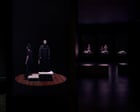
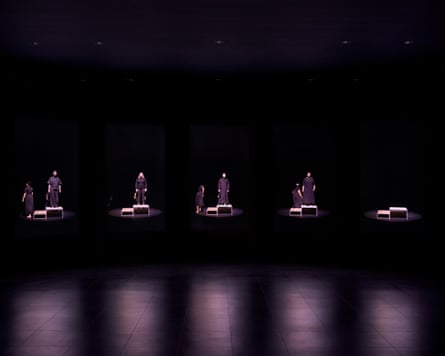
The sound of mourning spills out into the streets. A single, endless wailing note echoes out of the basement of Ibraaz, a relatively new cultural centre in London’s Fitzrovia. This is Gabrielle Goliath’s heart-wrenching Elegy, each of its three films featuring a woman singing just one note until their lungs falter and another woman steps up to fill in for her. Just as a note is about to die, it is sustained. It’s a haunting, shocking act of mourning for murder, injustice and genocide.
And it almost never made it.
A panel of five leading South African cultural voices picked Goliath’s work to represent their nation at this summer’s Venice Biennale. Goliath has been working on the project for a decade, collecting voices, collecting stories. This was a work about femicide and the murder of LGBTQ+ people in South Africa, but it had expanded. The latest iteration dealt with the Ovaherero and Nama genocide in Namibia, and the death of a Palestinian poet in 2023. It was a step too far for Gayton McKenzie, South Africa’s sport, arts and culture minister.
McKenzie is the president of the far-right Patriotic Alliance party, and has been vocal in his support of Israel in recent years. He wrote a letter describing the work as “highly divisive”. He called for the work to be edited, for the offending passage about the Palestinian poet to be removed. Goliath refused, so McKenzie put a stop to the whole thing, cancelling her Venice pavilion. She fought it tooth and nail, taking her case to South Africa’s high court, but the case was dismissed. The South Africa pavilion at the biennale sat embarrassingly empty, a big, glaring visual metaphor for the global reach of the culture wars and a symbol of censorship in the face of violence.
Goliath instead found a home for the work in a nearby church, which is where I first saw it. It was devastating then, an almost overwhelmingly emotional piece of art in a beautiful setting. Ibraaz lacks the ornate, quiet atmosphere of that Venetian church, but has made up for it with absolute sombre darkness. The space is pitch black save for the screens. One film is in commemoration of Ipeleng Christine Moholane, a woman who was strangled and left for dead in a field near Johannesburg in 2015. Another is in honour of two women who died at the hands of German colonial oppressors during the genocide in Namibia between 1904 and 1908. The third is for the poet Hiba Abu Nada and the thousands of Palestinians who have died in Gaza since 2023.
This is not a soft, plaintive lament – the room is a discordant, uncomfortable place, filled with a wailing cacophony of clashing vibrato and just out of tune notes. It sounds angry, vicious, furious, because it is. It’s not just an act of commemoration, it’s a call to action, a demand for change and justice.
While it’s incredibly emotional and deeply moving, the main feeling you get is frustration and hopelessness, not sadness. What makes Elegy so powerful is the endless proliferation of horrifying images we have to deal with on a daily basis. If you want to see images of death and genocide, you just have to look at social media or the news. We have more access to shocking, real imagery of awful current events than ever before. But Goliath has stripped the imagery away and left you with only the emotion, so just the anger and heartache remains.
It’s an act of resistance against the image economy, against murder and femicide, against violence and genocide. It’s a feminist lament, a scream against it all.
But it’s also a significant modern artwork, a symbol of our times, of our wars and cultural frictions, and its sound lingers in your ears long after you’ve walked away.
KioskNews shows a cleaned-up reading view extracted from the publisher’s page — the original always lives on their site, not ours.