John M MacKenzie obituary

How does ruling the world change the rulers themselves? If such a question has become self-evident today, it was not the case in 1984, when John M MacKenzie, who has died aged 82, published Propaganda and Empire: The Manipulation of British Public Opinion, 1880-1960.
Through his analysis of a wide range of cultural artefacts, until then neglected by historians, he articulated some of the key questions that would structure the “imperial turn”. With subsequent publications, and through Studies in Imperialism published by Manchester University Press – a book series that he launched, and edited during three decades, with more than 200 titles now published – he shifted the historical understanding of empire, treating it not as a peripheral aspect of national history, but as a central organising framework for understanding the formation of modern societies, identities, institutions and systems of power.
Partly brought up in Northern Rhodesia (now Zambia), he started his academic career in Vancouver, Canada and, from his first permanent position in 1968 at Lancaster University, was seconded to the University of Rhodesia (Zimbabwe) for a year in 1973-74; this and multiple research visits gave him valuable firsthand experience of colonialism and its consequences.
He was among the first to recognise that imperial connections had profound repercussions in the metropole (the home country), an insight that was at the heart of his concept of “popular imperialism,” explored in his edited volumes Imperialism and Popular Culture (1986) and Popular Imperialism and the Military (1991).
This approach brought to light evidence, not only literary, musical, operatic and cinematic production, but also cultural artefacts – postcards, cartoons, pamphlets, collectibles – that testified to the prevalence of an “imperial mindset”, as he put it in European Empires and the People (2011).
His fascination with imperial phenomena began as a child growing up in Glasgow. There he witnessed the ships in the port linking the Scottish powerhouse to the colonies, the way the city was “inseparable from its imperial context”, as he wrote in his 2023 autobiography, Orientations: A Life at the End of Empire.
From street names and statuary (notably around Kelvingrove Park) referring to colonial campaigns, territories or figures, to Church of Scotland talks delivered by missionaries on furlough from Africa, imperial references permeated his Glaswegian everyday life.
He was born at his mother’s family home in Northenden, south Manchester, while his father was away on army service as an instructor. The son of Hannah (nee Whitby) and Alexander MacKenzie, from Inverness, he was an intelligent and precocious child, schooled in inner-city Glasgow and, from the age of 11, in Ndola in Northern Rhodesia, where his father was an official in the public works department of the colonial Northern Rhodesian government.
After a degree from Glasgow University, and a PhD from the University of British Columbia, Vancouver, he made his academic home at Lancaster University, becoming chair in imperial history in 1991. His early publications, in the 1970s, contributed to African history, before he evolved into a historian of empire.
His extensive experience of oral history interviewing as an Africanist, and archaeological fieldwork in Rhodesia (where he excavated a Portuguese church north of Harare) and at Roman sites in Scotland (including Cardean fort near Alyth) in association with the Hunterian Museum, led him to a greater appreciation of historical evidence beyond documents and archives.
John’s work from the British perspective generated widespread interest in the scholarly communities of other European countries, who were struck by similar blind spots in their own historical traditions.
His research also revealed nuances in imperial connections within each of the four nations of the United Kingdom, and underlined the pivotal role played by Scots in developing key colonies within the British empire, which he wrote about in Scotland and the British Empire (2011), co-edited with Tom Devine, and The Scots in South Africa (2007), with Nigel Dalziel, his partner of 45 years.
John was one of the first to explore the environmental impact of colonial expansion, recognising that hunting practices could reveal how the growth of the British empire affected the natural world across the globe, hindering access to resources for local populations whilst at the same time championing new conservation practices.
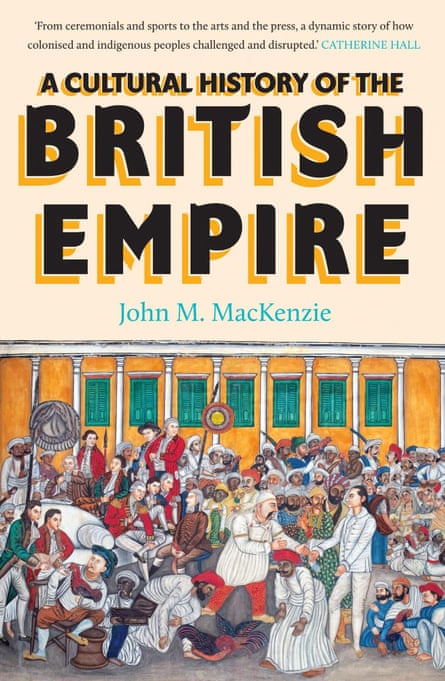
As well as looking at the contribution of empire to modern British society, he analysed culture in overseas societies, examining how museums, architecture, sports, statuary, photography and the press as they emerged in “the British world” had been influenced by their colonial contact. This approach culminated in his book Cultural History of the British Empire (2022), which explored how British culture was “both adopted and subverted” by those on the receiving end of colonialism, best exemplified by the role of the indigenous press in promoting anti-colonial nationalism.
A passionate scholar, John enjoyed extended conversations with colleagues, some of which crystallised into book- or article-long projects, including discussions with Edward Said that led to Orientalism: History, Theory and the Arts in 1996, and longstanding debates with his sparring partner Bernard Porter.
While he sought to introduce nuance in the often-Manichean approaches of the former, he responded to the latter’s criticism that he had presented an overly “maximalist” vision of the cultural impact of empire on metropolitan culture.
In 2016 he edited the Wiley-Blackwell Encyclopedia of Empire, the printed version of which comprised 2,600 pages across four volumes.
His research helped reshape the field of imperial studies not just through his own publications, but by exercising his academic leadership, from teaching, doctoral supervision and examining to the generous support of more junior colleagues. The MacKenzie Moment and Imperial History: Essays in Honour of John M MacKenzie, edited by Stephanie Barczewski and Martin Farr, was published in 2019.
After retiring from Lancaster as emeritus professor in 2002, John relocated to Alyth, near Perth. A fellow of the Royal Historical Society and the Royal Society of Edinburgh, he received an honorary doctorate from Aix-Marseille University, France, in 2021.
He is survived by Nigel, his brother Alistair, and a nephew and four nieces.
KioskNews shows a cleaned-up reading view extracted from the publisher’s page — the original always lives on their site, not ours.