Doing more with less: A Singaporean surgeon’s lessons from a hospital between two Sudans
SINGAPORE – The drive from Agok airstrip to Ameth-Bek Hospital cut through vast stretches of sandy ground and scrubland. Every so often, a truck would pass carrying young men – sometimes boys – armed with AK-47s.
It was an unremarkable sight to everyone but me, yet a stark reminder that the security situation could change quickly. Near the hospital, the presence of the United Nations Interim Security Force for Abyei peacekeepers brought some reassurance.
I was based at the Abyei Special Administrative Area, a disputed region between Sudan and South Sudan. Its communities have been shaped by years of tension, displacement and inter-communal violence. People fleeing the war in Sudan were still crossing the border during my assignment, while insecurity in South Sudan kept access to healthcare extremely fragile.
Ameth-Bek is a 91-bed secondary hospital and the only facility providing surgical care for a large surrounding region about 15 times the size of Singapore. It has an emergency room, operating theatre, surgical and inpatient wards, maternity services and a neonatal ward. With specialist referral difficult, it has to manage almost every and any case that comes through its doors.
I was one of two general surgeons in a project by Medecins Sans Frontieres, or Doctors Without Borders. Between April and June, the team performed 1,170 operations, with more than 20 cases on some days. We managed violence-related injuries, road traffic accidents, emergency abdominal surgery, obstetric emergencies, burns and common urgent surgical conditions such as hernias and infected wounds. The workload was heavy and varied, requiring constant adaptation with a small team and limited equipment and investigations.
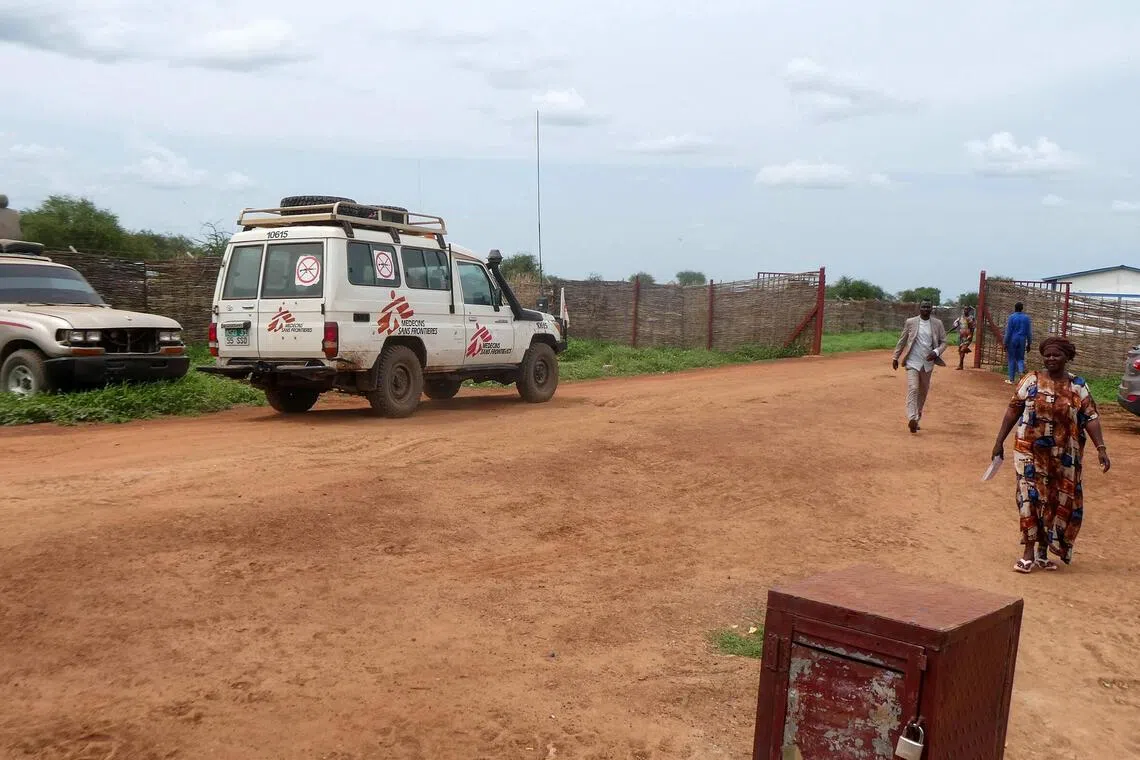
A Doctors Without Borders vehicle at the entrance of Ameth-Bek Hospital in the Abyei region on the border of Sudan and South Sudan.
PHOTO: COURTESY OF TANG JUN HAN
Few resources, more ingenuity
Trauma patients often arrived late at Ameth-Bek Hospital. Some had travelled long distances from Sudan after experiencing gunshots, drone attacks, explosions or other violent injuries, reaching us only after substantial blood loss, infection, pain and exhaustion had pushed their bodies close to their limits.
We also saw other consequences of delayed access to care. For example, children with burns who had initially been treated at home, sometimes with rabbit hair applied to the wounds as a local remedy. There was something almost disarming about it, until you remembered that families were doing what they could with what they had. Some patients had lived with severe open fractures for years, with bones jutting out.
In Singapore, we are used to the scoop-and-run pre-hospital system, extensive laboratory testing, CT scans, readily available blood products and intensive care unit (ICU) beds. In Abyei, none of these were possible.
We had to be deliberate about every blood test, asking whether the result would meaningfully change what we needed to do. Diagnosis often came down to a careful history, thorough physical examination, and close observation when non-operative management was chosen.
For much of the assignment, we had only one functioning diathermy pencil for a long operating list each day. It is a common instrument for cutting tissue and controlling bleeding that we barely think about having in operating theatres back home. In Abyei, replacement equipment and resupply could take time. We had to plan the use of the diathermy pencil around the day’s cases, preserving it for those cases where it would make the most significant difference.
The constraints changed not only how we operated, but also what a good outcome meant.
A major amputation or a stoma could be life-saving but have profound consequences once a patient returns to a community where prostheses, stoma bags and follow-up care might not be available. Damage control surgery, often taught as the answer for catastrophic trauma, is itself resource-intensive, requiring blood products, invasive monitoring and post-operative intensive care. We managed a high volume of serious trauma without an ICU and with limited blood products. Decisions had to account for what could safely be sustained after surgery as much as what could be achieved in the theatre.
That did not mean working without principles, but adapting them to what was available. We improvised a simple vacuum dressing to draw fluid from wounds, using gauze, a 50ml syringe and plungers from smaller syringes to create suction. For children with a foreign object in the ear or nose, we fashioned a small hook from the metal part of an intravenous cannula.
In extreme abdominal trauma, a Bogota bag – made by stitching a sterile fluid bag to the abdominal wall – provided temporary closure, protecting swollen organs while the patient was stabilised before a planned return to theatre.
In one case of a “frozen abdomen”, where severe scarring had fused the bowel and surrounding organs together, an endotracheal tube, normally used to secure the airway, was repurposed to drain intestinal contents until definitive surgery was possible.
In another case, we used a Cystofix catheter – normally used to drain urine from the bladder – to drain fluid from around the heart of a young child. Likely related to tuberculosis, the fluid had begun to squeeze the heart and stop it from filling properly, causing a life-threatening condition known as cardiac tamponade.
Such decisions were carefully considered, given the limited options for referral and further treatment.
One decision I vividly remember involved a young man with a gunshot wound in which the bullet had crossed the midline of his torso. He had arrived late from Sudan but looked surprisingly well – walking, eating and with normal vital signs. But the bullet trajectory concerned us, and we agreed to first check for injury to the diaphragm or abdomen before proceeding with wound debridement.
An emergency operation revealed a large tear in the diaphragm, with part of the stomach trapped through it and a ruptured segment of colon near the spleen. His deceptively good appearance had masked these serious injuries. He recovered over the following days and was soon well enough to return to Sudan.
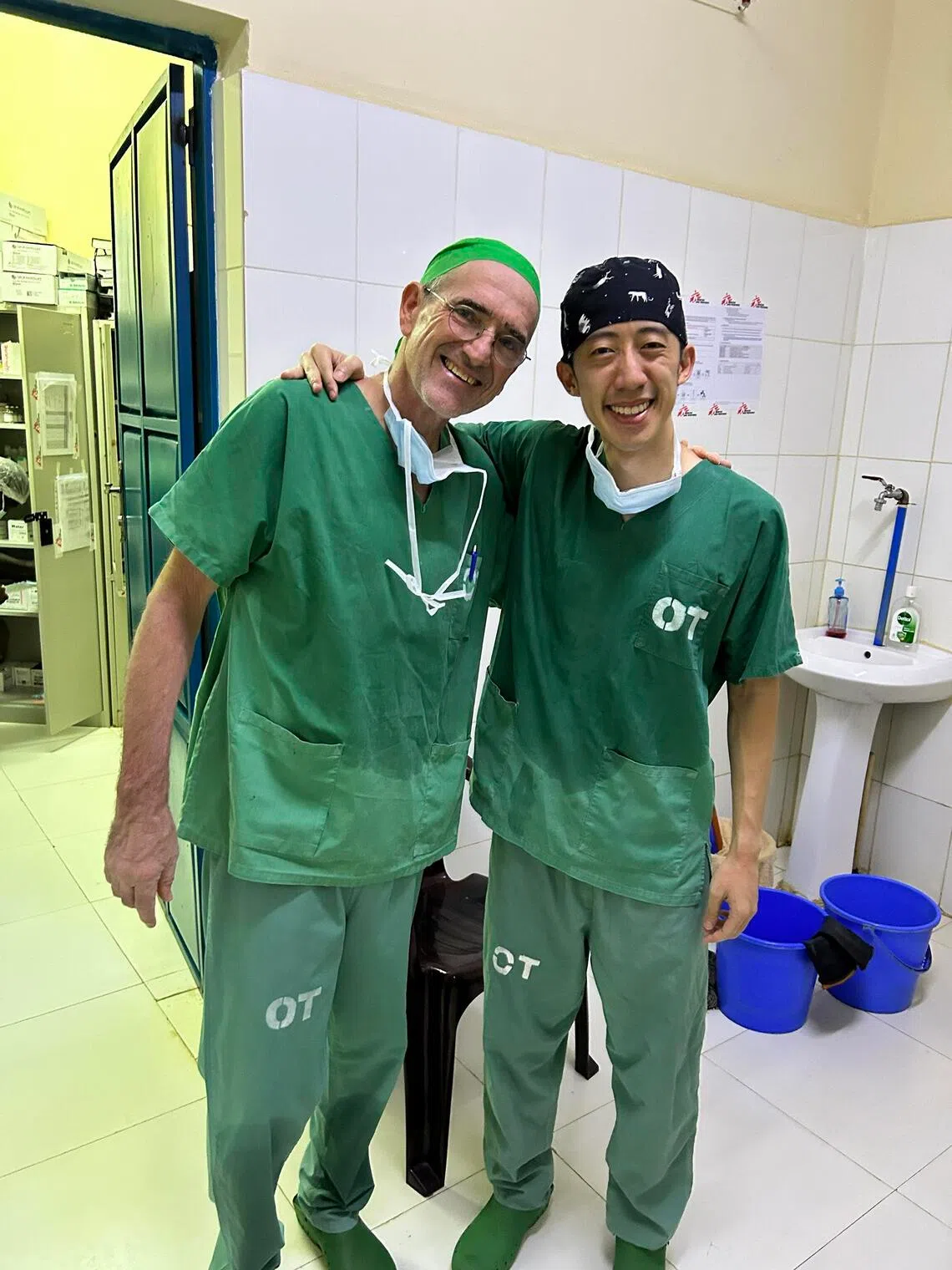
Tan Tock Seng Hospital specialist trauma surgeon Tang Jun Han with German general surgeon Matthias Oppelt in Abyei.
PHOTO: COURTESY OF TANG JUN HAN
The fight to save a leg
The case of a man with a snakebite has remained with me. He was from Sudan and had suffered a likely cytotoxic bite, causing severe swelling and progressive tissue destruction. By the time he reached us, his leg was infected and gangrenous, with haemorrhagic blisters. He was in septic shock and in great pain. The usual life-saving recommendation would have been an above-knee amputation, but he vehemently refused.
As we spoke, it became clear that losing his leg would mean losing not only his mobility, but also his ability to farm, tend cattle and provide for his family. We respected his decision, while being transparent about the risks. Over several weeks, we repeatedly debrided dead tissue from almost his entire leg and foot, dressing the wound with sugar. Gradually, and stubbornly, he improved, and we moved on to skin grafting.
On the day he was discharged, he walked out of the hospital on the leg he had refused to give up. If faced with a similar case again, I would still recommend amputation as a life-saving treatment. But his case reminded me that patients can be remarkably resilient, and that the “right” operation must also consider the life a patient hopes to return to.
Many of these decisions were not easy. I went there as a trauma surgeon, but had sought additional training in caesarean sections, external fixation and surgery in austere settings. In a single day, I might perform a trauma laparotomy or emergency caesarean, apply an external fixator to a fractured limb, remove a bead from a toddler’s nose, or debride non-viable brain tissue after a penetrating head injury.
The other hard part was seeing how much depended on resources. Some patients arrived too late, or needed blood products, ventilation or ICU care that we could not provide. Some might have survived in a better-resourced setting, but did not. In the end, you return each day and do the best you can with what you have, for the patient in front of you.
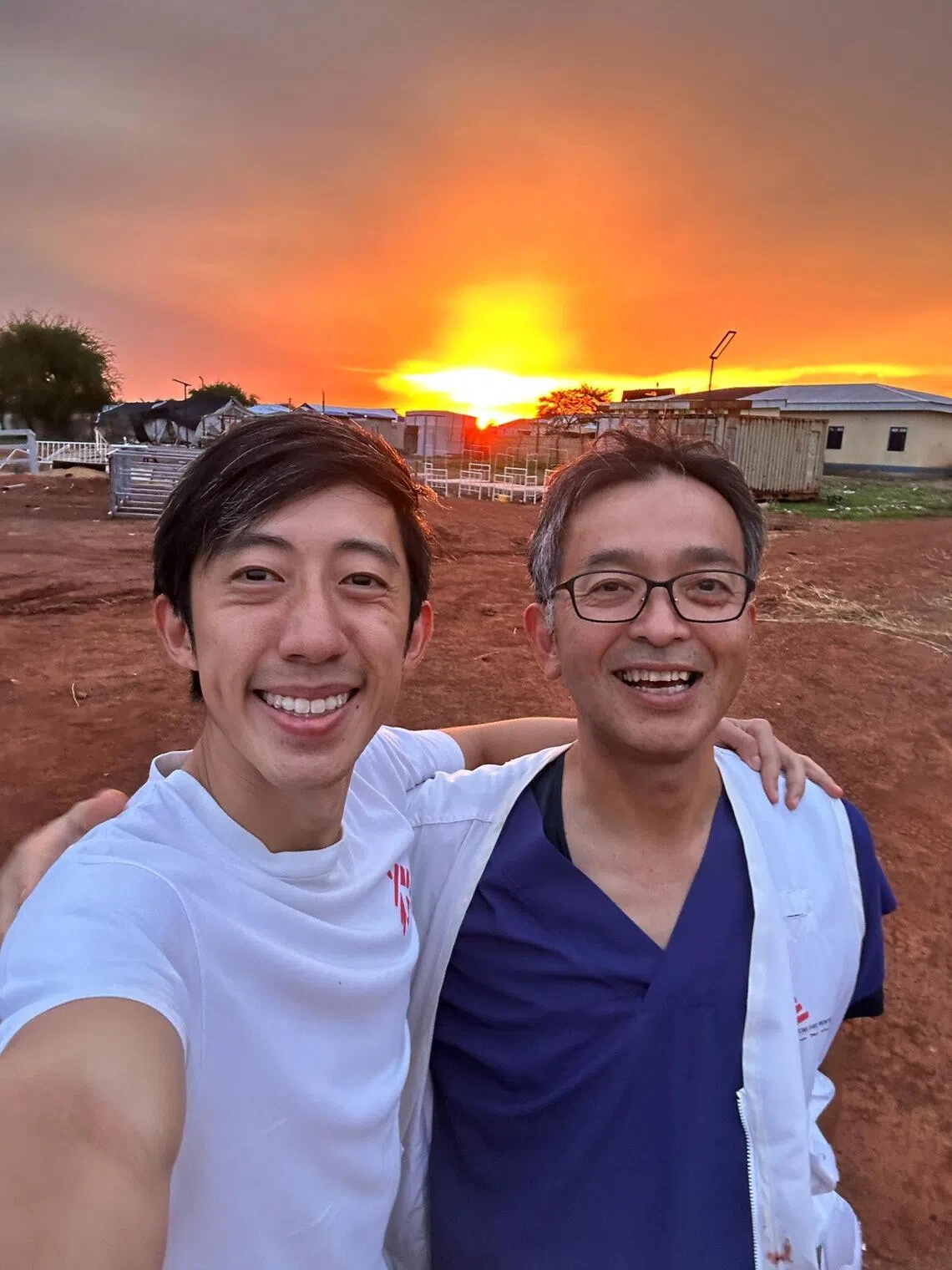
Tan Tock Seng Hospital specialist trauma surgeon Tang Jun Han with Japanese general surgeon Mikio Shiozawa in Abyei.
PHOTO: COURTESY OF TANG JUN HAN
What changed for me?
This assignment taught me to appreciate the healthcare system in Singapore and the many things that support a patient’s journey long before and after a surgeon enters the operating theatre. In Abyei, I was reminded of how much safe care depends on the whole system working well.
It also brought me back to the basics of medicine – taking a careful history, examining a patient thoroughly, thinking through the anatomy and physiology, and reassessing rather than immediately relying on a scan or blood test. And, of course, how immensely useful bedside ultrasound can be in finding answers.
Yet, amid the stark differences in resources and environment, the fundamentals of good surgery did not change. The challenge was not to lower those standards, but to find safe and thoughtful ways to adapt and uphold them. What works well in one healthcare system may not be appropriate or sustainable in another.
My experience in Abyei has not changed the standards I hold for care in Singapore. Instead, it has made me more thoughtful about why we investigate, intervene or ask for a particular resource or test. It has also made me more conscious of the many people behind a patient’s recovery, especially our nursing and anaesthesia colleagues.
Coming home, I still often think about my patients and colleagues in Abyei. One very young patient with a complex abdominal condition underwent more than 30 operations. More than once, we considered whether it was time to shift the focus towards offering palliative care. But he was very young, and as long as we were seeing small signs of progress, we chose to persevere.
If I could tell colleagues and aspiring humanitarian surgeons one thing, it would be not to romanticise the work, but also not to be discouraged by that reality.
Prepare as thoroughly as you can, clinically and personally, because you owe that to your patients and the team who will work with you. No preparation can make a first assignment entirely predictable, but it will give you a safer place from which to adapt.
In difficult places, hope is not something you wait to feel. It is a choice made each day to keep showing up and doing the next right thing for the patient, even when the odds are poor. When a team is united by that purpose, it can give patients a chance they might otherwise never have had.
Tang Jun Han is a specialist trauma surgeon in the Department of General Surgery at Tan Tock Seng Hospital. He completed his speciality training in 2021 and was admitted as a Fellow of the Royal College of Surgeons of Edinburgh.
KioskNews shows a cleaned-up reading view extracted from the publisher’s page — the original always lives on their site, not ours.