The 8 Greatest Gothic Horror Books of the Last 25 Years, Ranked

Luc Haasbroek is a writer and videographer from Durban, South Africa. He has been writing professionally about pop culture for eight years. Luc's areas of interest are broad: he's just as passionate about psychology and history as he is about movies and TV. He's especially drawn to the places where these topics overlap.
Luc is also an avid producer of video essays and looks forward to expanding his writing career. When not writing, he can be found hiking, playing Dungeons & Dragons, hanging out with his cats, and doing deep dives on whatever topic happens to have captured his interest that week.
Sign in to your Collider account
Gothic horror is one of those genres that refuses to stay buried. The castles, ancestral curses, doomed romances, and supernatural visitations of its earliest classics have never completely disappeared, but modern writers have become increasingly adventurous about transplanting those ingredients into new places and forms.
For instance, a Gothic story can now unfold aboard a ship trapped in Arctic ice, beneath the blazing Texas sun, or against the backdrop of a roiling civil war. As with all other genres, Gothic horror has evolved, but authors keep finding something worthwhile to say. With that in mind, we're celebrating the very best Gothic horror books of the last quarter-century.
8 'In The Valley Of The Sun' (2017)

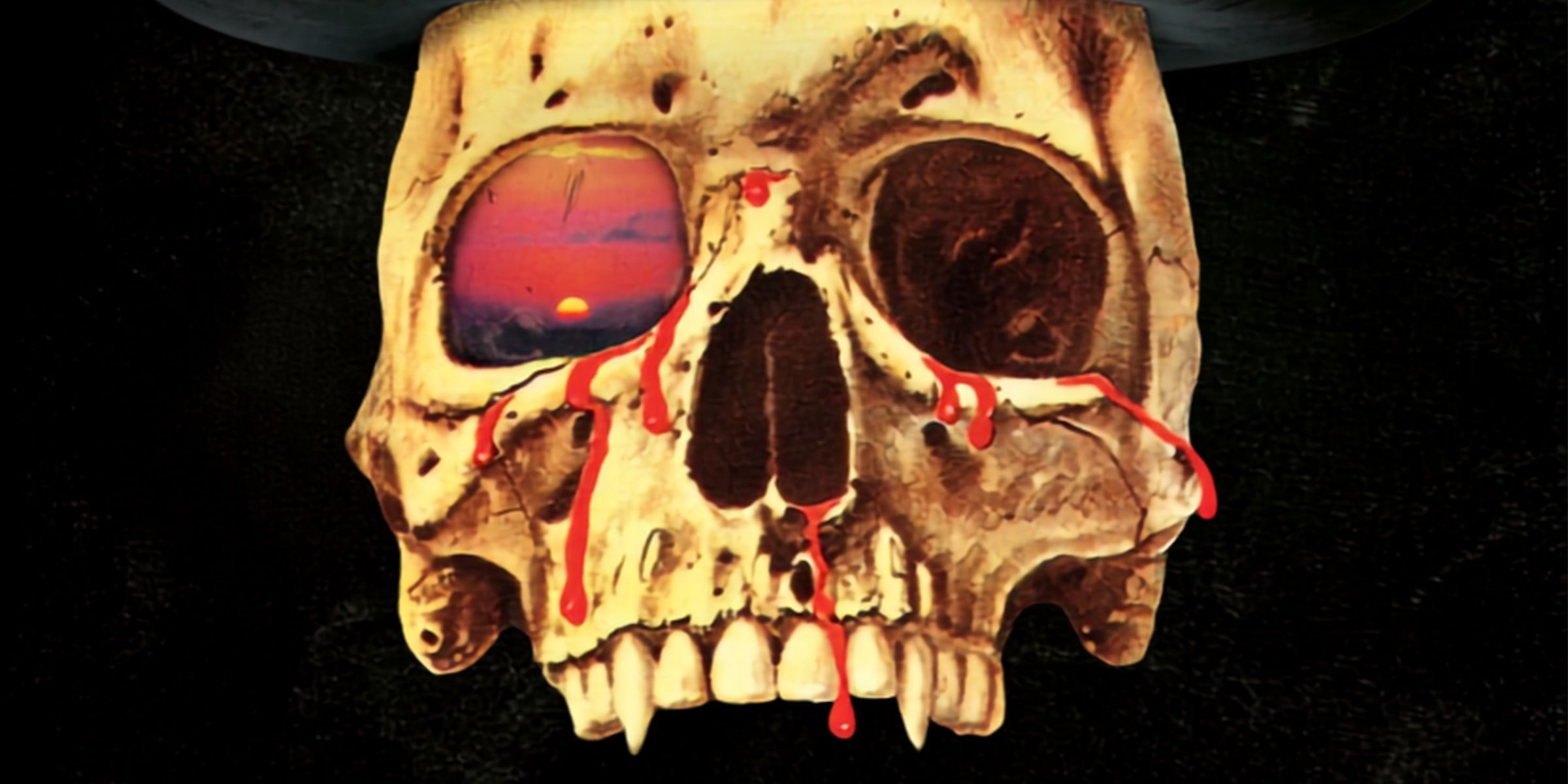
"I don't believe in monsters." Putting a fresh spin on vampire tropes, author Andy Davidson spins a vampire story set against the highways, motels, oil fields, and open spaces of 1980s Texas. Main character Travis Stillwell is a violent drifter who winds up at a motel operated by Annabelle Gaskin and her young son, Sandy. Even before his monstrous transformation, Travis carries deep darkness within him, yet he's oddly sympathetic... even when he's killing.
At the same time, a Texas Ranger pursues Travis across the state, unaware that the threat he's pursuing is worse than anything he's encountered before. From here, In the Valley of the Sun plays out as part vampire story, part serial-killer thriller, and part modern Southern Gothic. The vibe and atmosphere have strong parallels to the likes of Near Dark, Let the Right One In, and the harrowing works of Cormac McCarthy. However, the finished product is still very much its own thing, a dark bit of vampiric mayhem.
7 'Come With Me' (2021)

"Some ghosts aren't dead." Come With Me revolves around Aaron Decker, whose life is shattered by the sudden death of his wife, Allison. What begins as a story about grief soon becomes something considerably stranger when Aaron discovers that Allison had been conducting an investigation without telling him, connected to a series of murdered girls and a mystery reaching back into her past. That discovery transforms the plot into both a supernatural horror and a detective story.
Aaron follows the trail Allison left behind, effectively pursuing his dead wife through fragments of a life he realizes he never completely understood. In a way, Come With Me is like a ghost story. Although set in present-day Pennsylvania, the atmosphere is 100% Gothic, replete with many of the genre's calling cards: buried secrets, hauntings, obsession, and the intrusion of the past into the present.
6 'Teatro Grottesco' (2006)

"We leave this behind in your capable hands." Teatro Grottesco is an Italian horror short story collection by philosopher/writer Thomas Ligotti, known for his nihilistic, pessimistic brand of weird fiction. The tales span a range of tones and structures, yet they share a bleak worldview rippling with dread and unease. Likewise, the settings, while modern, still feel Gothic: most of the action here takes place in grim, unnamed towns, shadowy alleys, sterile offices, derelict art galleries, and industrial ruins like the monstrous, automated factory in the story "The Red Tower".
The Gothic influence also comes through in Teatro Grottesco's focus on collapsing minds. The narrators in these stories are typically isolated intellectuals, failed artists, or desperate office workers who suffer from paranoia. They are frequently unsure of what is real and what is a manifestation of their madness, submerging the reader in a web of illusions, delusions, and half-truths.
5 'Victorian Psycho' (2025)

"I arrived at Ensor House with blood under my fingernails." This one was recently adapted into a movie starring Maika Monroe and Thomasin McKenzie. In Victorian Psycho, Winifred Notty arrives at an isolated manor to educate the children of a wealthy Victorian family, but readers are immediately informed that this new governess is neither innocent nor particularly stable. Her thoughts are violent, grotesque, funny, and increasingly difficult to separate from what she might actually do.
That inversion gives the novel much of its wicked energy. Plus, in classic fashion, the unreliable narration constantly destabilizes what we think we know about Ensor House and its inhabitants. Familiar ingredients of Victorian Gothic fiction are everywhere: the grand house, rigid class hierarchy, disturbing children, repressed sexuality, religious anxiety, and secrets lurking beneath respectable appearances. It all feels like a cross between Jane Eyre and an especially nasty slasher movie.
Collider Exclusive · Horror Survival Quiz Which Horror Villain Do You Have the Best Chance of Surviving? Jason Voorhees · Michael Myers · Freddy Krueger · Pennywise · Chucky
Five killers. Five completely different ways to die — if you're not smart enough, fast enough, or self-aware enough to avoid it. Only one of them is the villain your particular set of instincts gives you a fighting chance against. Eight questions will figure out which one.
🏕️Jason
🔪Michael
💤Freddy
🎈Pennywise
🪆Chucky
01
Something feels wrong. You can't explain it — you just know. What do you do? First instincts are the difference between the survivor and the first act casualty.
02
Where are you most likely to find yourself when things go wrong? Setting is everything in horror. Where you are determines which rules apply.
03
What is your most reliable survival asset? Every survivor has a quality the villain didn't account for. What's yours?
04
What kind of fear is hardest for you to fight through? Knowing your weakness is the first step to not dying because of it.
05
You're with a group when things start going wrong. What's your role? Horror movies are brutally clear about who survives group situations and who doesn't.
06
What's the horror movie mistake you're most likely to make? Honest self-assessment is a survival skill. Denial is not.
07
What's your best weapon against something that can't be stopped by conventional means? Every horror villain has a weakness. The survivors are always the ones who find it.
08
It's the final scene. You're the last one standing. How did you make it? The final survivor always has a reason. What's yours?
Your Survival Odds Have Been Calculated Your Best Chance Is Against…
Your instincts, your strengths, and your particular way of thinking under pressure point to one villain you actually have a fighting chance against. Everyone else — good luck.
Jason Voorhees
Jason is relentless, but he is also predictable — and that is the gap you would exploit.
- He moves in straight lines toward his target. He doesn't strategise, doesn't adapt, doesn't outsmart. He simply pursues.
- Your ability to keep moving, use the environment, and resist the panic that freezes most victims gives you a genuine edge.
- The Crystal Lake survivors were always the ones who stopped running in circles and started thinking about terrain, water, and distance.
- You think like that. Which means Jason, for all his indestructibility, would face someone who simply refused to be where he expected.
Michael Myers
Michael watches before he moves. He is patient, methodical, and almost impossible to detect — until it's too late for anyone who isn't paying close enough attention.
- But you are paying attention. You notice the shape in the window, the car parked slightly wrong, the silence where there should be sound.
- Michael's power lies in the invisibility of ordinary suburbia — the fact that nothing ever looks wrong until it already is.
- Your spatial awareness and instinct to map every room, every exit, and every shadow before you need them is precisely the quality Laurie Strode had.
- You are not a victim waiting to happen. You are someone who already suspects something is wrong — and acts on it.
Freddy Krueger
Freddy wins by getting inside your head — using your own fears, your own memories, your own subconscious as weapons against you. That strategy requires a target who can be destabilised.
- You are harder to destabilise than most. You've faced uncomfortable truths about yourself and you haven't looked away.
- The survivors on Elm Street were always the ones who understood what was happening and chose to face it rather than flee from it.
- Freddy's greatest weakness is that his power evaporates in the presence of someone who refuses to give him the fear he feeds on.
- Your psychological resilience — the ability to stay grounded when reality itself becomes unreliable — is exactly the quality that keeps you alive here.
Pennywise
Pennywise is ancient, shapeshifting, and feeds on terror — but it has one critical vulnerability: it cannot function against someone who genuinely stops being afraid of it.
- The Losers Club didn't survive because they were braver than everyone else. They survived because they faced their fears together, and faced them honestly.
- You ask the questions others avoid. You look directly at what frightens you rather than turning away.
- That directness — the refusal to let fear fester in the dark — is Pennywise's worst nightmare.
- It chose the wrong target when it chose you. You are exactly the kind of person whose fear tastes like nothing at all.
Chucky
Chucky's greatest advantage is that nobody takes him seriously until it's already too late. He exploits the gap between how something looks and what it actually is.
- You don't have that gap. You take threats seriously regardless of how they present — and you never make the mistake of underestimating something because of its size or appearance.
- Chucky relies on surprise, on the delay between recognition and response. You close that delay faster than almost anyone.
- Your instinct to treat every unfamiliar thing with appropriate scepticism — rather than dismissing it because it seems absurd — is the exact quality that keeps you breathing.
- Against Chucky, not laughing is already winning. You are very good at not laughing.
4 'Riddance' (2018)

"The dead are notoriously difficult to reach." Riddance takes place in the Sybil Joines Vocational School for Ghost Speakers & Hearing-Mouth Children, an institution devoted to communicating with the dead, complete with unique methods, terminology, history, and unsettling rituals. Like a classic haunted house, the school is a dreary, claustrophobic labyrinth filled with hidden rooms and strange equipment. At its center is Sybil herself, founder and headmistress, who has a dangerous obsession with the boundary between life and death.
Rather than a straightforward narrative, Riddance presents itself as an assemblage of documents: reports, photographs, diagrams, correspondence, interviews, "ectoplasm charts", and other supposed archival materials. This singular style makes the book feel like an artifact that somehow escaped from the fictional world it describes. Beneath that epistolary structure are recognizably Gothic preoccupations: childhood, death, secret histories, bizarre institutions, forbidden knowledge, and the frightening possibility of crossing a boundary that should remain intact.

"There are things worse than death." Centering on a father-son relationship, this one is an ambitious, decades-spanning story about dictatorship, occult power, and the horrifying things families pass down through generations. Juan possesses the ability to communicate with an incomprehensible supernatural entity known as the Darkness. His son Gaspar may have inherited the same ability, making him immensely valuable to the secretive Order that has exploited people like Juan for generations.
The supernatural violence unfolds against the very real terror of Argentina's Dirty War and its aftermath, mixing fact and fantasy. These political elements coexist alongside decidedly Gothic ones, like haunted places, grotesque rituals, forbidden rooms, mutilated bodies, and an evil that seems capable of swallowing reality itself. Finally, there's the visceral body horror: images of missing limbs, ceremonial mutilation, and piles upon piles of bones.
2 'The Terror' (2007)

"Whatever happens, we are not going to die of cold." This book by Hyperion author Dan Simmons served as the basis for the first season of the solid TV show starring Jared Harris and Tobias Menzies. The setup is immediately compelling: two ships are trapped in the Arctic ice hundreds of miles from safety. Their crews face dwindling supplies, disease, starvation, vicious temperatures, and the growing realization that rescue may never arrive.
As if the historical reality weren't frightening enough, something enormous is also stalking the men across the frozen waste. Fortunately, rather than being a pulpy monster story, Simmons crafts The Terror into an immersive, plausible historical horror. He turns the endless Arctic wilderness into the ultimate Gothic location, while also paying homage to a lot of classic Gothic literature, like Poe's The Masque of the Red Death and the poem "The Rime of the Ancient Mariner".
1 'Horns' (2010)

"People say you should always do the right thing, even when the wrong thing would be easier." Horns begins with Ig Perrish waking after a night of heavy drinking to discover that two horns are growing from his forehead. That would be alarming enough, but then people begin confessing their ugliest thoughts to him. Joe Hill takes this wonderfully bizarre premise and builds it around something considerably more painful: Ig's girlfriend Merrin Williams was murdered a year earlier, and virtually everyone in town believes he killed her.
The abilities granted by the horns are less a superpower than a mechanism for stripping away the comforting lies holding Ig's world together. People tell him about their cruelty, lust, resentment, selfishness, and secret desires, often with horrifying casualness. Hill gets plenty of black comedy from these confessions, yet the book is incredibly melancholy, too, and plays cleverly with traditional Gothic notions of sin and monstrosity.
KioskNews shows a cleaned-up reading view extracted from the publisher’s page — the original always lives on their site, not ours.