COP31 concludes without agreement as countries differ on fossil fuel phase-out
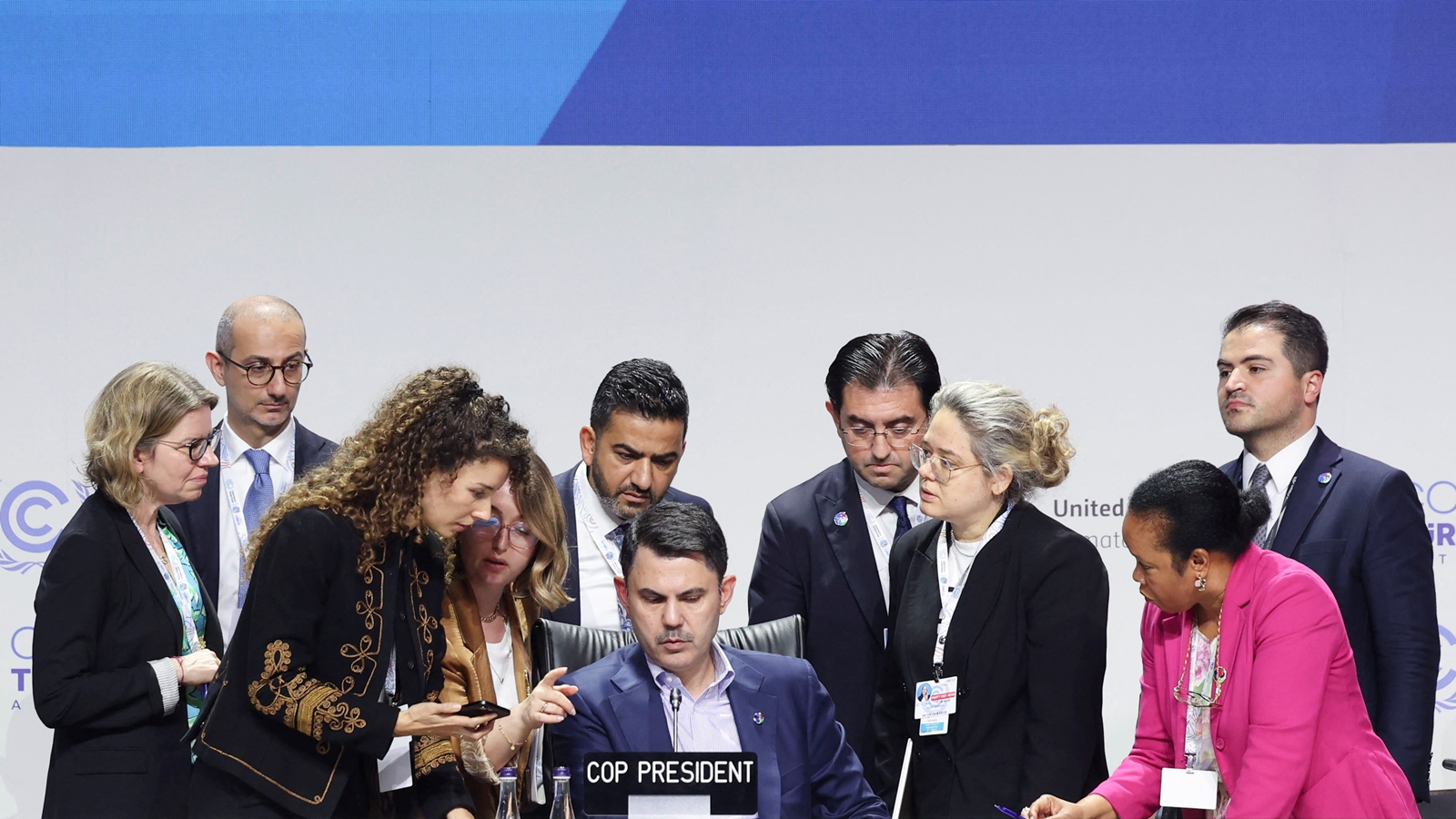
For the first time in over 15 years, the annual UN climate conference has failed to reach a consensus on the main political agreement, after the European Union and several other countries refused to endorse a draft that did not include any mention of a fossil fuel phase-out at the COP31 meeting in Antalya, Turkey.
The European Union, and over 80 other countries, mainly the small island states, had taken a similar position at the previous meeting, COP30, in Brazil last year, seeking a roadmap on fossil fuel phase-out, but had to eventually step back, as oil-dependent economies like Saudi Arabia managed the support of large influential economies like India and China in keeping any language on fossil fuels out of the main agreement.
This time, EU had the support of over 130 countries and they went for broke — it was either an agreement with a provision on fossil fuel phase-out or no agreement at all. Since the UN process takes decisions only by consensus, a rejection by even one country is sufficient to block an agreement.
The rejection of the main agreement does not mean there was no outcome from COP31. This UN conference serves as the annual meeting of parties to the 1992 UN Framework Convention on Climate Change (UNFCCC), to the 1997 Kyoto Protocol and to the 2015 Paris Agreement. Each of these meetings has several items on agenda, and the countries decided on a number of these. Each of these decisions become the successful outcome of COP31.
Apart from the official agenda, the host country, which also serves as the president of COP, proposes a set of draft agreements, in consultations with other countries, with the objective of accelerating global climate action. After two weeks of negotiations, and give and take, if the countries finally agree to adopt these proposals by consensus, these become the cover text or political agreement, and is given a name by the host country. At COP31, Turkey had proposed to call it the Antalya Pact. The draft text went through multiple rounds of changes, but still failed to get consensus, and thus had to be dropped.
The last time a similar thing had happened was in 2009, at COP15 in Copenhagen, Denmark. The stakes there were much higher, as countries were attempting to finalise a new climate agreement, which eventually happened six years later in Paris. A couple of COPs have come to the brink of failure after that as well, most recently in Baku in 2024 and Glasgow in 2021, but countries finally made peace with a compromise agreement.
“The absence of a cover decision does not pause climate action,” Environment Minister Bhupender Yadav said, while acknowledging that India, too, had reservations on some of the elements of the cover decision that was rejected.
Story continues below this ad
“India engaged constructively and tirelessly with the presidencies (Turkey and Australia) and other parties. While concerns remain over certain elements of the cover decision, we remain committed to dialogue and constructive engagement until the very end to build consensus,” he said.
The inclusion of some language on fossil fuel phase-out was not the only contentious issue in the draft political agreement. There were deep divisions on other important issues like a proposed global target to achieve 35 per cent electrification rate by 2035, a new adaptation finance goal, and the emphasis on the use of carbon capture and storage technologies as a mitigation strategy.
But it was the clash over fossil fuels that became the main reason for rejecting the agreement. A transition away from fossil fuels like coal, oil or gas is central to global efforts to fight climate change. Nearly three-quarters of the annual global greenhouse gas emissions is attributable to the burning of these fuels. And yet, they still cater to over 80 per cent of world’s energy needs.
For close to three decades, the climate negotiations had refused to recognise the elephant in the room, the term ‘fossil fuels’ not finding even a single mention in the hundreds of decisions that came out of the COP meetings, except in one instance in 2021, in the context of reducing subsidies for fossil fuels. It was only at COP28 in Dubai in 2023 that the term finally found a mention in the main agreement. One paragraph in that agreement talked about recognising the need for transitioning away from fossil fuels in a just, orderly and equitable manner.
Story continues below this ad
But attempts to build upon this language in subsequent COPs have been thwarted. In the absence of the US, which, under President Donald Trump, has walked out of the Paris Agreement and the UNFCCC, the balance of power at these climate negotiations has shifted a bit in favour of China and other large developing countries. The European Union, despite the support of a large number of countries, was not able to get its way on its own, and had to force a breakdown to make its point.
A casualty of this was Turkey’s push for getting the world to agree on an electrification target for 2035. Electrification is critical to energy transition, as clean and renewable sources of energy can be consumed only in the form of electricity, unlike traditional fossil fuels which can be directly burnt to produce energy. As of now, just 23 per cent of the world’s final energy consumption is in the form of electricity. As the host country, Turkey initially proposed a voluntary pledge by countries to try and achieve a 35 per cent electrification rate by 2035. Later, it put this proposal in the draft political agreement itself. Though some countries did support the proposal, many pressed for the inclusion of the caveat that the increased electrification should come only from clean and green sources.
The first draft of the political agreement had included a provision for trying to achieve a tripling of adaptation finance to reach US$ 120 billion by 2035. Subsequent drafts dropped the number, with the developed countries refusing to carve out a specific sum for adaptation under their existing obligation of US$ 300 billion in climate finance from 2035.
Many of these contentious issues will re-appear in discussions at next year’s climate meeting, COP32, which is to be held in Addis Ababa, Ethiopia.
KioskNews shows a cleaned-up reading view extracted from the publisher’s page — the original always lives on their site, not ours.