Hong Kong police arrest students as alleged key figures in HK$2.16 million scam ring
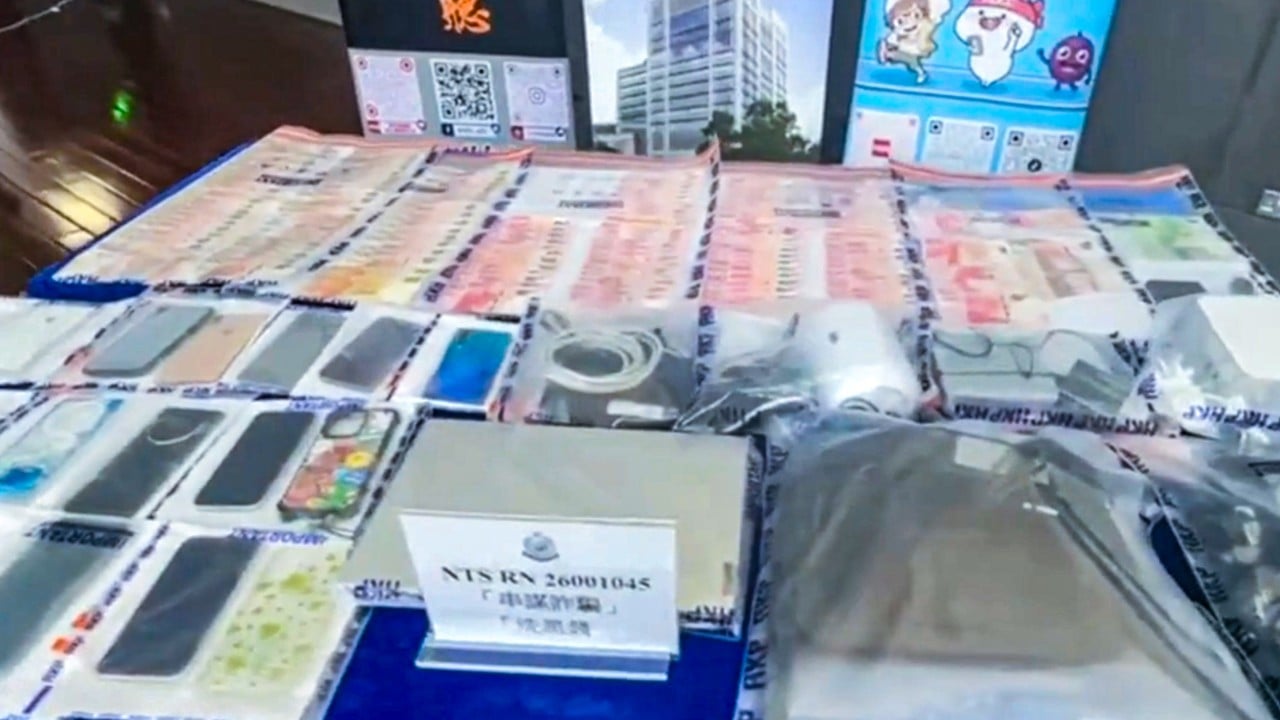
Two students are among the suspected core members of a fraud and money-laundering syndicate that have been arrested by Hong Kong police in connection with fake job advertisements, dating scams and bogus concert ticket sales.
Police said on Thursday that they had arrested 10 people in an earlier operation targeting the syndicate, which allegedly swindled victims out of more than HK$2.1 million (US$267,578).
The suspects, five males and five females aged between 13 and 68, were arrested on suspicion of conspiracy to defraud and money laundering, according to Superintendent Leung Chi-hang of the regional anti-deception unit in New Territories South.
Leung said two of the suspects, a man and a woman studying at different tertiary institutions, were a couple and suspected core members of the syndicate.

The operation covered cases involving 43 victims, about 60 per cent of whom were students who had fallen prey to shopping scams.
Chief Inspector Lam Chun-hong of the regional technology and financial crime unit in New Territories South said the syndicate allegedly posted fake modelling recruitment advertisements on social media between October 2024 and May this year.
“Under the pretext of making salary payments, they tricked jobseekers into using phone numbers provided by the syndicate to register electronic wallet accounts, which were then manipulated as puppet accounts to receive funds from scams,” he said.
Lam said the syndicate subsequently used at least eight such accounts to receive funds from at least 43 online shopping and dating scams.
“In the scams, the fraudsters would purportedly claim to sell concert tickets to swindle money,” he said.
“They would then funnel most of the scammed funds through multiple transfers into their personal accounts, laundering the money through everyday expenditures at luxury massage parlours, tertiary institution canteens, and medical clinics.”
KioskNews shows a cleaned-up reading view extracted from the publisher’s page — the original always lives on their site, not ours.