U.S. identifies remains of 6 soldiers killed in Korean War, including teens
Six soldiers who died in the Korean War, including two teenagers, have been accounted for decades after their deaths, the Defense POW/MIA Accounting Agency announced Monday.
The identifications are part of an ongoing effort to locate and identify the remains of those killed in the Korean War. When a soldier is marked as accounted for, they receive a burial with full military honors.
U.S. Army Cpl. Jackie Lee Thurman was a member of Battery B, 99th Field Artillery Battalion, 1st Cavalry Division. Thurman, 18, was a forward observer near Waegwan, South Korea, when his post came under heavy attack, according to the agency, and was last seen trying to evacuate a shell-shocked officer from the area while under heavy enemy fire.
Afterward, Thurman was reported missing in action. A presumptive finding of death was issued on Dec. 31, 1953. His remains were declared unrecoverable two years later, in January 1956.
The agency said that a set of remains, designated X-5814 Tanggok, was recovered by the Quartermaster Graves Registration Company near Kumhwa-dong, South Korea, in October 1952. The remains were interred as unknowns at the National Memorial Cemetery of the Pacific in Honolulu, Hawaii. In November 2022, the agency disinterred the remains. Analysis allowed the agency's scientists to identify the remains as Thurman's. He was marked as accounted for by the agency on May 18, 2026.
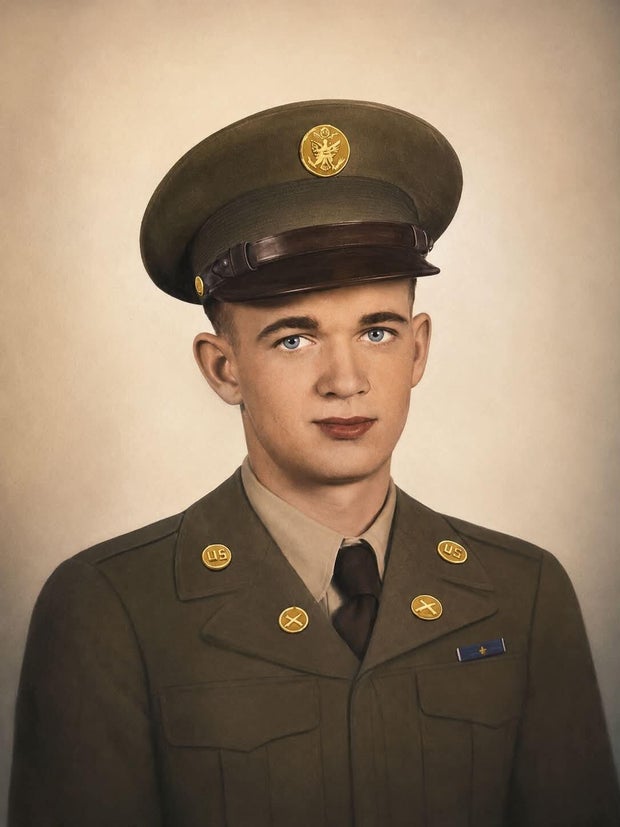
U.S. Army 1st Lt. Raymond Banker Gilbert was a member of B Battery, 503rd Field Artillery Battalion, 2nd Infantry Division, who was reported missing during the battle of the Ch'ongch'on River in North Korea, according to the agency. Witness statements allowed the Army to determine that Gilbert, 23, had been taken as a prisoner of war by the Chinese People's Volunteer Army and died from battlefield wounds in a POW camp on Jan. 31, 1951.
After the war, a recovered set of remains was returned to U.S. custody as part of a 1954 exchange known as Operation Glory, the agency said. The remains could not be identified at the time and were buried as an unknown at the National Memorial Cemetery of the Pacific. They were disinterred on July 1, 2024, and sent to the agency's laboratory. Analysis, circumstantial and historical evidence allowed the agency to identify the remains as Gilbert's. His remains were marked as accounted for on June 4, 2026.
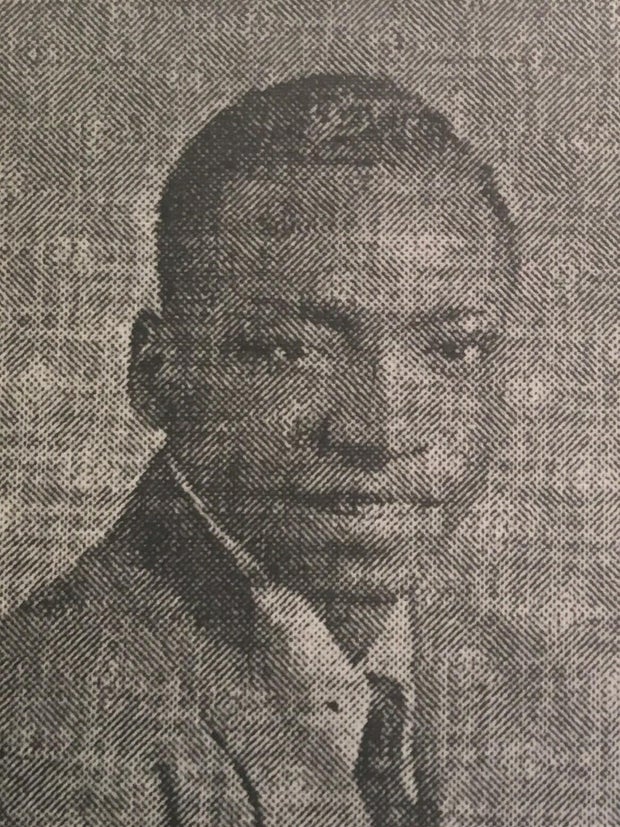
U.S. Army Cpl. William R. Laughlin Jr. was a member of Company D, 1st Battalion, 32nd Infantry Regiment, 7th Infantry Division, attached to the 31st Regimental Combat Team, according to the agency. Laughlin, 21, was among the U.S. soldiers ambushed by the Chinese People's Volunteer Army at the Chosin Reservoir in North Korea.
The ambush sparked a 17-day battle in frigid weather. Each side took thousands of casualties. U.S. and United Nations forces eventually retreated south toward the supply base of Hagaru-ri. Laughlin could not be located after the battle and was reported missing in action on Dec. 2, 1950. A presumptive finding of death was issued on Dec. 31, 1953.
A pair of remains returned during Operation Glory were connected to an isolated burial east of the Chosin Reservoir. They could not be identified and were interred as unknowns at the National Memorial Cemetery of the Pacific. The agency disinterred the remains in July 2022 and used modern forensic techniques at its laboratory to identify them as Laughlin's. He was marked as accounted for by the agency on Sept. 28, 2026.
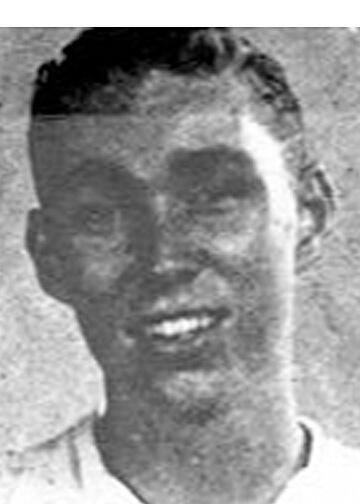
U.S. Army Sgt. Joseph A. Platzkoester, a member of Company H, 2nd Battalion, 38th Infantry Regiment, 2nd Infantry Division, was last seen during an ambush near Inje in South Korea. Platzkoester, 28, was part of a convoy doing counteroffensive clearing operations at the time, the agency said. The convoy encountered an enemy roadblock. While his battalion pushed through, Platzkoester could not be found after the fight and was reported missing in action.
The area was searched, but Platzkoester's remains were not found. A presumptive finding of death was issued on Dec. 31, 1953, and his remains were declared nonrecoverable in January 1956.
In 1951, the 148th Quartermaster Graves Registration Company found a set of remains that could not be identified. They were interred as an unknown at the National Memorial Cemetery of the Pacific. In November 2023, the set of remains was disinterred and sent to the agency's laboratory, where analysis identified them as Platzkoester's. He was marked as accounted for by the agency on May 29, 2026. A photo of Platzkoester was not available.
U.S. Army Cpl. Andrew R. Tischler, 21, was assigned to Company F, 2nd Battalion, 15th Infantry Regiment, 3rd Infantry Division, and was reported missing in action during a road march near Taewol Village in South Korea, according to the agency. The agency said it was able to account for him on May 5, 2026. Information about how his remains were found and identified was not available. A photo was not shared by the agency.
The other teen soldier, U.S. Army Cpl. Richard N. Lennox, 18, was accounted for on Aug. 7, 2025, the agency said. He was a member of Company C, 1st Battalion, 7th Infantry Regiment, 3rd Infantry Division reported missing in action after his unit was attacked by enemy forces near Sachang-ni, North Korea, on Nov. 28, 1950. He was captured and marched to a prisoner-of-war camp in Changsong, where he died in October 1951.
Lennox's remains were among those handed over during Operation Glory, the agency said. They could not be identified at the time and were buried as an unknown at the National Memorial Cemetery of the Pacific. The remains were disinterred on June 13, 2016. The agency analyzed the remains and said that Lennox had been accounted for on Aug. 7, 2025. A photo of Lennox was not available.
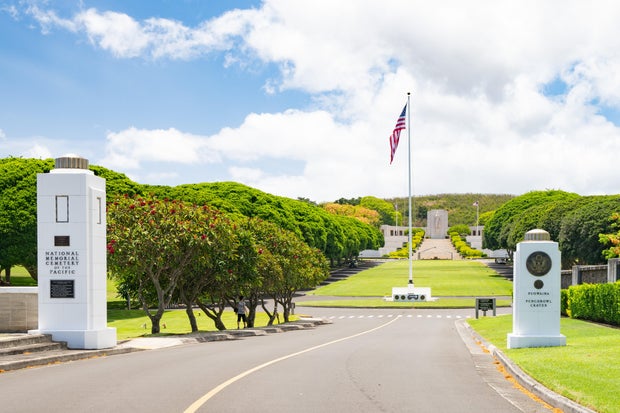
Each missing soldier's name was engraved on the Walls of the Missing at the National Memorial Cemetery of the Pacific. Now that they have been accounted for, rosettes will be placed alongside their names.
More information about each soldier, including how they were identified, may be shared after their families are briefed by the agency. The agency told CBS News in 2024 that history, diplomacy and science all come into each investigation. First, researchers start with archival records. Investigators then search for surviving witnesses and clues. Once the potential location of a set of remains is identified, a recovery mission is sent to bring those remains to the agency's laboratory.
At the lab, scientists use dental evidence and other records to study the remains. For soldiers who disappeared during the Korean War, experts can use tuberculosis skin test results taken before someone shipped out. The remains also undergo X-rays, DNA analysis and isotope analysis. Finally, a reference sample of DNA from a family member is compared to the remains. The process can take decades, the agency told CBS News.
About 7,500 Americans are still unaccounted for from the Korean War, the agency says. Efforts to bring home fallen soldiers from the conflict are complicated by relations with North Korea: While the agency operates in 46 countries, North Korea is an outlier. Sometimes, war dead are recovered during exchanges like Operation Glory.
KioskNews shows a cleaned-up reading view extracted from the publisher’s page — the original always lives on their site, not ours.