China urges opening Bab al-Mandeb in first joint statement with regional nation
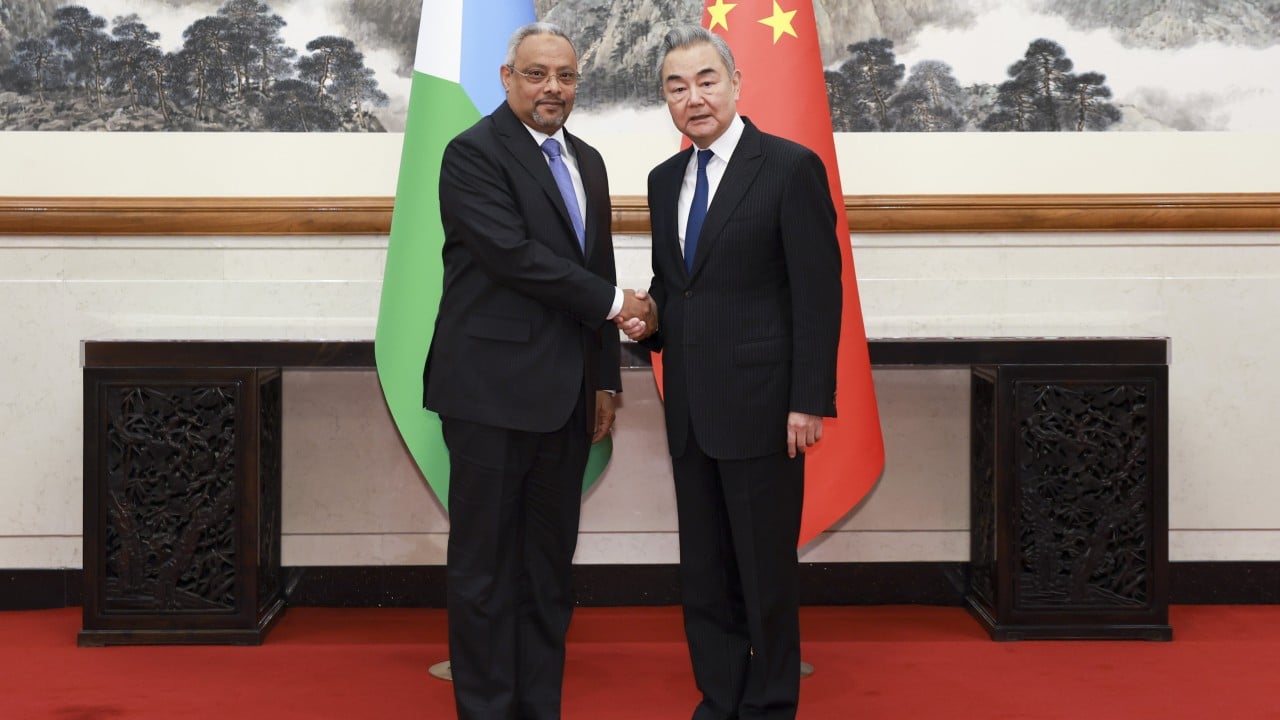
China backs “constructive efforts” to ensure international shipping lanes are safe and open, a communique jointly issued with Djibouti said, marking Beijing’s first formal statement with a Red Sea nation on containing the fallout from the US-Iran war.
Chinese analysts said the situation in the Red Sea has not yet escalated to a level that warrants direct naval escorts, though Beijing will closely monitor the region and may take action in the event the country’s shipping comes under threat.
“The two sides emphasised the importance of safeguarding freedom of navigation in the Red Sea and the Bab al-Mandeb Strait and stressed that the navigation rights exercised by merchant vessels of all countries in accordance with international law should be respected,” read the communique released after Chinese Foreign Minister Wang Yi and his Djiboutian counterpart Abdoulkader Houssein Omar met in Beijing on Wednesday.
“China supports Red Sea coastal states in constructively safeguarding the unobstructed and secure operation of international shipping lanes and protecting the region’s common interests,” it added.
Djibouti occupies a critical strategic position just across the narrow Bab al-Mandeb Strait from Yemen. The strait connects the Red Sea to the Gulf of Aden and is a chokepoint in trade between the Indian Ocean and the Mediterranean.
Both sides expressed a shared desire to prevent regional tensions from further spilling over into the Red Sea, according to the communique.
01:01
Houthi attack on Saudi airport kills 12, injures hundreds
Djibouti has hosted a Chinese overseas military support base since 2017, which is designed to facilitate naval escorts conducting anti-piracy missions in the Gulf of Aden. It also hosts US, French, Italian and Japanese bases.
Tensions between Yemen’s Houthi movement and Saudi Arabia have worsened in recent months. While the conflict between the two has been simmering since 2014, the militant movement declared a “maritime embargo” on shipping from the kingdom passing through the Bab al-Mandeb Strait after a Saudi-backed Yemeni coalition attacked the Houthi-controlled Sanaa airport in July.
“China has long championed freedom of navigation. Issuing such a joint communique with Djibouti, a nation positioned at the Bab al-Mandeb Strait and host to Beijing’s sole overseas military support base, carries far more symbolic weight than routine diplomatic statements issued under normal circumstances,” said Li Weijian, a researcher at the Shanghai Institute for International Studies.
The current situation did not yet require Chinese naval escort operations, as no Chinese vessels had been threatened or attacked, Li said.
Beijing remained committed to seeking a peaceful and lasting solution through diplomatic channels, Li said, though if the situation changes then China’s reaction could also change.
“Whether further action will be taken depends on how the situation develops. If it continues to escalate and poses a threat to Chinese shipping safety or the lives and property of Chinese citizens, I believe China will certainly take further measures,” he said.
Niu Xinchun, director of the China-Arab research institute at Ningxia University, noted that the immediate threat to Chinese vessels remained limited, as the Houthis have explicitly stated that they are targeting Saudi Arabia only.
Meanwhile, the recent recovery in Middle East oil exports had eased supply pressures, further reducing any immediate need for naval escorts, Niu said.
Trump open to nuclear talks with Xi and Putin
Oil exports from Middle East producers excluding Iran averaged 24.6 million barrels per day in the week to October 18, higher than a pre-war average of 23.3 million, The Wall Street Journal reported on Tuesday, citing data from commodities data provider Kpler.
Experts attributed the recovery in oil shipments to high profits and growing operational experience, which have kept tankers navigating the Strait of Hormuz despite lingering dangers.
Beyond calling for freedom of navigation, the joint communique also addressed the role of external powers in the conflict and warned that the “flames of war” should not spread from the Middle East to the Horn of Africa.
“The international community, particularly major powers from outside the region, should abandon double standards, respect the sovereignty and territorial integrity of regional countries, and refrain from resorting to force or imposing unilateral sanctions,” the joint communique added.
While Saudi Arabia has sought US support against the Houthis, Washington’s stance has fluctuated.
Last month, US President Donald Trump called off planned air strikes against Houthi targets at the last minute, caught between defending a key ally and avoiding expanding the war with Iran.
As Houthi strikes on Saudi Arabia intensify, including attacks causing civilian casualties, the US on Wednesday ordered the departure of non-emergency government personnel and their families from the kingdom.
KioskNews shows a cleaned-up reading view extracted from the publisher’s page — the original always lives on their site, not ours.