Why inhabitants of China’s 5,000-year-old cultural capital buried a stunning ancient palace
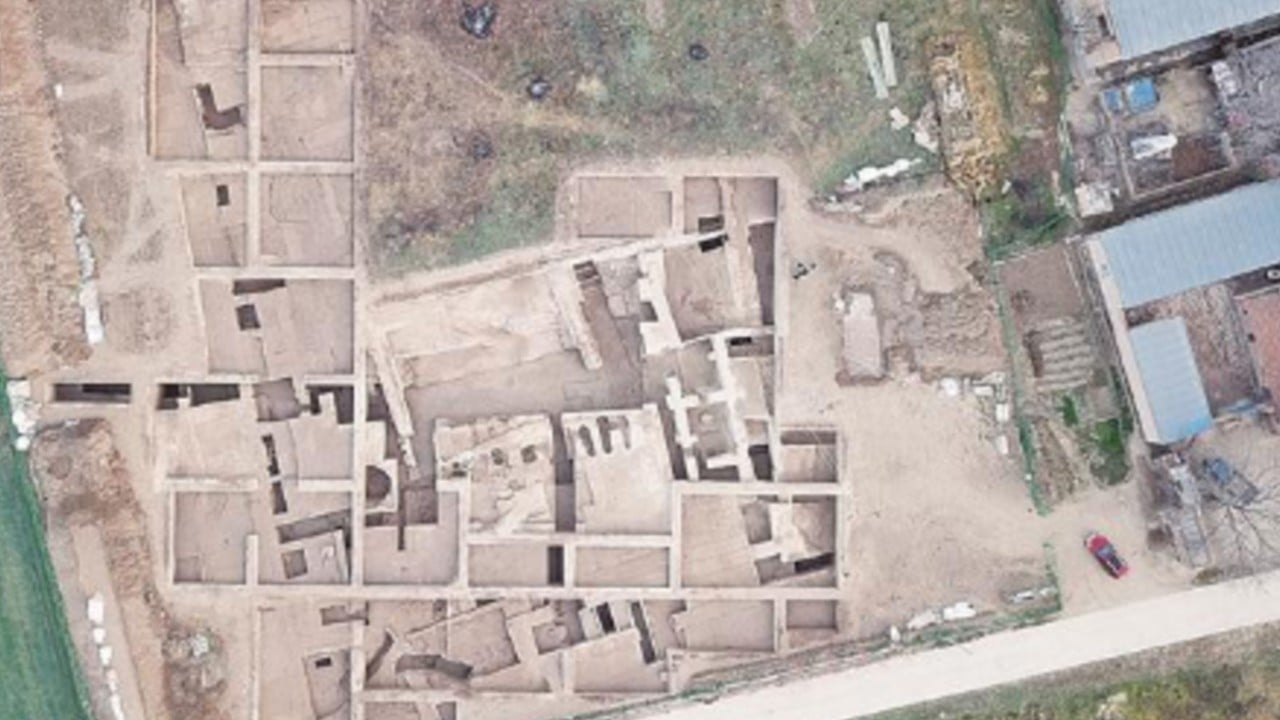
The ancient palace would have been considered a crown jewel of its people. Foreigners would have admired it with awe, and locals would have held it in great esteem.
Then, 5,000 years ago, the villagers deliberately buried it, and we do not know why.
A team of scientists announced several updates in mid-October about their work at Nanzuo, an ancient capital city near Qingyang, Gansu, in northwest China. Most of the updates concerned a central palace that would have been the cultural hub of the region’s most important city at the time.
“This is the best-preserved and largest palace-style building dating back 5,000 years that we have seen in China to date,” said Yang Xiaohua, a staff member of the Nanzuo Cultural Relics Protection Institute, in a press release.
“It is tall, magnificent, and orderly, and the ancient people used architecture to create a solemn and dignified spatial atmosphere.”
The palace covered about 4,000 square metres and had rammed-earth walls that created separate living spaces. The main hall was large, and the building was “painted” with white-lime plaster, which would have made it feel open and bright.
The palace was a gem in a powerful regional capital that was developing the earliest forms of organised government.
And yet, the building’s beauty and social value make it peculiar that the settlement was buried.
The team determined that people salvaged valuable items, such as beams and pillars, before burying the building beneath layers of compacted earth and flattening the surface. The removal of valuable items is important evidence that the palace was deliberately buried, rather than covered gradually by accumulated dirt over time.
Additionally, the site showed no signs of having been buried by a dramatic natural disaster, such as the one that buried Pompeii in Italy. There was also no evidence of pillaging by outside forces.
Rather, people consciously decided to dismantle the building and then bury it, much as a modern town might clear a site to build a car park. Doing this to such an important building would have fundamentally altered Nanzuo, which makes the decision all the more perplexing.
Han Jianye, a professor at Renmin University and one of the project’s leaders, hypothesised that the people of Nanzuo may have migrated to northern Shaanxi, drawn by growing regional capitals such as Shimao.
Han did not offer an explanation for why the settlement’s abandonment would also have meant that the palace had to be buried. This may well be an unanswerable question.
Han was also clear that Nanzuo’s decline did not detract from its significance, noting that the capital influenced its regional neighbours long after it had lost its cultural prominence.
“Nanzuo, with its massive settlement size and rigorous urban layout, ranks among the core remains of early world civilisations; its importance is self-evident,” he said.
Han pointed to complexes like the palace as evidence for his hypothesis, saying: “[This complex] could only have been achieved with the emergence of a coercive regional ‘kingdom’ with a consolidated national power.”
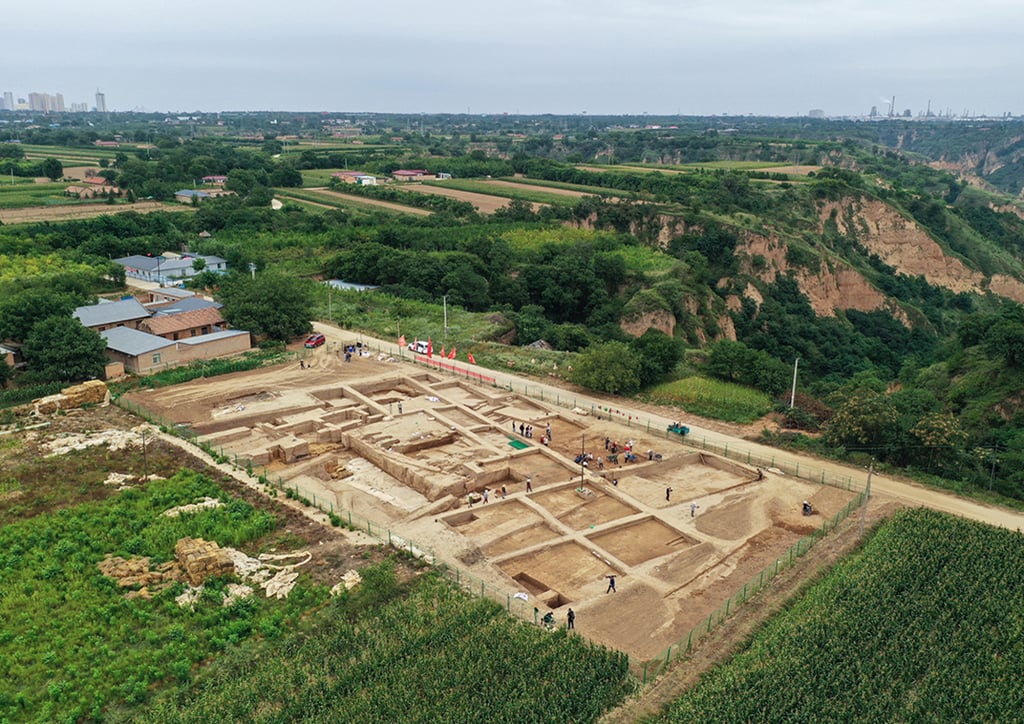
He estimated that, at its height, Nanzuo had as many as 10,000 residents, a significant number for the period.
One of Han’s colleagues went a step further, pointing specifically to Nanzuo – and a site named Langzhou to the east – as evidence that China is truly an uninterrupted civilisation with 5,000 years of history.
Wang Wei, a chief expert on the “Project to Trace the Origins of Chinese Civilisation”, said Nanzuo stands out because it shows clear signs of human culture and civilisation, which he considers a step beyond those found at earlier Neolithic sites.
It is understandable that Shimao would have attracted people from across the region, including from Nanzuo.
The city is one of the great Yellow River civilisations of early China. Its fortifications were so advanced that archaeologists initially believed they were the earliest examples of the Great Wall of China. The discovery of jade artefacts later revealed that they were much older.
KioskNews shows a cleaned-up reading view extracted from the publisher’s page — the original always lives on their site, not ours.